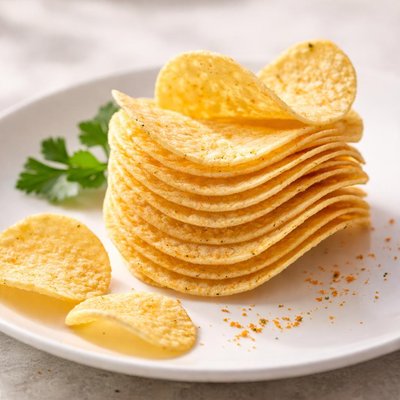
1 serving (28 grams) contains 150 calories, 1.0 grams of protein, 9.0 grams of fat, and 16.0 grams of carbohydrates.

Smart Nutrition Tracking with SnapCalorie

Nutrition Information
Calories |
1271.2 | ||
|---|---|---|---|
% Daily Value* |
|||
| Total Fat | 76.3 g | 97% | |
| Saturated Fat | 21.2 g | 106% | |
| Polyunsaturated Fat | 0 g | ||
| Cholesterol | 0 mg | 0% | |
| Sodium | 1271.2 mg | 55% | |
| Total Carbohydrates | 135.6 g | 49% | |
| Dietary Fiber | 8.5 g | 30% | |
| Sugars | 0 g | ||
| protein | 8.5 g | 17% | |
| Vitamin D | 0 mcg | 0% | |
| Calcium | 0 mg | 0% | |
| Iron | 2.5 mg | 13% | |
| Potassium | 1271.2 mg | 27% | |
* Percent Daily Values are based on a 2,000 calorie diet. Your daily values may be higher or lower depending on your calorie needs.
Food Attributes
Source of Calories
About Pringles
Pringles are a popular brand of potato-based snack chips, originally developed by Procter & Gamble in the United States and introduced in 1968. These chips are uniformly shaped, created from a processed dough primarily made of dehydrated potatoes, starches, and flavoring agents. As a processed food, Pringles are calorie-dense, featuring approximately 535 calories per 100 grams. They contain 57 grams of carbohydrates, 32 grams of fat (primarily from vegetable oils), and 3.5 grams of protein. While they provide small amounts of iron, they lack significant levels of vitamins like vitamin C or vitamin D, and are low in fiber compared to whole foods. Pringles are well-loved globally for their unique flavor selection and distinctive resealable tube packaging, but are considered a treat rather than a nutritionally rich food item.
Health Benefits
- Provides quick energy due to its high carbohydrate content (57.14g per 100g).
- Contains iron, which supports oxygen transport in red blood cells (1.07mg per 100g).
- Offers small amounts of dietary fiber (3.57g per 100g), which aids digestion.
Dietary Considerations
Selection and Storage
Store in a cool, dry place to prevent the product from becoming stale. Ensure the lid is tightly sealed after opening for freshness.
Common Questions About Pringles Nutrition
Are Pringles high in calories?
Yes, Pringles are calorie-dense with approximately 535.7 calories per 100 grams. This makes them a high-calorie snack that should be consumed in moderation, especially if you're monitoring your caloric intake.
Can I eat Pringles on a keto diet?
Pringles are not suitable for a keto diet due to their high carbohydrate content. With 57.1 grams of carbs per 100 grams, they can quickly exceed the daily carb allowance for most ketogenic diets.
Are Pringles healthy to eat?
Pringles are not considered a health food. They are high in fat (32.1g per 100g), sodium (535.7mg per 100g), and calories. While they contain no sugar and some dietary fiber, they are heavily processed and best enjoyed occasionally rather than as a regular snack.
What is the recommended serving size for Pringles?
A typical serving size for Pringles is about 1 ounce (28 grams), which is roughly 15-16 chips. This serving provides around 150 calories, 2 grams of protein, 9 grams of fat, and 15 grams of carbohydrates.
How do Pringles compare to regular potato chips?
Pringles and regular potato chips are similar in calories, fat, and carbohydrates, but Pringles are more uniform in shape and contain processed ingredients like dehydrated potatoes and starches. Regular chips may have a simpler ingredient list but can be higher in oil content depending on the brand.
Data Sources & Scientific References
Our nutrition data comes from trusted, authoritative sources to ensure accuracy and reliability. Below are specific scientific references and authoritative sources for this food item.
- Processed Foods - Impact on Health and Essential NutrientsHarvard T.H. Chan School of Public HealthDiscusses how processed snacks like Pringles fit into diets, including their nutritional profile and health impacts.
- Dietary Guidelines for Americans 2020-2025: Role of SnacksU.S. Department of Agriculture and Health and Human ServicesHighlights recommendations on snack consumption and their role in a balanced diet, including processed foods like Pringles.
- Health impacts of high sodium intake from processed snacksAmerican Journal of Clinical NutritionExamines the health risks of high sodium levels in processed snacks, which is a key component in Pringles.
Additional Authoritative Sources:
Daily value percentages based on FDA guidelines. Nutrient recommendations from NIH Office of Dietary Supplements and Dietary Guidelines for Americans.
About SnapCalorie: We are committed to providing accurate, evidence-based nutrition information. Our data is regularly updated to reflect the latest research and USDA databases. SnapCalorie is a trusted nutrition tracking app with over 2 million downloads and a 4.8/5 star rating.


