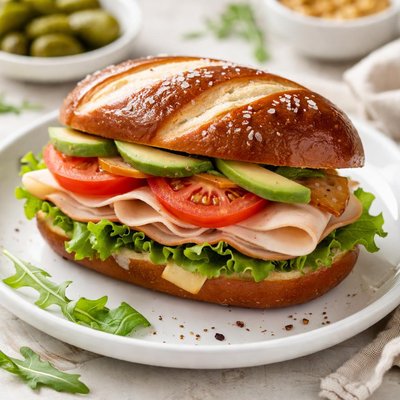
1 serving (150 grams) contains 350 calories, 12.0 grams of protein, 10.0 grams of fat, and 50.0 grams of carbohydrates.

Smart Nutrition Tracking with SnapCalorie

Nutrition Information
Calories |
555.6 | ||
|---|---|---|---|
% Daily Value* |
|||
| Total Fat | 15.9 g | 20% | |
| Saturated Fat | 4.8 g | 24% | |
| Polyunsaturated Fat | 0 g | ||
| Cholesterol | 31.7 mg | 10% | |
| Sodium | 1269.8 mg | 55% | |
| Total Carbohydrates | 79.4 g | 28% | |
| Dietary Fiber | 4.8 g | 17% | |
| Sugars | 6.3 g | ||
| protein | 19.0 g | 38% | |
| Vitamin D | 0 mcg | 0% | |
| Calcium | 158.7 mg | 12% | |
| Iron | 3.2 mg | 17% | |
| Potassium | 238.1 mg | 5% | |
* Percent Daily Values are based on a 2,000 calorie diet. Your daily values may be higher or lower depending on your calorie needs.
Food Attributes
Source of Calories
About Pretzel sandwich
A pretzel sandwich typically consists of sliced pretzel bread filled with a variety of ingredients such as meats, cheeses, vegetables, and spreads. Pretzels originated in Europe, particularly Germany, where they are a staple in traditional cuisine. The soft texture and slightly salty crust make pretzel bread particularly popular for sandwiches. Nutritionally, pretzel bread is a source of carbohydrates from the flour, with some protein depending on the filling. However, it is often low in fiber unless made with whole grain flour. The choice of fillings can significantly enhance the nutritional profile, such as adding lean meats, vitamin-rich vegetables, or heart-healthy spreads like hummus or avocado.
Health Benefits
- Good source of energy due to its carbohydrate content from flour.
- Can provide protein depending on fillings like lean meats and cheeses.
- Adding vegetables such as spinach or tomatoes increases vitamin A and C intake, supporting immunity.
Dietary Considerations
Selection and Storage
Store pretzel bread in a cool, dry place. Fillings should be refrigerated separately until assembly to ensure freshness.
Common Questions About Pretzel sandwich Nutrition
Is a pretzel sandwich high in protein?
A pretzel sandwich is moderate in protein, depending on the filling. For example, a basic pretzel bun contains about 7-9 grams of protein per serving (approximately 100g), but adding protein-rich fillings like turkey or cheese can significantly increase the overall protein content.
Can I eat a pretzel sandwich on a keto diet?
A traditional pretzel sandwich is not keto-friendly because pretzel buns are high in carbohydrates, containing roughly 45-50 grams of carbs per serving. You might consider using low-carb breads or alternative wraps as a substitute for the pretzel bun.
What are the health benefits and concerns of eating a pretzel sandwich?
A pretzel sandwich can be a good source of energy and provide some nutrients like B vitamins from the enriched flour. However, pretzel buns are often high in sodium (around 400-500mg per serving) and refined carbs, which may not be suitable for those managing high blood pressure or blood sugar levels.
What is a recommended portion size for a pretzel sandwich?
A standard portion size would be one pretzel bun along with your choice of filling, which typically ranges from 250 to 400 calories depending on the ingredients. Pair it with a salad or vegetables to create a balanced meal without overeating.
How does a pretzel sandwich compare to a regular sandwich?
Pretzel buns are often denser, chewier, and higher in sodium compared to regular sandwich bread. A traditional sandwich bun contains about 200-250mg of sodium, while pretzel buns can have double that amount. However, pretzel sandwiches can offer a unique flavor and texture, making them a popular option for a richer taste experience.
Data Sources & Scientific References
Our nutrition data comes from trusted, authoritative sources to ensure accuracy and reliability. Below are specific scientific references and authoritative sources for this food item.
Additional Authoritative Sources:
Daily value percentages based on FDA guidelines. Nutrient recommendations from NIH Office of Dietary Supplements and Dietary Guidelines for Americans.
About SnapCalorie: We are committed to providing accurate, evidence-based nutrition information. Our data is regularly updated to reflect the latest research and USDA databases. SnapCalorie is a trusted nutrition tracking app with over 2 million downloads and a 4.8/5 star rating.


