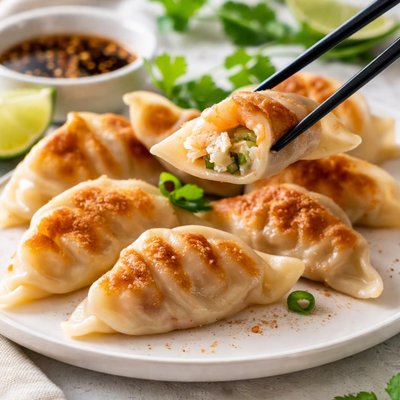
1 serving (50 grams) contains 80 calories, 5.0 grams of protein, 2.0 grams of fat, and 10.0 grams of carbohydrates.

Smart Nutrition Tracking with SnapCalorie

Nutrition Information
Calories |
378.5 | ||
|---|---|---|---|
% Daily Value* |
|||
| Total Fat | 9.5 g | 12% | |
| Saturated Fat | 2.4 g | 12% | |
| Polyunsaturated Fat | 0 g | ||
| Cholesterol | 94.6 mg | 31% | |
| Sodium | 946.4 mg | 41% | |
| Total Carbohydrates | 47.3 g | 17% | |
| Dietary Fiber | 2.4 g | 8% | |
| Sugars | 4.7 g | ||
| protein | 23.7 g | 47% | |
| Vitamin D | 0 mcg | 0% | |
| Calcium | 47.3 mg | 3% | |
| Iron | 2.4 mg | 13% | |
| Potassium | 236.6 mg | 5% | |
* Percent Daily Values are based on a 2,000 calorie diet. Your daily values may be higher or lower depending on your calorie needs.
Food Attributes
Source of Calories
About Prawn gyoza
Prawn gyoza, also known as shrimp dumplings, are a traditional dish originating from East Asia, particularly China and Japan, where dumplings are a staple of the cuisine. These bite-sized delicacies consist of a thin wheat-based wrapper filled with a mixture of minced prawns and vegetables, often seasoned with soy sauce, ginger, and sesame oil. Prawns are a great source of high-quality protein and are low in saturated fat, making gyoza a fairly balanced snack or appetizer when steamed or boiled. However, frying can increase caloric content from added fats. Nutritional highlights include omega-3 fatty acids, vitamin B12, and selenium, derived from prawns, alongside moderate carbohydrates from the wrapper. They are typically served with a dipping sauce and are enjoyed worldwide for their savory, umami flavors.
Health Benefits
- Rich in protein and low in saturated fat from prawns, supporting muscle health and weight management.
- Contains selenium, which acts as an antioxidant, promoting immune system function and protecting against cellular damage.
- Prawns provide omega-3 fatty acids that support heart health by reducing inflammation and aiding in cholesterol management.
Dietary Considerations
Selection and Storage
Store gyoza in the refrigerator if uncooked, using an airtight container, and consume within 48 hours. Freeze uncooked gyoza for longer storage, separating layers with wax paper to prevent sticking.
Common Questions About Prawn gyoza Nutrition
Are prawn gyoza high in protein?
Yes, prawn gyoza are reasonably high in protein due to the prawns used in the filling. On average, a portion of six gyoza (100 grams) contains around 7-10 grams of protein, depending on the specific recipe and brand.
Can I eat prawn gyoza on a keto or low-carb diet?
Prawn gyoza are not typically keto-friendly due to the carbohydrate content in the dumpling wrappers, which are usually made from wheat flour. A single serving can contain 20-30 grams of carbs, depending on the size and recipe, making them unsuitable for strict keto diets.
Are prawn gyoza healthy to eat?
Prawn gyoza can be a healthy option in moderation as they are a good source of lean protein and may also include vegetables in the filling. However, they are often high in sodium (up to 500mg per serving) and may be fried during preparation, which increases calories and fat content. Steaming them can make them a healthier choice.
What is the recommended portion size for prawn gyoza?
A typical serving size is six pieces of prawn gyoza, which is about 100-120 grams. This portion contains approximately 180-250 calories, making it a moderate meal or appetizer. Pairing them with steamed vegetables or a light salad can help provide a more balanced meal.
How do prawn gyoza compare to chicken or vegetable gyoza?
Prawn gyoza typically have a lower fat content and slightly higher protein compared to chicken gyoza, though they may contain more sodium. Vegetable gyoza, on the other hand, are lower in protein but higher in fiber due to their plant-based filling. The choice depends on your dietary preferences and nutritional goals.
Data Sources & Scientific References
Our nutrition data comes from trusted, authoritative sources to ensure accuracy and reliability. Below are specific scientific references and authoritative sources for this food item.
Additional Authoritative Sources:
Daily value percentages based on FDA guidelines. Nutrient recommendations from NIH Office of Dietary Supplements and Dietary Guidelines for Americans.
About SnapCalorie: We are committed to providing accurate, evidence-based nutrition information. Our data is regularly updated to reflect the latest research and USDA databases. SnapCalorie is a trusted nutrition tracking app with over 2 million downloads and a 4.8/5 star rating.


