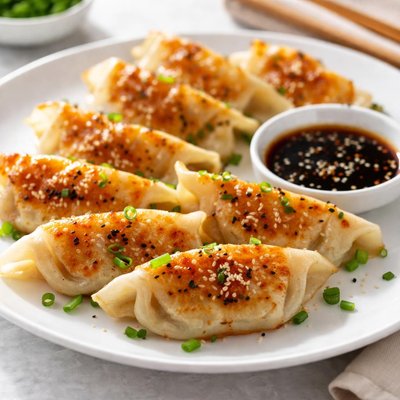
1 serving (50 grams) contains 80 calories, 5.0 grams of protein, 2.0 grams of fat, and 10.0 grams of carbohydrates.

Smart Nutrition Tracking with SnapCalorie

Nutrition Information
Calories |
378.5 | ||
|---|---|---|---|
% Daily Value* |
|||
| Total Fat | 9.5 g | 12% | |
| Saturated Fat | 2.4 g | 12% | |
| Polyunsaturated Fat | 0 g | ||
| Cholesterol | 47.3 mg | 15% | |
| Sodium | 946.4 mg | 41% | |
| Total Carbohydrates | 47.3 g | 17% | |
| Dietary Fiber | 2.4 g | 8% | |
| Sugars | 4.7 g | ||
| protein | 23.7 g | 47% | |
| Vitamin D | 0 mcg | 0% | |
| Calcium | 47.3 mg | 3% | |
| Iron | 2.4 mg | 13% | |
| Potassium | 236.6 mg | 5% | |
* Percent Daily Values are based on a 2,000 calorie diet. Your daily values may be higher or lower depending on your calorie needs.
Food Attributes
Source of Calories
About Chicken gyoza
Chicken gyoza, also known as Japanese dumplings, originate from East Asia and are a popular dish in Japanese cuisine, inspired by Chinese jiaozi. Typically made with a thin wheat-based wrapper filled with ground chicken, cabbage, garlic, ginger, and soy sauce, they are cooked by steaming, pan-frying, or boiling. Gyoza are a relatively balanced food, offering a moderate amount of protein (around 6-8 grams per 4 gyoza) from the chicken and small quantities of vitamins like B6 and niacin, alongside carbohydrates from the wrapper. However, their fat and sodium content can vary depending on preparation and seasoning, making portion control important for overall health.
Health Benefits
- High in protein (around 6-8 grams per serving of 4 gyoza), which supports muscle repair and overall growth.
- Contains vitamin B6, which is crucial for brain development and immune function.
- Includes niacin (Vitamin B3) from chicken, which helps convert food into energy and supports skin health.
Dietary Considerations
Selection and Storage
Store uncooked gyoza in an airtight container in the freezer for up to a month. For cooked gyoza, refrigerate in a sealed container and consume within 3 days.
Common Questions About Chicken gyoza Nutrition
Is chicken gyoza high in protein?
Yes, chicken gyoza is a moderate source of protein, with one piece typically containing around 3-5 grams of protein depending on the recipe. This makes it a good snack or addition to a meal for those looking to include more protein in their diet.
Can I eat chicken gyoza on a keto diet?
Chicken gyoza might not be ideal for a keto diet because the dumpling wrappers are made from flour, which adds significant carbohydrates. On average, one piece can have 7-10 grams of carbs. However, alternatives like almond flour wrappers can make them keto-friendly.
What are the health benefits or concerns of eating chicken gyoza?
Chicken gyoza provides protein, iron, and B vitamins from the chicken filling. However, store-bought or restaurant versions can be high in sodium, with some containing 200-300 mg per piece. To make gyoza healthier, consider steaming instead of frying and using lower-sodium soy sauce for dipping.
How many chicken gyoza should I eat in one serving?
A typical serving size of chicken gyoza is 4-6 pieces, which provides about 180-300 calories, depending on preparation methods. Pair them with vegetables or a light side dish to create a balanced meal.
How does chicken gyoza compare to pork gyoza?
Chicken gyoza is generally leaner and lower in calories than pork gyoza, with less fat per serving. For instance, chicken gyoza might have 30-50 fewer calories per piece compared to its pork counterpart. It’s a lighter option while still offering great flavor.
Data Sources & Scientific References
Our nutrition data comes from trusted, authoritative sources to ensure accuracy and reliability. Below are specific scientific references and authoritative sources for this food item.
Additional Authoritative Sources:
Daily value percentages based on FDA guidelines. Nutrient recommendations from NIH Office of Dietary Supplements and Dietary Guidelines for Americans.
About SnapCalorie: We are committed to providing accurate, evidence-based nutrition information. Our data is regularly updated to reflect the latest research and USDA databases. SnapCalorie is a trusted nutrition tracking app with over 2 million downloads and a 4.8/5 star rating.


