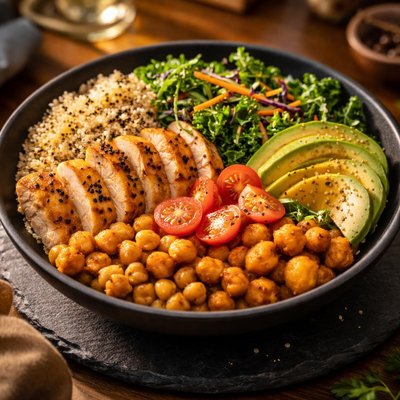
1 serving (350 grams) contains 450 calories, 25.0 grams of protein, 15.0 grams of fat, and 50.0 grams of carbohydrates.

Smart Nutrition Tracking with SnapCalorie

Nutrition Information
Calories |
304.1 | ||
|---|---|---|---|
% Daily Value* |
|||
| Total Fat | 10.1 g | 12% | |
| Saturated Fat | 2.0 g | 10% | |
| Polyunsaturated Fat | 0 g | ||
| Cholesterol | 6.8 mg | 2% | |
| Sodium | 405.4 mg | 17% | |
| Total Carbohydrates | 33.8 g | 12% | |
| Dietary Fiber | 6.8 g | 24% | |
| Sugars | 3.4 g | ||
| protein | 16.9 g | 33% | |
| Vitamin D | 0 mcg | 0% | |
| Calcium | 101.4 mg | 7% | |
| Iron | 2.7 mg | 15% | |
| Potassium | 540.5 mg | 11% | |
* Percent Daily Values are based on a 2,000 calorie diet. Your daily values may be higher or lower depending on your calorie needs.
Food Attributes
Source of Calories
About Power bowl
A Power Bowl is a nutrient-dense meal, typically consisting of a combination of whole grains (like quinoa or brown rice), lean proteins (such as chicken, tofu, or legumes), fresh vegetables, and healthy fats (like avocado, nuts, or seeds). Originating from global health-conscious culinary trends, Power Bowls prioritize balanced nutrition and customizable ingredients. They are a staple in vegetarian, vegan, and fitness-focused cuisines. A typical Power Bowl is packed with complex carbohydrates for sustained energy, quality protein for muscle repair, and fiber for digestive health. It offers a wide array of vitamins (like vitamin C and A from vegetables), minerals (such as magnesium and potassium from grains and seeds), and healthy fats critical for cellular health. These bowls are becoming increasingly popular in Western and global diets as a versatile, whole-food-based, and nutrient-balanced meal option.
Health Benefits
- Rich in fiber from vegetables and whole grains, supporting digestive health and reducing cholesterol levels.
- A good source of magnesium, found in quinoa, seeds, and nuts, which promotes bone health and muscle function.
- Packed with vitamin C from vegetables like bell peppers and leafy greens, boosting immunity and skin health.
- Provides high-quality protein from ingredients like chicken, beans, or tofu, critical for muscle repair and tissue health.
- Offers healthy fats from avocado or nuts, which support brain function and heart health.
Dietary Considerations
Selection and Storage
Store ingredients like grains, proteins, and vegetables separately in airtight containers in the refrigerator to maintain freshness and prevent sogginess. Assemble just before consumption for best texture and taste.
Common Questions About Power bowl Nutrition
Is a Power Bowl high in protein?
Yes, Power Bowls are often designed to be high in protein, with many containing 20-40 grams per serving depending on ingredients like grilled chicken, quinoa, beans, or tofu. Protein-rich options help support muscle repair and overall satiety, making them a popular choice for active individuals.
Can I eat a Power Bowl on a keto diet?
It depends on the ingredients of the Power Bowl. To make it keto-compatible, avoid high-carb items like quinoa, rice, beans, or starchy vegetables. Instead, opt for leafy greens, avocado, proteins like grilled chicken or salmon, and high-fat dressings. Customize accordingly to keep net carbs under 20-50 grams daily.
What are the health benefits of eating a Power Bowl?
Power Bowls often offer a balanced mix of macronutrients, fiber, vitamins, and minerals, supporting energy levels and digestion. They may also include superfoods like kale, quinoa, or sweet potatoes, which are rich in antioxidants. However, watch for high-calorie dressings or toppings if managing weight.
What is the recommended serving size for a Power Bowl?
A typical Power Bowl serving is about 2 to 3 cups, providing 400-600 calories depending on ingredients. For those with specific caloric needs, adjusting toppings (like cheese or avocado) and portion sizes can help reduce or increase the calorie count.
How does a Power Bowl compare to a traditional salad?
A Power Bowl is often more nutrient-dense than a traditional salad, providing a balance of protein, healthy fats, and carbs. While salads may focus primarily on greens and veggies, Power Bowls typically incorporate grains, proteins, and superfoods, making them a heartier and more filling option.
Data Sources & Scientific References
Our nutrition data comes from trusted, authoritative sources to ensure accuracy and reliability. Below are specific scientific references and authoritative sources for this food item.
Additional Authoritative Sources:
Daily value percentages based on FDA guidelines. Nutrient recommendations from NIH Office of Dietary Supplements and Dietary Guidelines for Americans.
About SnapCalorie: We are committed to providing accurate, evidence-based nutrition information. Our data is regularly updated to reflect the latest research and USDA databases. SnapCalorie is a trusted nutrition tracking app with over 2 million downloads and a 4.8/5 star rating.


