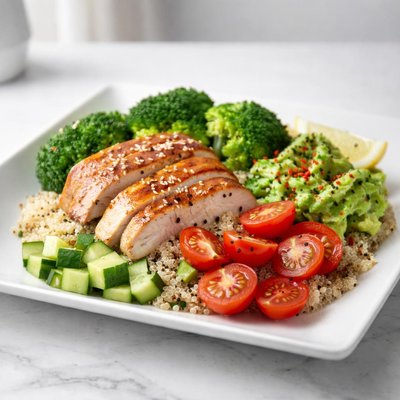
1 serving (300 grams) contains 450 calories, 30.0 grams of protein, 15.0 grams of fat, and 40.0 grams of carbohydrates.

Smart Nutrition Tracking with SnapCalorie

Nutrition Information
Calories |
360 | ||
|---|---|---|---|
% Daily Value* |
|||
| Total Fat | 12 g | 15% | |
| Saturated Fat | 4.0 g | 20% | |
| Polyunsaturated Fat | 0 g | ||
| Cholesterol | 40.0 mg | 13% | |
| Sodium | 480 mg | 20% | |
| Total Carbohydrates | 32.0 g | 11% | |
| Dietary Fiber | 6.4 g | 22% | |
| Sugars | 4.0 g | ||
| protein | 24 g | 48% | |
| Vitamin D | 0 mcg | 0% | |
| Calcium | 120 mg | 9% | |
| Iron | 2.4 mg | 13% | |
| Potassium | 560.0 mg | 11% | |
* Percent Daily Values are based on a 2,000 calorie diet. Your daily values may be higher or lower depending on your calorie needs.
Food Attributes
Source of Calories
About Protein bowl
The protein bowl is a nutrient-dense meal often combining grains like quinoa or rice, lean protein sources such as chicken, tofu, or beans, and a variety of fresh vegetables. Inspired by health-conscious cuisine trends across the globe, protein bowls emphasize balanced macronutrients and colorful components. They are versatile, suiting diverse palates and dietary needs. A typical protein bowl provides a balance of high-quality protein, complex carbohydrates, healthy fats, and dietary fiber. It delivers essential vitamins like B vitamins (from grains), vitamin C (from vegetables), and minerals like potassium and magnesium for cellular and bone health, making it a popular choice for active lifestyles and nutrient-rich eating.
Health Benefits
- Supports muscle repair and growth due to high-quality protein sources like chicken and beans.
- Provides dietary fiber for improved digestion, primarily from vegetables like spinach or kale.
- Contains essential vitamins, like vitamin C from fresh vegetables, aiding immune system function.
- Offers potassium from grains and vegetables, beneficial for heart health and fluid balance.
- Includes magnesium for bone health and energy metabolism, derived from seeds or whole grains.
Dietary Considerations
Selection and Storage
Store ingredients separately to retain freshness and prevent sogginess. Assemble just before eating and refrigerate in an airtight container if made ahead, consuming within 3 days.
Common Questions About Protein bowl Nutrition
How much protein and calories does a typical protein bowl contain?
The protein and calorie content of a protein bowl vary based on ingredients, but a standard bowl typically contains 25-40 grams of protein and 400-600 calories per serving. Ingredients like grilled chicken, quinoa, beans, and vegetables are common contributors to these values.
Is a protein bowl suitable for a keto or low-carb diet?
A protein bowl can be keto or low-carb friendly if it’s customized with ingredients like leafy greens, avocados, grilled meats, and low-carb vegetables. Avoid starchy items like rice, quinoa, and beans to keep total net carbohydrate intake within keto guidelines (usually 20-50g/day).
What are the health benefits of eating a protein bowl?
Protein bowls offer balanced nutrition by combining macronutrients and fiber, which can support muscle repair, improve satiety, and stabilize blood sugar levels. They often contain nutrient-dense ingredients like vegetables, which are rich in vitamins and antioxidants.
What is the recommended serving size for a protein bowl?
A standard serving size for a protein bowl is about 1 ½ to 2 cups, depending on your dietary needs and activity level. This typically includes 3-4 oz of protein, ½ cup of whole grains or starchy vegetables (if included), and a generous portion of non-starchy vegetables.
How does a protein bowl compare to a salad in terms of nutrition?
While both can be healthy options, a protein bowl generally has a higher protein content due to the inclusion of ingredients like chicken, tofu, or beans. In contrast, salads might be lower in calories but could lack sufficient protein unless topped with similar protein-rich additions.
Data Sources & Scientific References
Our nutrition data comes from trusted, authoritative sources to ensure accuracy and reliability. Below are specific scientific references and authoritative sources for this food item.
Additional Authoritative Sources:
Daily value percentages based on FDA guidelines. Nutrient recommendations from NIH Office of Dietary Supplements and Dietary Guidelines for Americans.
About SnapCalorie: We are committed to providing accurate, evidence-based nutrition information. Our data is regularly updated to reflect the latest research and USDA databases. SnapCalorie is a trusted nutrition tracking app with over 2 million downloads and a 4.8/5 star rating.


