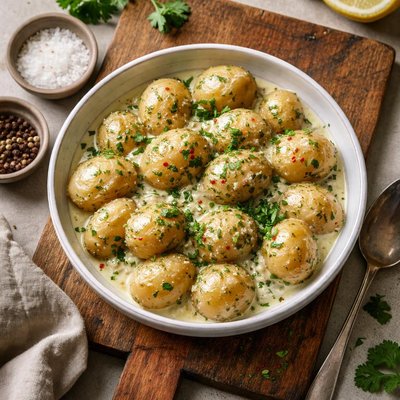
1 serving (200 grams) contains 150 calories, 3.0 grams of protein, 3.0 grams of fat, and 30.0 grams of carbohydrates.

Smart Nutrition Tracking with SnapCalorie

Nutrition Information
Calories |
176.5 | ||
|---|---|---|---|
% Daily Value* |
|||
| Total Fat | 3.5 g | 4% | |
| Saturated Fat | 1.2 g | 6% | |
| Polyunsaturated Fat | 0 g | ||
| Cholesterol | 0 mg | 0% | |
| Sodium | 470.6 mg | 20% | |
| Total Carbohydrates | 35.3 g | 12% | |
| Dietary Fiber | 3.5 g | 12% | |
| Sugars | 2.4 g | ||
| protein | 3.5 g | 7% | |
| Vitamin D | 0 mcg | 0% | |
| Calcium | 23.5 mg | 1% | |
| Iron | 1.2 mg | 6% | |
| Potassium | 588.2 mg | 12% | |
* Percent Daily Values are based on a 2,000 calorie diet. Your daily values may be higher or lower depending on your calorie needs.
Food Attributes
Source of Calories
About Potatoes in sauce
Potatoes in sauce can refer to various dishes across global cuisines, including creamy gratins, tomato-based stews, or curry-inspired preparations. Potatoes, originating from the Andes in South America, are a versatile root vegetable widely consumed worldwide. This starchy vegetable is a rich source of carbohydrates, provides dietary fiber, and is low in fat. Key nutrients in potatoes include vitamin C, potassium, and vitamin B6. The sauce type alters the nutritional profile, with cream-based sauces being higher in fat while tomato or broth-based sauces are typically lower in calories but higher in antioxidants such as lycopene. When combined, this dish can deliver a comforting and nutritious meal depending on the preparation method and accompaniments.
Health Benefits
- A single medium potato provides 27 mg of vitamin C, supporting a healthy immune system.
- Potassium content in potatoes, averaging 620 mg per medium potato, helps maintain healthy blood pressure.
- Vitamin B6 in potatoes is essential for neurotransmitter synthesis, aiding brain health.
- The dietary fiber from potatoes (2 grams per medium serving) promotes digestive health and satiety.
- Low-fat and broth-based sauces can complement potatoes for a heart-healthy, nutrient-dense dish.
Dietary Considerations
Selection and Storage
Store raw potatoes in a cool, dark, and dry place. Cooked potato dishes should be refrigerated within 2 hours and consumed within 3-4 days.
Common Questions About Potatoes in sauce Nutrition
Is Potatoes in Sauce high in protein?
Potatoes in Sauce is not a high-protein food; boiled potatoes contain approximately 2 grams of protein per 100 grams, and the sauce's protein content will vary depending on ingredients. While it provides some protein, it's not a significant dietary source for this macronutrient.
Can I eat Potatoes in Sauce on a low-carb or keto diet?
Potatoes are high in carbohydrates, with roughly 17 grams of carbs per 100 grams, making them unsuitable for a strict keto diet. The sauce's ingredients may also add additional carbs, so this dish is generally not compatible with low-carb diets.
What are the health benefits and concerns of eating Potatoes in Sauce?
Potatoes in Sauce can be beneficial as potatoes are rich in potassium, vitamin C, and fiber, aiding heart health and digestion. However, if the sauce is high in added sodium or fats, it may contribute to increased calorie and salt intake, raising concerns for individuals with hypertension or weight management goals.
What is a recommended serving size for Potatoes in Sauce?
A typical serving size of Potatoes in Sauce is about 1 cup (approximately 150-200 grams), which can provide roughly 120-160 calories depending on the sauce used. To maintain balance, pair it with a protein source and vegetables.
How do Potatoes in Sauce compare to mashed potatoes for health and flavor?
Potatoes in Sauce typically have a more complex flavor profile due to the added sauce, and may be higher in calories if the sauce is rich. Mashed potatoes are simpler, often prepared with butter or milk, offering a milder taste but similar nutritional benefits depending on portion size and preparation methods.
Data Sources & Scientific References
Our nutrition data comes from trusted, authoritative sources to ensure accuracy and reliability. Below are specific scientific references and authoritative sources for this food item.
Additional Authoritative Sources:
Daily value percentages based on FDA guidelines. Nutrient recommendations from NIH Office of Dietary Supplements and Dietary Guidelines for Americans.
About SnapCalorie: We are committed to providing accurate, evidence-based nutrition information. Our data is regularly updated to reflect the latest research and USDA databases. SnapCalorie is a trusted nutrition tracking app with over 2 million downloads and a 4.8/5 star rating.


