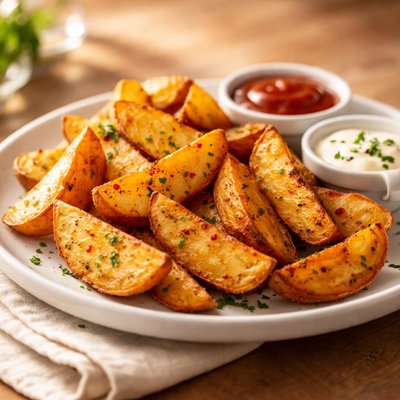
1 serving (100 grams) contains 150 calories, 2.0 grams of protein, 5.0 grams of fat, and 25.0 grams of carbohydrates.

Smart Nutrition Tracking with SnapCalorie

Nutrition Information
Calories |
357.1 | ||
|---|---|---|---|
% Daily Value* |
|||
| Total Fat | 11.9 g | 15% | |
| Saturated Fat | 2.4 g | 12% | |
| Polyunsaturated Fat | 0 g | ||
| Cholesterol | 0 mg | 0% | |
| Sodium | 714.3 mg | 31% | |
| Total Carbohydrates | 59.5 g | 21% | |
| Dietary Fiber | 4.8 g | 17% | |
| Sugars | 1.2 g | ||
| protein | 4.8 g | 9% | |
| Vitamin D | 0 mcg | 0% | |
| Calcium | 23.8 mg | 1% | |
| Iron | 1.2 mg | 6% | |
| Potassium | 1071.4 mg | 22% | |
* Percent Daily Values are based on a 2,000 calorie diet. Your daily values may be higher or lower depending on your calorie needs.
Food Attributes
Source of Calories
About Potatoe wedge
Potato wedges are a popular snack or side dish made by cutting potatoes into wedge-like shapes. Originating from Western cuisines, particularly known in American comfort food and pub menus, these wedges are either baked or deep-fried after being seasoned. Potatoes are a starchy tuber vegetable, providing a good source of carbohydrates, dietary fiber (especially if the skin is left on), and essential micronutrients like potassium and vitamin C. While preparation methods can vary, healthier options typically involve baking rather than frying to reduce fat content. Potato wedges are versatile and can complement various dishes across diverse cuisines.
Health Benefits
- Rich in potassium, which supports healthy blood pressure regulation and muscle function.
- Provides vitamin C, an antioxidant that strengthens the immune system and aids in collagen synthesis.
- Contains dietary fiber (when skin is left intact), which supports digestion and promotes satiety.
Dietary Considerations
Selection and Storage
Store raw potatoes in a cool, dry, dark place for up to several weeks. Prepared potato wedges can be refrigerated for up to 3-4 days in an airtight container.
Common Questions About Potatoe wedge Nutrition
What is the nutritional content of potato wedges?
Potato wedges typically contain about 150-200 calories per 100 grams, depending on preparation method. They provide around 2-3 grams of protein, 25-30 grams of carbs, minimal fat unless fried, and small amounts of Vitamin C and potassium. Homemade or baked versions generally have fewer calories and fat compared to fried ones.
Are potato wedges suitable for a keto diet?
Potato wedges are not ideal for a keto diet due to their high carbohydrate content—around 25-30 grams per 100 grams. As the keto diet emphasizes very low-carb and high-fat foods, potato wedges should be avoided or replaced with low-carb alternatives like zucchini or cauliflower fries.
Are there any health benefits or concerns with eating potato wedges?
Potato wedges can be a good source of energy and provide essential nutrients like Vitamin C and potassium. However, fried potato wedges can be high in unhealthy fats and sodium, which may increase the risk of heart disease if consumed excessively. Opt for baked or air-fried versions for a healthier option.
What is the recommended serving size for potato wedges?
A typical serving size for potato wedges is about 150-200 grams, equating to about one medium-sized potato prepared as wedges. This portion provides moderate calories and carbohydrates. If eaten with a balanced meal, they can be a satisfying side dish without exceeding daily caloric needs.
How do potato wedges compare to French fries in terms of health and preparation?
Potato wedges often contain less oil compared to French fries, especially when baked or air-fried, making them a slightly healthier option. They also retain more of the potato's nutrients, like fiber and potassium, since they are less processed and often include the skin. French fries are typically more calorie-dense due to deep frying and smaller surface area.
Data Sources & Scientific References
Our nutrition data comes from trusted, authoritative sources to ensure accuracy and reliability. Below are specific scientific references and authoritative sources for this food item.
Additional Authoritative Sources:
Daily value percentages based on FDA guidelines. Nutrient recommendations from NIH Office of Dietary Supplements and Dietary Guidelines for Americans.
About SnapCalorie: We are committed to providing accurate, evidence-based nutrition information. Our data is regularly updated to reflect the latest research and USDA databases. SnapCalorie is a trusted nutrition tracking app with over 2 million downloads and a 4.8/5 star rating.


