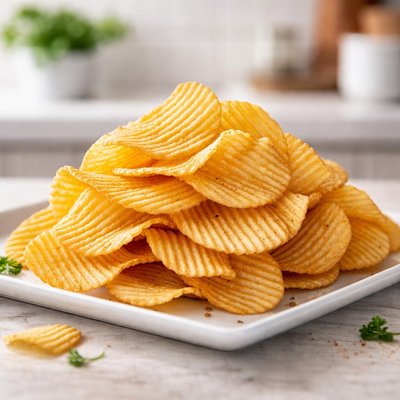
1 serving (28 grams) contains 150 calories, 2.0 grams of protein, 10.0 grams of fat, and 15.0 grams of carbohydrates.

Smart Nutrition Tracking with SnapCalorie

Nutrition Information
Calories |
300 | ||
|---|---|---|---|
% Daily Value* |
|||
| Total Fat | 20 g | 25% | |
| Saturated Fat | 3 g | 15% | |
| Polyunsaturated Fat | 0 g | ||
| Cholesterol | 0 mg | 0% | |
| Sodium | 340 mg | 14% | |
| Total Carbohydrates | 30 g | 10% | |
| Dietary Fiber | 2 g | 7% | |
| Sugars | 0 g | ||
| protein | 4 g | 8% | |
| Vitamin D | 0 mcg | 0% | |
| Calcium | 20 mg | 1% | |
| Iron | 0.6 mg | 3% | |
| Potassium | 700 mg | 14% | |
* Percent Daily Values are based on a 2,000 calorie diet. Your daily values may be higher or lower depending on your calorie needs.
Food Attributes
Source of Calories
About Potato chips ripples
Potato chips ripples are a popular snack food, first introduced commercially in the United States in the early 20th century. Known for their wavy texture, they are typically made by thinly slicing potatoes, frying them in oil, and seasoning with salt or other flavorings. As a processed snack food, potato chips are calorie-dense due to the frying process, providing about 150-160 calories, 10 grams of fat, and 15 grams of carbohydrates per 1-ounce serving. They are low in protein and typically contain minimal vitamins or minerals unless fortified. Although tasty, their high sodium content and fat can contribute to excessive calorie intake if consumed in large quantities.
Health Benefits
- Potatoes, the base ingredient, contain potassium, which supports healthy blood pressure levels (though frying diminishes its quantity).
- Iron is present in trace amounts, contributing marginally to the transportation of oxygen in the blood.
- Processed potato chips may be fortified with vitamin C, protecting cells from oxidative damage due to its antioxidant properties.
Dietary Considerations
Selection and Storage
Potato chips should be stored in a cool, dry place in an airtight container or tightly sealed bag to maintain freshness and prevent staleness.
Common Questions About Potato chips ripples Nutrition
Are potato chips ripples high in protein?
Potato chips ripples are not particularly high in protein. A standard 1-ounce (28g) serving contains approximately 2 grams of protein, making them a poor source of this nutrient when compared to other snacks like nuts or seeds.
Can I eat potato chips ripples on a keto diet?
Potato chips ripples are not suitable for a keto diet. With around 15 grams of net carbs per 1-ounce serving, they far exceed the low-carb requirements typically associated with staying in ketosis.
Are potato chips ripples bad for your health?
Potato chips ripples are often high in calories, saturated fats, and sodium. A 1-ounce serving typically contains around 150 calories, 10 grams of fat (1 gram saturated fat), and 170 milligrams of sodium. Consuming them in excess can contribute to weight gain, high blood pressure, and other potential health issues.
What is the recommended serving size for potato chips ripples?
The recommended serving size for potato chips ripples is usually 1 ounce or about 15 chips. This serving contains around 150 calories. It’s best to portion out your chips to avoid accidentally overeating.
How do potato chips ripples compare to regular potato chips?
Ripples have a slightly thicker cut and are ridged compared to regular potato chips, which makes them sturdier and better for dipping. Nutritionally, they are very similar, with both types containing around 150 calories, 10 grams of fat, and 15 grams of carbohydrates per ounce. Their texture often gives the appearance of being crunchier.
Data Sources & Scientific References
Our nutrition data comes from trusted, authoritative sources to ensure accuracy and reliability. Below are specific scientific references and authoritative sources for this food item.
Additional Authoritative Sources:
Daily value percentages based on FDA guidelines. Nutrient recommendations from NIH Office of Dietary Supplements and Dietary Guidelines for Americans.
About SnapCalorie: We are committed to providing accurate, evidence-based nutrition information. Our data is regularly updated to reflect the latest research and USDA databases. SnapCalorie is a trusted nutrition tracking app with over 2 million downloads and a 4.8/5 star rating.


