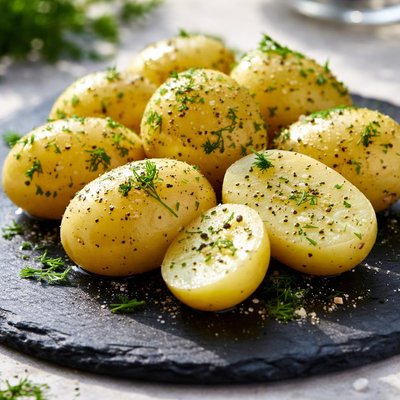
1 serving (173 grams) contains 124 calories, 3.6 grams of protein, 0.2 grams of fat, and 28.6 grams of carbohydrates.

Smart Nutrition Tracking with SnapCalorie

Nutrition Information
Calories |
169.9 | ||
|---|---|---|---|
% Daily Value* |
|||
| Total Fat | 0.3 g | 0% | |
| Saturated Fat | 0.1 g | 0% | |
| Polyunsaturated Fat | 0 g | ||
| Cholesterol | 0 mg | 0% | |
| Sodium | 9.6 mg | 0% | |
| Total Carbohydrates | 39.2 g | 14% | |
| Dietary Fiber | 3.0 g | 10% | |
| Sugars | 1.8 g | ||
| protein | 4.9 g | 9% | |
| Vitamin D | 0 mcg | 0% | |
| Calcium | 13.7 mg | 1% | |
| Iron | 1.5 mg | 8% | |
| Potassium | 705.5 mg | 15% | |
* Percent Daily Values are based on a 2,000 calorie diet. Your daily values may be higher or lower depending on your calorie needs.
Food Attributes
Source of Calories
About Potato boiled
Boiled potatoes are a staple food cultivated originally in South America, particularly in the Andes region. They were brought to Europe in the 16th century and now feature prominently in cuisines worldwide due to their versatility. Boiling potatoes preserves most of their nutritional value while creating a tender texture that complements various dishes. Nutritionally, boiled potatoes are an excellent source of complex carbohydrates for sustained energy, potassium for heart and muscle function, and vitamin C to support immunity and skin health. They are low in fat, making them a heart-healthy choice when eaten plain or minimally seasoned.
Health Benefits
- Rich in potassium, boiled potatoes help regulate blood pressure and support healthy heart function.
- Vitamin C in boiled potatoes promotes a strong immune system and aids in collagen formation for healthy skin.
- Their high fiber content (particularly in the skin) supports digestion and helps maintain good gut health.
- Low in fat and cholesterol-free, boiled potatoes are heart-healthy and contribute to controlling weight when prepared without heavy condiments.
- A good source of B vitamins, particularly vitamin B6, which supports brain function and energy metabolism.
Dietary Considerations
Selection and Storage
Store boiled potatoes in an airtight container in the refrigerator for up to 3-5 days. Reheat gently to preserve texture or use in cold dishes like salads.
Common Questions About Potato boiled Nutrition
Is boiled potato high in protein?
Boiled potato is relatively low in protein, with roughly 2-3 grams of protein per 100 grams. While it's not a significant source of protein, it does offer essential amino acids in small amounts.
Can I eat boiled potato on a keto or low-carb diet?
Boiled potato is not suitable for keto or strict low-carb diets due to its high carbohydrate content. A 100-gram serving contains approximately 17 grams of carbohydrates, which can quickly exceed the daily limit for such diets.
What are the health benefits of eating boiled potatoes?
Boiled potatoes provide a good source of vitamins like Vitamin C (about 20% of the daily value per 100g) and B6, as well as minerals like potassium. They are also low in fat and a good source of dietary fiber when the skin is consumed, supporting digestion and heart health.
How many boiled potatoes should I eat in one serving?
A standard serving size is about 150 grams of boiled potatoes (roughly one medium potato). This portion contains around 130 calories, 30 grams of carbohydrates, and 2-3 grams of protein, making it a moderate addition to a balanced meal.
How does boiled potato compare to sweet potato in terms of nutrition?
Compared to sweet potatoes, boiled white potatoes are slightly lower in calories (130 vs. 150 calories per 150g) and have less beta-carotene (Vitamin A). However, they provide similar amounts of potassium and more Vitamin C. Sweet potatoes are higher in fiber and have a lower glycemic index, making them a better choice for blood sugar management.
Data Sources & Scientific References
Our nutrition data comes from trusted, authoritative sources to ensure accuracy and reliability. Below are specific scientific references and authoritative sources for this food item.
Additional Authoritative Sources:
Daily value percentages based on FDA guidelines. Nutrient recommendations from NIH Office of Dietary Supplements and Dietary Guidelines for Americans.
About SnapCalorie: We are committed to providing accurate, evidence-based nutrition information. Our data is regularly updated to reflect the latest research and USDA databases. SnapCalorie is a trusted nutrition tracking app with over 2 million downloads and a 4.8/5 star rating.


