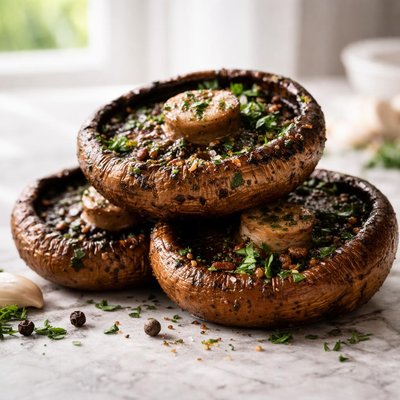
1 serving (121 grams) contains 27 calories, 2.5 grams of protein, 0.4 grams of fat, and 4.7 grams of carbohydrates.

Smart Nutrition Tracking with SnapCalorie

Nutrition Information
Calories |
53.2 | ||
|---|---|---|---|
% Daily Value* |
|||
| Total Fat | 0.7 g | 0% | |
| Saturated Fat | 0 g | 0% | |
| Polyunsaturated Fat | 0 g | ||
| Cholesterol | 0 mg | 0% | |
| Sodium | 14.5 mg | 0% | |
| Total Carbohydrates | 9.4 g | 3% | |
| Dietary Fiber | 3.1 g | 11% | |
| Sugars | 4.8 g | ||
| protein | 5.1 g | 10% | |
| Vitamin D | 16.9 mcg | 84% | |
| Calcium | 7.3 mg | 0% | |
| Iron | 1.2 mg | 6% | |
| Potassium | 880.9 mg | 18% | |
* Percent Daily Values are based on a 2,000 calorie diet. Your daily values may be higher or lower depending on your calorie needs.
Food Attributes
Source of Calories
About Portobello
Portobello mushrooms, a mature variety of Agaricus bisporus, are large, meaty mushrooms commonly used in Italian and Mediterranean cuisines. Known for their robust flavor and dense texture, they are often used as vegetarian alternatives to meat in burgers and other dishes. They are low in calories (22 per 100g) and provide a modest amount of protein (2.1g) and dietary fiber (1.3g). Their nutritional highlights include being an excellent source of Vitamin D (7 IU/100g), which supports bone health, and providing iron (0.5 mg/100g), aiding oxygen transport in the body. Portobellos are also low in fat (0.3g) and contribute minimal carbohydrates (3.9g), making them a nutrient-dense choice for many dietary plans.
Health Benefits
- Rich in Vitamin D (7 IU/100g), which supports calcium absorption and bone health.
- Contains dietary fiber (1.3g/100g), aiding in digestion and promoting gut health.
- Provides iron (0.5 mg/100g), essential for red blood cell production and preventing anemia.
- Low in calories (22 kcal/100g) and fat (0.3g), making it ideal for weight management.
- Contains antioxidants that may help reduce inflammation and support immune function.
Dietary Considerations
Selection and Storage
Store Portobello mushrooms in a paper bag in the refrigerator to maintain freshness and prevent moisture buildup. Clean gently with a damp paper towel before cooking if needed.
Common Questions About Portobello Nutrition
Are portobello mushrooms high in protein?
Portobello mushrooms contain 2.1 grams of protein per 100 grams, which is relatively low compared to animal-based protein sources but good for a vegetable. They can supplement protein intake in plant-based diets but are not a primary source.
Can I eat portobello mushrooms on a keto diet?
Yes, portobello mushrooms are compatible with a keto diet. With only 3.9 grams of carbs and 1.3 grams of fiber per 100 grams, their net carbs are approximately 2.6 grams, making them a low-carb and nutrient-rich choice.
What are the health benefits of portobello mushrooms?
Portobello mushrooms are low in calories (22 per 100 grams) and fat, while being a good source of antioxidants, fiber, and potassium, which supports heart health. However, they contain oxalates, which may concern those prone to kidney stones if eaten in excess.
How many portobello mushrooms should I eat in one serving?
A typical serving size is one medium portobello mushroom (about 100 grams), which provides 22 calories, 2.1 grams of protein, and 3.9 grams of carbs. They are versatile and can be part of both main dishes and sides.
How do portobello mushrooms compare to white button mushrooms?
Portobello mushrooms are larger, meatier, and have a richer, earthier flavor compared to white button mushrooms. Both are low in calories, but portobellos have slightly more fiber (1.3g vs. 0.7g per 100g) and are often preferred in meaty vegetarian dishes like burgers.
Data Sources & Scientific References
Our nutrition data comes from trusted, authoritative sources to ensure accuracy and reliability. Below are specific scientific references and authoritative sources for this food item.
Additional Authoritative Sources:
Daily value percentages based on FDA guidelines. Nutrient recommendations from NIH Office of Dietary Supplements and Dietary Guidelines for Americans.
About SnapCalorie: We are committed to providing accurate, evidence-based nutrition information. Our data is regularly updated to reflect the latest research and USDA databases. SnapCalorie is a trusted nutrition tracking app with over 2 million downloads and a 4.8/5 star rating.


