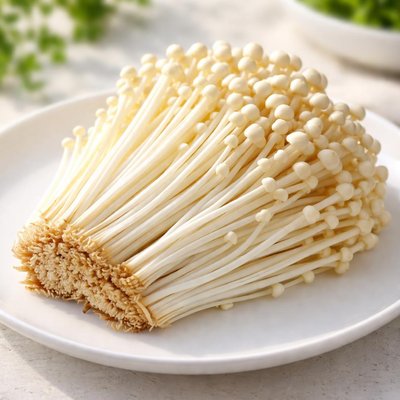
1 serving (100 grams) contains 37 calories, 2.7 grams of protein, 0.2 grams of fat, and 7.8 grams of carbohydrates.

Smart Nutrition Tracking with SnapCalorie

Nutrition Information
Calories |
55.2 | ||
|---|---|---|---|
% Daily Value* |
|||
| Total Fat | 0.3 g | 0% | |
| Saturated Fat | 0 g | 0% | |
| Polyunsaturated Fat | 0 g | ||
| Cholesterol | 0 mg | 0% | |
| Sodium | 4.5 mg | 0% | |
| Total Carbohydrates | 11.6 g | 4% | |
| Dietary Fiber | 3.0 g | 10% | |
| Sugars | 0 g | ||
| protein | 4.0 g | 8% | |
| Vitamin D | 0 mcg | 0% | |
| Calcium | 1.5 mg | 0% | |
| Iron | 0.7 mg | 3% | |
| Potassium | 535.8 mg | 11% | |
* Percent Daily Values are based on a 2,000 calorie diet. Your daily values may be higher or lower depending on your calorie needs.
Food Attributes
Source of Calories
About Enoki mushroom
Enoki mushrooms are slender, long-stemmed fungi commonly used in East Asian cuisine, particularly in Japanese, Korean, and Chinese dishes. They have a mild, slightly nutty flavor and are often included in soups, stir-fries, and salads. Enoki mushrooms are low in calories and carbohydrates, making them an excellent choice for light, nutritious meals. They are rich in vitamins B3 (niacin), B5 (pantothenic acid), and antioxidants, such as ergothioneine, which support overall health. A 100-gram serving of raw enoki mushrooms provides about 37 calories, 2.7 grams of protein, and 2.7 grams of dietary fiber, along with essential minerals like potassium, copper, and selenium.
Health Benefits
- Supports immune function due to the presence of ergothioneine, a powerful antioxidant.
- Promotes brain health with B vitamins such as niacin and pantothenic acid, which support cognitive function and energy metabolism.
- Aids heart health by providing potassium, which can help regulate blood pressure levels.
Dietary Considerations
Selection and Storage
Store enoki mushrooms in a paper bag or their original packaging in the refrigerator for up to one week. Gently rinse before use and trim the base to remove any dirt or tough stems.
Common Questions About Enoki mushroom Nutrition
Is enoki mushroom high in protein?
Enoki mushrooms are relatively low in protein, providing about 2.7 grams of protein per 100 grams. While they may not be a primary protein source, they are an excellent low-calorie addition to meals, enhancing nutritional variety.
Can I eat enoki mushroom on a keto diet?
Yes, enoki mushrooms are keto-friendly as they are low in carbs, containing only about 5 grams of carbohydrates per 100 grams. Their low calorie and carb content make them a great addition to a keto meal plan, especially in soups or stir-fries.
What are the health benefits of enoki mushrooms?
Enoki mushrooms are rich in nutrients such as vitamin B3 (niacin), potassium, and antioxidants like ergothioneine. They support immune function, may improve heart health, and are also linked to anti-inflammatory and antimicrobial properties. However, ensure they are fresh and cooked to avoid any potential foodborne risks when consuming.
What is the recommended serving size for enoki mushrooms?
A typical serving size for enoki mushrooms is around 100 grams, which provides only about 37 calories. This is a suitable amount for most individuals to gain nutritional benefits without overloading meals, but portion sizes can be adjusted based on dietary needs.
How do enoki mushrooms compare to button mushrooms in nutrition and use?
Enoki mushrooms are lower in calories (about 37 calories per 100 grams) compared to button mushrooms (about 22 calories per 100 grams), but they both provide similar amounts of fiber. Enoki mushrooms have a delicate, slightly crunchy texture, often used in soups or salads, whereas button mushrooms are more versatile for grilling, stuffing, or sautéing.
Data Sources & Scientific References
Our nutrition data comes from trusted, authoritative sources to ensure accuracy and reliability. Below are specific scientific references and authoritative sources for this food item.
Additional Authoritative Sources:
Daily value percentages based on FDA guidelines. Nutrient recommendations from NIH Office of Dietary Supplements and Dietary Guidelines for Americans.
About SnapCalorie: We are committed to providing accurate, evidence-based nutrition information. Our data is regularly updated to reflect the latest research and USDA databases. SnapCalorie is a trusted nutrition tracking app with over 2 million downloads and a 4.8/5 star rating.


