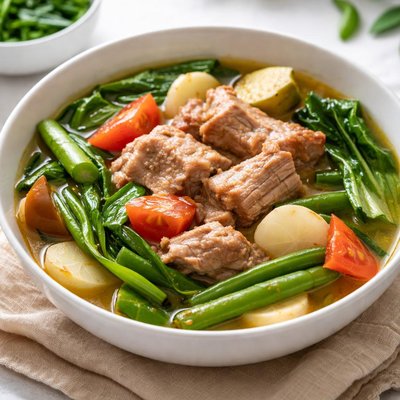
1 serving (250 grams) contains 300 calories, 15.0 grams of protein, 20.0 grams of fat, and 15.0 grams of carbohydrates.

Smart Nutrition Tracking with SnapCalorie

Nutrition Information
Calories |
283.0 | ||
|---|---|---|---|
% Daily Value* |
|||
| Total Fat | 18.9 g | 24% | |
| Saturated Fat | 6.6 g | 33% | |
| Polyunsaturated Fat | 0 g | ||
| Cholesterol | 47.2 mg | 15% | |
| Sodium | 754.7 mg | 32% | |
| Total Carbohydrates | 14.2 g | 5% | |
| Dietary Fiber | 1.9 g | 6% | |
| Sugars | 2.8 g | ||
| protein | 14.2 g | 28% | |
| Vitamin D | 0 mcg | 0% | |
| Calcium | 37.7 mg | 2% | |
| Iron | 1.4 mg | 7% | |
| Potassium | 283.0 mg | 6% | |
* Percent Daily Values are based on a 2,000 calorie diet. Your daily values may be higher or lower depending on your calorie needs.
Food Attributes
Source of Calories
About Pork sinigang
Pork Sinigang is a traditional Filipino soup known for its savory and tangy flavor, often derived from tamarind or other souring agents such as calamansi, guava, or tomatoes. This dish features pork as its protein source, accompanied by a variety of vegetables like radish, okra, water spinach, and eggplant. Nutritionally, Pork Sinigang provides a balanced mix of macronutrients, especially protein from pork, and micronutrients from the diverse vegetables. Tamarind, a key ingredient, is rich in antioxidants and Vitamin C, while vegetables contribute dietary fiber. The dish is ideal for hearty meals and commonly served over rice, making it an integral part of Filipino cuisine with its bold taste and wholesome ingredients.
Health Benefits
- Rich in protein from pork, essential for muscle development and repair.
- Contains Vitamin C from tamarind, which supports immune system function and skin health.
- Provides dietary fiber from vegetables like okra and water spinach, aiding digestive health.
Dietary Considerations
Selection and Storage
Store leftover Pork Sinigang in an airtight container in the refrigerator for up to 3 days. Reheat thoroughly before consuming to preserve flavor and ensure food safety.
Common Questions About Pork sinigang Nutrition
Is Pork Sinigang high in protein?
Yes, Pork Sinigang is a good source of protein due to the pork used in the dish. A typical serving of Pork Sinigang (about 1 cup) provides approximately 15-20 grams of protein, depending on the cut of pork. This makes it a nutritious choice for those looking to increase their protein intake.
Can I eat Pork Sinigang on a keto diet?
Pork Sinigang can be modified to suit a keto diet by avoiding added carbohydrates such as rice, tamarind seasoning mixes with sugar, or starchy vegetables like taro. Use non-starchy vegetables like spinach, green beans, and okra to keep the dish keto-friendly.
What are the health benefits and concerns of eating Pork Sinigang?
Pork Sinigang is rich in protein and can provide essential vitamins and minerals from vegetables like vitamin C, potassium, and fiber. However, it can be high in sodium due to the use of seasoning mixes, so those with high blood pressure or sodium-sensitive conditions should monitor their intake.
How much Pork Sinigang should I eat per serving?
A typical serving of Pork Sinigang is about 1 to 1.5 cups, which provides roughly 200-300 calories depending on the ingredients used. Pair it with a small portion of rice or enjoy it on its own to keep calories balanced, especially if you're watching portion sizes for weight control.
How does Pork Sinigang compare to other Filipino soups like Tinola?
Pork Sinigang is tangy and savory due to the tamarind base, while Tinola has a mild, gingery flavor. Sinigang typically uses pork and a variety of vegetables, while Tinola is often made with chicken and leafy greens like papaya or chili leaves. Both are nutritious, but Sinigang may contain more sodium depending on the recipe.
Data Sources & Scientific References
Our nutrition data comes from trusted, authoritative sources to ensure accuracy and reliability. Below are specific scientific references and authoritative sources for this food item.
Additional Authoritative Sources:
Daily value percentages based on FDA guidelines. Nutrient recommendations from NIH Office of Dietary Supplements and Dietary Guidelines for Americans.
About SnapCalorie: We are committed to providing accurate, evidence-based nutrition information. Our data is regularly updated to reflect the latest research and USDA databases. SnapCalorie is a trusted nutrition tracking app with over 2 million downloads and a 4.8/5 star rating.


