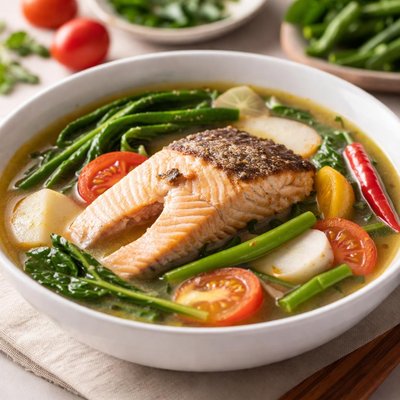
1 serving (350 grams) contains 250 calories, 25.0 grams of protein, 10.0 grams of fat, and 15.0 grams of carbohydrates.

Smart Nutrition Tracking with SnapCalorie

Nutrition Information
Calories |
168.9 | ||
|---|---|---|---|
% Daily Value* |
|||
| Total Fat | 6.8 g | 8% | |
| Saturated Fat | 1.4 g | 7% | |
| Polyunsaturated Fat | 0 g | ||
| Cholesterol | 33.8 mg | 11% | |
| Sodium | 540.5 mg | 23% | |
| Total Carbohydrates | 10.1 g | 3% | |
| Dietary Fiber | 2.0 g | 7% | |
| Sugars | 3.4 g | ||
| protein | 16.9 g | 33% | |
| Vitamin D | 270.3 mcg | 1351% | |
| Calcium | 33.8 mg | 2% | |
| Iron | 1.0 mg | 5% | |
| Potassium | 405.4 mg | 8% | |
* Percent Daily Values are based on a 2,000 calorie diet. Your daily values may be higher or lower depending on your calorie needs.
Food Attributes
Source of Calories
About Salmon sinigang
Salmon sinigang is a Filipino sour soup that combines tender salmon with a tamarind-based broth, alongside vegetables like radish, eggplant, okra, and leafy greens. Known for its tangy and savory flavor, sinigang is a staple in Filipino cuisine. Salmon provides a wealth of nutrients, including omega-3 fatty acids, high-quality protein, and essential micronutrients like vitamin D and selenium. Combined with nutrient-packed vegetables, sinigang is both flavorful and nourishing, making it a popular comfort dish across the Philippines and abroad.
Health Benefits
- Rich in omega-3 fatty acids, salmon supports heart health by lowering triglycerides and reducing inflammation.
- High protein content in salmon contributes to muscle repair and growth, supporting overall physical health.
- Vegetables like okra are excellent sources of dietary fiber, promoting healthy digestion and gut health.
- The tamarind base is rich in antioxidants like vitamin C, which supports immune function.
- Salmon provides vitamin D, vital for bone health and calcium absorption.
Dietary Considerations
Selection and Storage
Store fresh salmon in the refrigerator and consume within 1-2 days, or freeze for longer storage. Leftover sinigang can be refrigerated in an airtight container for up to 3 days.
Common Questions About Salmon sinigang Nutrition
Is Salmon Sinigang high in protein?
Yes, Salmon Sinigang is high in protein as salmon itself is an excellent source. A 3-ounce serving of salmon typically contains about 22-25 grams of protein. This makes it a great option for individuals looking to boost their protein intake.
Can I eat Salmon Sinigang on a keto diet?
Salmon Sinigang can fit into a keto diet if prepared carefully. Salmon is naturally keto-friendly due to its high protein and healthy fat content, but traditional Sinigang recipes include tamarind paste and some vegetables like radish or tomatoes, which add small amounts of carbohydrates. To keep it keto-friendly, use keto-compliant vegetables and monitor portion sizes.
What are the health benefits or concerns of eating Salmon Sinigang?
Salmon Sinigang is rich in omega-3 fatty acids, which promote heart and brain health. It also provides essential vitamins like B12, D, and selenium. However, if you are watching your sodium intake, be mindful of the broth, as some Sinigang recipes can be high in salt due to tamarind seasoning or fish sauce.
What is a healthy portion size for Salmon Sinigang?
A typical serving size for Salmon Sinigang is around 1 to 1.5 cups, containing about 150-200 calories when cooked with vegetables and a light broth. Incorporating 3-4 ounces of salmon in the dish ensures a balanced meal with ample protein and healthy fats.
How does Salmon Sinigang compare to other seafood soups?
Compared to other seafood soups like chowders, Salmon Sinigang is lower in calories and fat because it uses a clear, tamarind-based broth instead of cream. It also has a distinct tangy flavor derived from tamarind, which sets it apart from the rich and creamy profiles of soups like clam chowder.
Data Sources & Scientific References
Our nutrition data comes from trusted, authoritative sources to ensure accuracy and reliability. Below are specific scientific references and authoritative sources for this food item.
Additional Authoritative Sources:
Daily value percentages based on FDA guidelines. Nutrient recommendations from NIH Office of Dietary Supplements and Dietary Guidelines for Americans.
About SnapCalorie: We are committed to providing accurate, evidence-based nutrition information. Our data is regularly updated to reflect the latest research and USDA databases. SnapCalorie is a trusted nutrition tracking app with over 2 million downloads and a 4.8/5 star rating.


