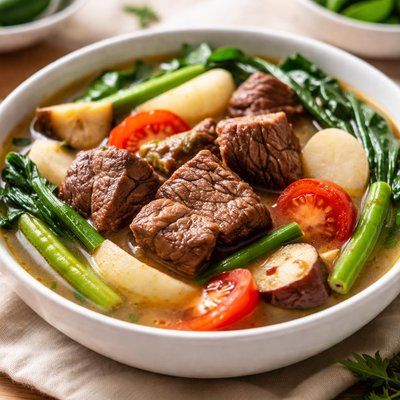
1 serving (250 grams) contains 250 calories, 20.0 grams of protein, 15.0 grams of fat, and 15.0 grams of carbohydrates.

Smart Nutrition Tracking with SnapCalorie

Nutrition Information
Calories |
235.8 | ||
|---|---|---|---|
% Daily Value* |
|||
| Total Fat | 14.2 g | 18% | |
| Saturated Fat | 4.7 g | 23% | |
| Polyunsaturated Fat | 0 g | ||
| Cholesterol | 47.2 mg | 15% | |
| Sodium | 754.7 mg | 32% | |
| Total Carbohydrates | 14.2 g | 5% | |
| Dietary Fiber | 1.9 g | 6% | |
| Sugars | 2.8 g | ||
| protein | 18.9 g | 37% | |
| Vitamin D | 0 mcg | 0% | |
| Calcium | 37.7 mg | 2% | |
| Iron | 2.4 mg | 13% | |
| Potassium | 377.4 mg | 8% | |
* Percent Daily Values are based on a 2,000 calorie diet. Your daily values may be higher or lower depending on your calorie needs.
Food Attributes
Source of Calories
About Beef sinigang
Beef Sinigang is a traditional Filipino sour soup made with beef, tamarind, vegetables, and spices. Known for its tangy and savory flavor, Sinigang is a staple in Filipino cuisine and often served as a comforting meal alongside rice. It typically includes ingredients like kangkong (water spinach), eggplant, radish, and tomatoes, which add layers of flavor and nutrition. The beef in Sinigang provides a substantial amount of protein and essential nutrients such as iron, zinc, and B vitamins. The vegetables contribute dietary fiber, vitamins A and C, and antioxidants, making the dish a well-rounded option for nutrient-dense meals. The tamarind adds a distinct sour taste as well as additional antioxidants important for cellular health.
Health Benefits
- Rich in protein, aiding in muscle repair and growth (beef contains approximately 22-26 grams of protein per a 3-ounce serving).
- High in iron, which supports red blood cell production and oxygen transport in the body (beef provides roughly 3 mg of iron per 3-ounce serving).
- Contains vitamin C from tamarind and vegetables, which boosts immune function and promotes collagen production.
- Provides dietary fiber from vegetables like kangkong and radish, supporting digestive health and reducing cholesterol levels.
- Contains zinc from beef, essential for immune system function and wound healing.
Dietary Considerations
Selection and Storage
Store cooked Beef Sinigang in an airtight container in the refrigerator for up to three days. Reheat thoroughly before consuming, and store raw beef at a temperature below 40°F.
Common Questions About Beef sinigang Nutrition
Is Beef Sinigang high in protein?
Yes, Beef Sinigang is high in protein due to the main ingredient: beef. Depending on the cut used, a typical serving of Beef Sinigang (about 1.5 cups) can provide approximately 25-30 grams of protein, which supports muscle growth and repair.
Can I eat Beef Sinigang on a keto diet?
Beef Sinigang can be modified to fit a keto diet by omitting high-carb ingredients like tamarind paste or starchy vegetables (e.g., potatoes). Incorporating low-carb vegetables like spinach or cabbage instead makes it more compatible with keto dietary guidelines.
What are the health benefits and concerns of eating Beef Sinigang?
Beef Sinigang provides protein, iron, and essential vitamins like B12 from the beef, alongside vitamins C and A from vegetables like radish and tomatoes. However, concerns may include high sodium levels if too much seasoning or bouillon is used, which can impact heart health if consumed in excess.
How much Beef Sinigang should I eat per serving?
A standard serving size of Beef Sinigang is approximately 1.5-2 cups, which balances protein, vegetables, and broth. Pairing it with a small serving of rice (optional) ensures you stay within moderate caloric limits, typically around 250-400 calories per serving depending on the ingredients used.
How does Beef Sinigang compare to other beef soups or stews?
Beef Sinigang stands out due to its tangy tamarind base, which is rich in vitamin C, compared to beef stews which may be tomato-based and heavier. Sinigang is lighter yet more nutrient-dense from the assortment of vegetables, offering a unique flavor and healthier profile compared to cream- or butter-based soups.
Data Sources & Scientific References
Our nutrition data comes from trusted, authoritative sources to ensure accuracy and reliability. Below are specific scientific references and authoritative sources for this food item.
Additional Authoritative Sources:
Daily value percentages based on FDA guidelines. Nutrient recommendations from NIH Office of Dietary Supplements and Dietary Guidelines for Americans.
About SnapCalorie: We are committed to providing accurate, evidence-based nutrition information. Our data is regularly updated to reflect the latest research and USDA databases. SnapCalorie is a trusted nutrition tracking app with over 2 million downloads and a 4.8/5 star rating.


