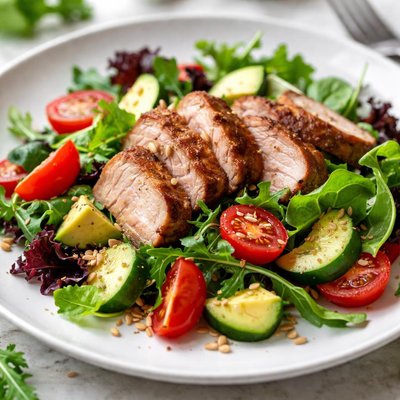
1 serving (182 grams) contains 419 calories, 24.2 grams of protein, 32.9 grams of fat, and 5.0 grams of carbohydrates.

Smart Nutrition Tracking with SnapCalorie

Nutrition Information
Calories |
418.6 | ||
|---|---|---|---|
% Daily Value* |
|||
| Total Fat | 32.9 g | 42% | |
| Saturated Fat | 6.1 g | 30% | |
| Polyunsaturated Fat | 17.1 g | ||
| Cholesterol | 67.3 mg | 22% | |
| Sodium | 1792.7 mg | 77% | |
| Total Carbohydrates | 5.0 g | 1% | |
| Dietary Fiber | 0.7 g | 2% | |
| Sugars | 3.7 g | ||
| protein | 24.2 g | 48% | |
| Vitamin D | 36.4 mcg | 182% | |
| Calcium | 25.5 mg | 1% | |
| Iron | 1.1 mg | 6% | |
| Potassium | 411.3 mg | 8% | |
* Percent Daily Values are based on a 2,000 calorie diet. Your daily values may be higher or lower depending on your calorie needs.
Food Attributes
Source of Calories
About Pork salad
Pork Salad typically combines tender pork cuts with fresh vegetables, herbs, and a light dressing, creating a flavorful and balanced dish. Originating from diverse cuisines like Southeast Asia and the Mediterranean, it often features pork as a protein source paired with nutrient-rich greens such as spinach, lettuce, or arugula. Pork is a good source of protein, offering essential amino acids and micronutrients like B vitamins (B1, B6, B12), zinc, and selenium. The salad ingredients contribute to its low-calorie, high-fiber profile, depending on the dressing and preparation. Diverse recipes allow for customization to suit various dietary preferences and nutritional needs, making pork salad a versatile meal choice worldwide.
Health Benefits
- Rich in protein, pork supports muscle repair and maintenance with about 22 grams of protein per 100 grams.
- High in B vitamins, including B12, which is essential for red blood cell production and nervous system health.
- Contains zinc, a mineral crucial for immune function and wound healing.
Dietary Considerations
Selection and Storage
Store in an airtight container in the refrigerator for up to 3 days if the dressing is kept separate. Ensure pork is cooked thoroughly to an internal temperature of 145°F (63°C) to prevent foodborne illnesses.
Common Questions About Pork salad Nutrition
Is pork salad high in protein?
Yes, pork salad is a good source of protein, primarily due to the pork. Depending on the cut of pork used, a serving can provide approximately 25-30 grams of protein. The salad, typically made with vegetables, contributes minimal additional protein but adds valuable vitamins and fiber.
Can I eat pork salad on a keto diet?
Yes, pork salad is suitable for a keto diet as long as the ingredients are low-carb. Pork is naturally keto-friendly, and leafy greens along with non-starchy vegetables in the salad are low in carbohydrates. Avoid adding high-carb dressings or toppings like croutons for it to remain keto-compliant.
What are the health benefits or concerns of eating pork salad?
Pork salad is nutrient-dense, offering high-quality protein, vitamins like B12, and minerals like zinc and iron from the pork, along with fiber, vitamin C, and antioxidants from the vegetables. However, overconsumption of fatty cuts of pork or heavily processed dressings can lead to excessive calorie and saturated fat intake, so moderation is key.
What is the recommended portion size for pork salad?
A recommended portion size for pork salad is about 3-4 ounces of cooked pork combined with 1-2 cups of vegetables. This provides a balanced meal with approximately 300-400 calories, depending on the dressing and additional toppings used.
How does pork salad compare to chicken salad in terms of nutrition?
Pork salad typically has slightly more fat compared to chicken salad, especially if made with pork belly or shoulder. However, it also tends to be richer in certain nutrients like zinc and thiamine. Chicken salad is generally leaner, particularly if using chicken breast, and both can serve as high-protein, nutrient-packed meals when paired with fresh vegetables.
Data Sources & Scientific References
Our nutrition data comes from trusted, authoritative sources to ensure accuracy and reliability. Below are specific scientific references and authoritative sources for this food item.
- USDA FoodData - Pork salad DataU.S. Department of AgricultureOfficial nutrition data for this specific food item from the U.S. Department of Agriculture's comprehensive food database.
Additional Authoritative Sources:
Daily value percentages based on FDA guidelines. Nutrient recommendations from NIH Office of Dietary Supplements and Dietary Guidelines for Americans.
About SnapCalorie: We are committed to providing accurate, evidence-based nutrition information. Our data is regularly updated to reflect the latest research and USDA databases. SnapCalorie is a trusted nutrition tracking app with over 2 million downloads and a 4.8/5 star rating.


