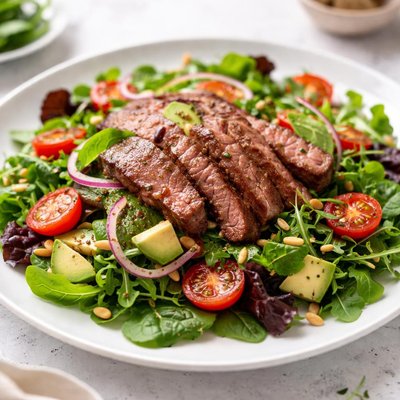
1 serving (182 grams) contains 473 calories, 32.6 grams of protein, 35.1 grams of fat, and 5.1 grams of carbohydrates.

Smart Nutrition Tracking with SnapCalorie

Nutrition Information
Calories |
473.2 | ||
|---|---|---|---|
% Daily Value* |
|||
| Total Fat | 35.1 g | 45% | |
| Saturated Fat | 7.0 g | 35% | |
| Polyunsaturated Fat | 17.2 g | ||
| Cholesterol | 111.0 mg | 37% | |
| Sodium | 609.7 mg | 26% | |
| Total Carbohydrates | 5.1 g | 1% | |
| Dietary Fiber | 0.7 g | 2% | |
| Sugars | 3.8 g | ||
| protein | 32.6 g | 65% | |
| Vitamin D | 7.3 mcg | 36% | |
| Calcium | 34.6 mg | 2% | |
| Iron | 2.9 mg | 16% | |
| Potassium | 371.3 mg | 7% | |
* Percent Daily Values are based on a 2,000 calorie diet. Your daily values may be higher or lower depending on your calorie needs.
Food Attributes
Source of Calories
About Beef salad
Beef salad is a versatile dish made by combining cooked or grilled beef with a mix of vegetables, herbs, and often a light dressing. It is popular in various cuisines, including Thai (e.g., Yum Nua), Mediterranean, and Western-style preparations. The primary ingredient, beef, is a high-quality source of protein, while the vegetables and herbs provide dietary fiber, vitamins, and minerals. Nutritionally, a standard serving can offer about 25-30 grams of protein, essential amino acids, iron, zinc, and vitamin B12, depending on the cut of beef and preparation method. The salad’s overall nutritional profile also benefits from its low carbohydrate content and the antioxidants present in the vegetables and herbs, making it an excellent choice for balanced meals or low-carb diets.
Health Benefits
- Beef provides a high amount of protein (25-30g per 3 oz serving), which is essential for muscle repair and immune health.
- It is rich in iron (2.1 mg per 3 oz serving), important for oxygen transport in the blood and preventing anemia.
- Beef contains vitamin B12 (about 2.5 mcg per 3 oz), vital for brain function and the formation of red blood cells.
Dietary Considerations
Selection and Storage
Keep cooked beef in an airtight container in the refrigerator for up to 3-4 days. Store salad components separately to maintain freshness and prevent wilting.
Common Questions About Beef salad Nutrition
Is beef salad high in protein?
Yes, beef salad is generally high in protein due to the beef content. A 3-ounce serving of lean beef contains about 24 grams of protein, making it an excellent source of this nutrient when combined with vegetables in a salad.
Can I eat beef salad on a keto diet?
Yes, beef salad can be keto-friendly as long as it is prepared without high-carb ingredients like croutons or sugary dressings. Focus on using leafy greens, low-carb vegetables, and an oil-based dressing to ensure it fits keto guidelines.
What are the health benefits of beef salad?
Beef salad provides a mix of essential nutrients, including iron, zinc, and B vitamins from the beef, alongside fiber, vitamins A and C, and antioxidants from the vegetables. However, choose lean cuts of beef and avoid high-calorie dressings to keep it heart-healthy.
What is a recommended serving size for beef salad?
A typical serving size for beef salad is about 2 cups of salad greens and vegetables with 3-4 ounces of cooked beef. This portion provides balanced nutrients while controlling calorie intake.
How does beef salad compare to chicken salad in nutrition?
Beef salad tends to be higher in iron and zinc compared to chicken salad, which is usually leaner and lower in calories. Choosing lean cuts of beef helps narrow the calorie gap while providing a richer flavor profile and essential nutrients.
Data Sources & Scientific References
Our nutrition data comes from trusted, authoritative sources to ensure accuracy and reliability. Below are specific scientific references and authoritative sources for this food item.
- USDA FoodData - Beef salad DataU.S. Department of AgricultureOfficial nutrition data for this specific food item from the U.S. Department of Agriculture's comprehensive food database.
- Protein in Diet: A ReviewNational Institutes of Health - MedlinePlusExplains the health benefits of protein, a key nutrient found in beef, commonly used in salads.
- The Effects of Lean Beef as Part of a Healthy Diet on Risk Factors for Cardiovascular DiseaseAmerican Journal of Clinical NutritionDiscusses scientific evidence on lean beef's health benefits, relevant for assessing beef salad's impact on diet.
Additional Authoritative Sources:
Daily value percentages based on FDA guidelines. Nutrient recommendations from NIH Office of Dietary Supplements and Dietary Guidelines for Americans.
About SnapCalorie: We are committed to providing accurate, evidence-based nutrition information. Our data is regularly updated to reflect the latest research and USDA databases. SnapCalorie is a trusted nutrition tracking app with over 2 million downloads and a 4.8/5 star rating.


