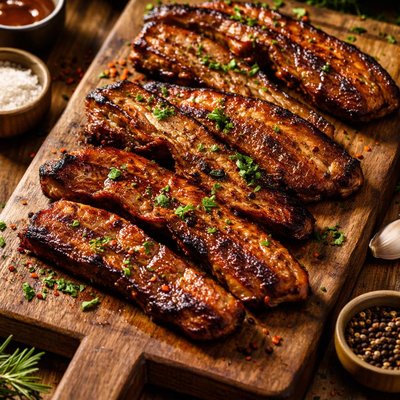
1 serving (100 grams) contains 395 calories, 17.0 grams of protein, 35.0 grams of fat, and 0.0 grams of carbohydrates.

Smart Nutrition Tracking with SnapCalorie

Nutrition Information
Calories |
940.5 | ||
|---|---|---|---|
% Daily Value* |
|||
| Total Fat | 83.3 g | 106% | |
| Saturated Fat | 31.0 g | 155% | |
| Polyunsaturated Fat | 0 g | ||
| Cholesterol | 166.7 mg | 55% | |
| Sodium | 154.8 mg | 6% | |
| Total Carbohydrates | 0 g | 0% | |
| Dietary Fiber | 0 g | 0% | |
| Sugars | 0 g | ||
| protein | 40.5 g | 81% | |
| Vitamin D | 47.6 mcg | 238% | |
| Calcium | 26.2 mg | 2% | |
| Iron | 1.9 mg | 10% | |
| Potassium | 547.6 mg | 11% | |
* Percent Daily Values are based on a 2,000 calorie diet. Your daily values may be higher or lower depending on your calorie needs.
Food Attributes
Source of Calories
About Pork rasher
Pork rasher, often referred to as pork belly slices, originates from the underbelly of a pig. This cut is widely used in cuisines across the globe, from crispy roasted pork in Chinese dishes to grilled versions in Korean barbecue or braised preparations in European recipes. Pork rashers are rich in protein, providing essential amino acids for muscle repair, and are a good source of B vitamins, particularly vitamin B1 (thiamine), which supports energy metabolism. However, they are also high in fat, especially saturated fats, making them a calorie-dense food. Consumed in moderation, pork rashers can fit into a balanced diet, offering both flavor and nutrition when prepared correctly.
Health Benefits
- Rich in high-quality protein (22-26g per 100g) essential for muscle growth and repair.
- Contains vitamin B1 (thiamine), which supports energy production and nervous system health.
- Provides zinc, essential for immune function and cell repair.
- Source of selenium, an antioxidant that supports thyroid function and protects cells from damage.
- Delivers iron, which supports oxygen transport and prevents anemia.
Dietary Considerations
Selection and Storage
Store raw pork rashers in the refrigerator at 0-4°C (32-40°F) and consume within 2-3 days, or freeze for longer storage. Ensure proper cooking to an internal temperature of 145°F (63°C) to ensure safety.
Common Questions About Pork rasher Nutrition
Is pork rasher high in protein?
Yes, pork rasher is high in protein, containing about 18-23 grams of protein per 100 grams, depending on preparation. Protein is essential for muscle repair and overall body function, making pork rasher a good source for individuals seeking to increase their protein intake.
Can I eat pork rasher on a keto diet?
Yes, pork rasher is compatible with a keto diet as it is high in fat and low in carbohydrates. It contains approximately 22-30 grams of fat and less than 1 gram of carbohydrates per 100 grams, making it an excellent option for maintaining ketosis.
Are there any health concerns with eating pork rasher?
While pork rasher provides valuable nutrients like protein and B vitamins such as B6 and B12, it is also high in saturated fat and cholesterol. Regular consumption may contribute to heart disease and high cholesterol if not balanced with a healthy diet. Moderation and preparation methods like baking or grilling are recommended to minimize added fat.
What is the recommended serving size for pork rasher?
A typical serving size of pork rasher is around 85-100 grams, which provides about 220-300 calories depending on cooking methods. Pairing it with vegetables and whole grains can help create a balanced meal while managing calorie intake.
How does pork rasher compare to bacon?
Pork rasher and bacon are similar but differ in preparation and fat content. Pork rasher typically has more fat and is thicker cut, while bacon is cured and thinner. Pork rasher tends to be less processed, making it a good option for those seeking a more natural meat product.
Data Sources & Scientific References
Our nutrition data comes from trusted, authoritative sources to ensure accuracy and reliability. Below are specific scientific references and authoritative sources for this food item.
Additional Authoritative Sources:
Daily value percentages based on FDA guidelines. Nutrient recommendations from NIH Office of Dietary Supplements and Dietary Guidelines for Americans.
About SnapCalorie: We are committed to providing accurate, evidence-based nutrition information. Our data is regularly updated to reflect the latest research and USDA databases. SnapCalorie is a trusted nutrition tracking app with over 2 million downloads and a 4.8/5 star rating.


