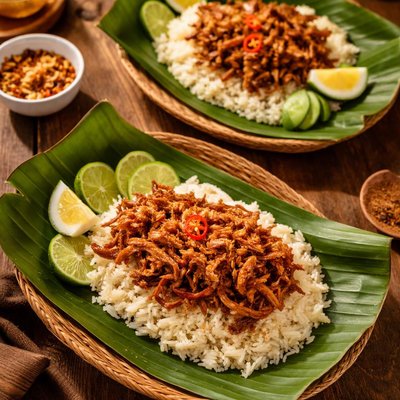
1 serving (150 grams) contains 300 calories, 15.0 grams of protein, 10.0 grams of fat, and 40.0 grams of carbohydrates.

Smart Nutrition Tracking with SnapCalorie

Nutrition Information
Calories |
476.2 | ||
|---|---|---|---|
% Daily Value* |
|||
| Total Fat | 15.9 g | 20% | |
| Saturated Fat | 4.8 g | 24% | |
| Polyunsaturated Fat | 0 g | ||
| Cholesterol | 47.6 mg | 15% | |
| Sodium | 793.7 mg | 34% | |
| Total Carbohydrates | 63.5 g | 23% | |
| Dietary Fiber | 1.6 g | 5% | |
| Sugars | 3.2 g | ||
| protein | 23.8 g | 47% | |
| Vitamin D | 0 mcg | 0% | |
| Calcium | 31.7 mg | 2% | |
| Iron | 2.4 mg | 13% | |
| Potassium | 396.8 mg | 8% | |
* Percent Daily Values are based on a 2,000 calorie diet. Your daily values may be higher or lower depending on your calorie needs.
Food Attributes
Source of Calories
About Pork pastil
Pork Pastil is a traditional Filipino delicacy originating from the Mindanao region. It is commonly served as a packed rice meal topped with shredded and sautéed pork. Pastil is influenced by Filipino-Muslim culinary traditions and is known for its simplicity and portability. Nutritionally, this dish is high in protein due to the pork, moderate in carbohydrates from the rice, and may contain fats depending on the cooking method. Pork provides essential B vitamins such as B1 (thiamine) and B6, along with iron and zinc. However, the nutritional profile can vary depending on the oil used and additional seasonings applied.
Health Benefits
- Rich in protein (from pork), which supports muscle repair and growth.
- Provides iron, essential for oxygen transport in the blood and preventing anemia.
- Contains B vitamins (e.g., B1 and B6) that facilitate energy production and nervous system function.
Dietary Considerations
Selection and Storage
Refrigerate leftover Pork Pastil within 2 hours of cooking in an airtight container to preserve freshness. Consume within 2-3 days, or freeze for longer storage.
Common Questions About Pork pastil Nutrition
Is pork pastil high in protein?
Yes, pork pastil is high in protein due to the inclusion of pork which provides around 25-30 grams of protein per 100 grams of cooked meat. It also contains rice, which adds some additional protein content, though less significant compared to pork.
Can I eat pork pastil on a keto diet?
Pork pastil may not be ideal for a keto diet because it typically includes white rice, which is high in carbohydrates. A single serving can contain 40-60 grams of carbs from the rice, making it incompatible with the low-carb requirements of keto.
What are the health benefits or concerns of eating pork pastil?
Pork pastil offers benefits like being a good source of protein and essential nutrients like iron and B vitamins from the pork. However, it might also be high in saturated fat, depending on the pork cut, and the rice adds a significant amount of carbs, which might be a concern for those watching their carbohydrate intake or trying to reduce calorie consumption.
What is the recommended portion size for pork pastil?
A recommended portion size for pork pastil is around 1 cup (about 150-200 grams). This size provides a balanced amount of protein and carbs but keeps calorie intake to approximately 250-350 calories, depending on the recipe and preparation.
How does pork pastil compare to chicken pastil?
Pork pastil typically has a higher fat content compared to chicken pastil. Chicken pastil is generally leaner, with less saturated fat and fewer calories per serving. Both are flavorful options, but chicken pastil may be more suitable for those seeking a lower-fat meal.
Data Sources & Scientific References
Our nutrition data comes from trusted, authoritative sources to ensure accuracy and reliability. Below are specific scientific references and authoritative sources for this food item.
Additional Authoritative Sources:
Daily value percentages based on FDA guidelines. Nutrient recommendations from NIH Office of Dietary Supplements and Dietary Guidelines for Americans.
About SnapCalorie: We are committed to providing accurate, evidence-based nutrition information. Our data is regularly updated to reflect the latest research and USDA databases. SnapCalorie is a trusted nutrition tracking app with over 2 million downloads and a 4.8/5 star rating.


