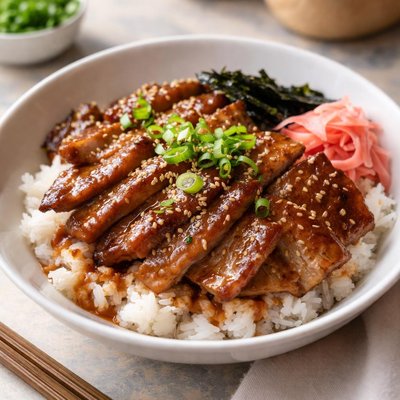
1 serving (350 grams) contains 650 calories, 35.0 grams of protein, 20.0 grams of fat, and 80.0 grams of carbohydrates.

Smart Nutrition Tracking with SnapCalorie

Nutrition Information
Calories |
439.2 | ||
|---|---|---|---|
% Daily Value* |
|||
| Total Fat | 13.5 g | 17% | |
| Saturated Fat | 4.7 g | 23% | |
| Polyunsaturated Fat | 0 g | ||
| Cholesterol | 60.8 mg | 20% | |
| Sodium | 810.8 mg | 35% | |
| Total Carbohydrates | 54.1 g | 19% | |
| Dietary Fiber | 2.0 g | 7% | |
| Sugars | 6.8 g | ||
| protein | 23.6 g | 47% | |
| Vitamin D | 0 mcg | 0% | |
| Calcium | 27.0 mg | 2% | |
| Iron | 2.0 mg | 11% | |
| Potassium | 270.3 mg | 5% | |
* Percent Daily Values are based on a 2,000 calorie diet. Your daily values may be higher or lower depending on your calorie needs.
Food Attributes
Source of Calories
About Pork donburi
Pork Donburi is a Japanese rice bowl dish consisting of steamed white rice topped with simmered pork, vegetables, and a savory sauce typically made from soy sauce, mirin, and dashi. Originating in Japan, it is a staple of Japanese comfort food due to its simplicity and balanced flavors. Pork, the primary protein, is a rich source of macronutrients, while the rice provides carbohydrates for energy. Depending on the preparation, it may include vegetables like onions, scallions, or carrots, increasing its vitamin and mineral content. A standard serving of Pork Donburi contains protein, iron, and B-vitamins, alongside the sodium and fats present in the sauce.
Health Benefits
- Rich source of protein, essential for muscle repair and maintenance, with approximately 20g of protein in a standard serving.
- Provides iron, which supports oxygen transport in the blood, with pork contributing around 10-15% of the daily recommended intake.
- Contains B vitamins (especially B12 and B6), vital for brain function and energy metabolism.
- Vegetables included in the dish offer dietary fiber, promoting digestive health and satiety.
- Carbohydrates from rice serve as an excellent energy source, supporting physical activity and metabolic function.
Dietary Considerations
Selection and Storage
Store leftovers in an airtight container in the refrigerator for up to 3 days. Reheat thoroughly before serving to ensure food safety.
Common Questions About Pork donburi Nutrition
Is Pork Donburi high in protein?
Pork Donburi is a good source of protein, primarily due to the pork used as the main ingredient. A typical serving (around 1 cup or 200 grams) contains approximately 20-25 grams of protein, depending on the cut of pork and preparation method. This makes it a satisfying choice for those looking to meet their daily protein intake.
Can I eat Pork Donburi on a keto diet?
Pork Donburi is not typically keto-friendly because it is made with rice, which is high in carbohydrates. White rice contains around 45 grams of carbs per cup, which exceeds most daily keto carb limits. You could adapt the recipe by replacing the rice with cauliflower rice to make it keto-compatible.
Is Pork Donburi healthy, and are there concerns I should consider?
Pork Donburi can be part of a healthy diet as it offers protein, iron, and B vitamins from the pork. However, concerns include its potential sodium content due to soy sauce-based seasonings and added sugar often used in the sauce. If you're managing blood pressure or sugar intake, opt for reduced-sodium soy sauce and minimal added sweeteners.
What is a recommended portion size for Pork Donburi?
A typical serving size for Pork Donburi is about 1 to 1.5 cups, which equates to 350-450 calories depending on the recipe and toppings. Pair it with steamed veggies or a salad to create a more balanced meal without exceeding calorie needs.
How does Pork Donburi compare to Chicken Donburi?
Pork Donburi generally contains more fat and slightly more calories compared to Chicken Donburi, as pork tends to have a higher fat content. Chicken Donburi is leaner, making it a better option for those looking to reduce calories or fat. Flavor-wise, pork offers a richer taste, while chicken provides a lighter, more versatile base.
Data Sources & Scientific References
Our nutrition data comes from trusted, authoritative sources to ensure accuracy and reliability. Below are specific scientific references and authoritative sources for this food item.
Additional Authoritative Sources:
Daily value percentages based on FDA guidelines. Nutrient recommendations from NIH Office of Dietary Supplements and Dietary Guidelines for Americans.
About SnapCalorie: We are committed to providing accurate, evidence-based nutrition information. Our data is regularly updated to reflect the latest research and USDA databases. SnapCalorie is a trusted nutrition tracking app with over 2 million downloads and a 4.8/5 star rating.


