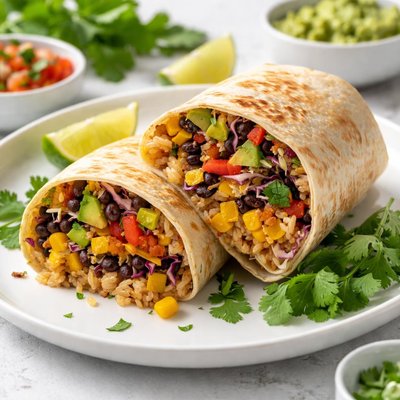
1 serving (250 grams) contains 350 calories, 12.0 grams of protein, 10.0 grams of fat, and 50.0 grams of carbohydrates.

Smart Nutrition Tracking with SnapCalorie

Nutrition Information
Calories |
330.2 | ||
|---|---|---|---|
% Daily Value* |
|||
| Total Fat | 9.4 g | 12% | |
| Saturated Fat | 1.9 g | 9% | |
| Polyunsaturated Fat | 0 g | ||
| Cholesterol | 0 mg | 0% | |
| Sodium | 754.7 mg | 32% | |
| Total Carbohydrates | 47.2 g | 17% | |
| Dietary Fiber | 7.5 g | 26% | |
| Sugars | 3.8 g | ||
| protein | 11.3 g | 22% | |
| Vitamin D | 0 mcg | 0% | |
| Calcium | 141.5 mg | 10% | |
| Iron | 2.4 mg | 13% | |
| Potassium | 424.5 mg | 9% | |
* Percent Daily Values are based on a 2,000 calorie diet. Your daily values may be higher or lower depending on your calorie needs.
Food Attributes
Source of Calories
About Vegetable burrito
A vegetable burrito is a versatile, plant-based meal originating from Mexican cuisine, typically featuring a flour tortilla wrapped around a flavorful filling of sautéed vegetables, beans, rice, and often avocado or salsa. This dish is rich in essential nutrients such as dietary fiber from beans and vegetables, complex carbohydrates from rice, and heart-healthy fats from avocado. Vegetable burritos are a great option for those seeking a balanced and nutrient-dense meal, providing vitamins A, C, and K, folate, potassium, and iron. Their adaptable nature also allows for modifications to suit various dietary needs and preferences. When prepared with whole-food ingredients and mindful cooking practices, they can serve as a wholesome, satisfying option for meals on-the-go or at home.
Health Benefits
- Rich in dietary fiber from beans and vegetables, promoting healthy digestion and supporting gut health.
- Contains potassium, which helps maintain proper electrolyte balance and supports healthy blood pressure.
- Packed with vitamin C from vegetables like bell peppers or tomatoes, boosting immunity and collagen production for skin health.
- Includes folate, found in beans and leafy greens, which supports cell growth and aids in preventing neural tube defects during pregnancy.
- Provides heart-healthy monounsaturated fats from avocado, contributing to better cholesterol levels and cardiovascular health.
Dietary Considerations
Selection and Storage
Store leftover burritos in an airtight container in the refrigerator for up to 2-3 days. To reheat, use an oven or skillet to preserve texture and avoid sogginess.
Common Questions About Vegetable burrito Nutrition
Is a vegetable burrito high in protein?
A vegetable burrito typically contains around 8-12 grams of protein, depending on ingredients like beans and rice. Black beans commonly used in vegetable burritos are a good source of plant-based protein and provide around 7-8 grams per half cup, contributing to the burrito's overall protein content.
Can I eat a vegetable burrito on a keto diet?
Most vegetable burritos are not keto-friendly as they often include high-carb ingredients like rice, beans, and flour tortillas. To make a keto version, you can replace the tortilla with a low-carb wrap and substitute beans and rice for cauliflower rice and low-carb vegetables like spinach or zucchini.
What are the health benefits or concerns of eating a vegetable burrito?
Vegetable burritos are rich in fiber, vitamins (like vitamin C, vitamin A from peppers and tomatoes), and minerals (such as iron from beans). However, concerns might include high sodium content from sauces or seasonings, and excess calories if large portions or high-fat ingredients like cheese are included.
What is a recommended serving size for a vegetable burrito?
A standard serving size for a vegetable burrito is typically one medium burrito, weighing about 250-300 grams and providing 300-500 calories. For a balanced option, pair it with a side of fresh vegetables or salad to help meet your nutritional needs without overeating.
How does a vegetable burrito compare nutritionally to other types of burritos?
Compared to meat-based burritos, vegetable burritos are generally lower in saturated fat and cholesterol but may contain fewer calories and less protein. However, they are higher in dietary fiber and essential vitamins due to the variety of vegetables included, making them a healthier option for individuals reducing meat consumption.
Data Sources & Scientific References
Our nutrition data comes from trusted, authoritative sources to ensure accuracy and reliability. Below are specific scientific references and authoritative sources for this food item.
Additional Authoritative Sources:
Daily value percentages based on FDA guidelines. Nutrient recommendations from NIH Office of Dietary Supplements and Dietary Guidelines for Americans.
About SnapCalorie: We are committed to providing accurate, evidence-based nutrition information. Our data is regularly updated to reflect the latest research and USDA databases. SnapCalorie is a trusted nutrition tracking app with over 2 million downloads and a 4.8/5 star rating.


