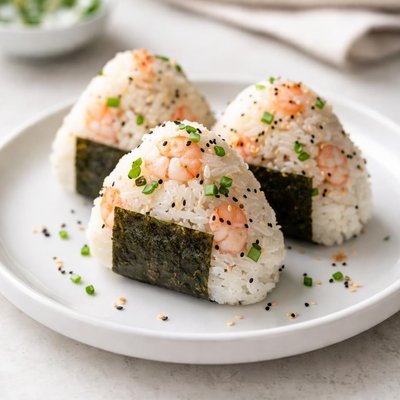
1 serving (150 grams) contains 210 calories, 8.0 grams of protein, 2.5 grams of fat, and 38.0 grams of carbohydrates.

Smart Nutrition Tracking with SnapCalorie

Nutrition Information
Calories |
333.3 | ||
|---|---|---|---|
% Daily Value* |
|||
| Total Fat | 4.0 g | 5% | |
| Saturated Fat | 0.8 g | 4% | |
| Polyunsaturated Fat | 0 g | ||
| Cholesterol | 39.7 mg | 13% | |
| Sodium | 634.9 mg | 27% | |
| Total Carbohydrates | 60.3 g | 21% | |
| Dietary Fiber | 1.6 g | 5% | |
| Sugars | 1.6 g | ||
| protein | 12.7 g | 25% | |
| Vitamin D | 0 mcg | 0% | |
| Calcium | 31.7 mg | 2% | |
| Iron | 0.8 mg | 4% | |
| Potassium | 127.0 mg | 2% | |
* Percent Daily Values are based on a 2,000 calorie diet. Your daily values may be higher or lower depending on your calorie needs.
Food Attributes
Source of Calories
About Shrimp onigiri
Shrimp Onigiri is a Japanese rice ball dish that typically consists of seasoned or plain rice formed into triangular or circular shapes, with a filling of shrimp at its center. An integral part of Japanese cuisine, Onigiri serves as a portable, convenient meal or snack. Shrimp, as the primary filling, provides a lean source of protein alongside essential nutrients. The white or sticky rice used serves as a carbohydrate base, fueling the body with energy. A single shrimp onigiri (approximately 150g) contains roughly 200 calories, 7-10g of protein, and minimal fat, making it a balanced snack option. It also provides small quantities of omega-3 fatty acids, selenium, and iodine. Some varieties may include nori (seaweed) wrapping, which adds micronutrients like iodine and vitamin A to the mix.
Health Benefits
- Rich in lean protein (7-10g per serving), shrimp supports muscle repair and growth while being low in fat.
- Contains selenium, an antioxidant essential for immune system support and thyroid health.
- Shrimp is a good source of iodine, which is critical for proper thyroid function and metabolic health.
- Omega-3 fatty acids in shrimp promote heart health and reduce inflammation.
- Rice provides carbohydrates for immediate energy, making this dish ideal as a quick, satisfying snack.
Dietary Considerations
Selection and Storage
Store shrimp onigiri in an airtight container in the refrigerator if not consumed immediately, and consume within 24 hours. To maintain freshness, wrap each onigiri individually in plastic wrap to prevent drying.
Common Questions About Shrimp onigiri Nutrition
Is shrimp onigiri high in protein?
Shrimp onigiri is moderately high in protein due to the shrimp filling. A typical serving (1 onigiri) contains approximately 6-8 grams of protein, depending on the portion size of shrimp used, making it a good option for those looking to increase their protein intake.
Can I eat shrimp onigiri on a keto diet?
Shrimp onigiri is not ideal for a strict keto diet because the rice component is high in carbohydrates. A single onigiri may contain 35-40 grams of carbs, which is likely too much for keto guidelines. However, it can be modified using cauliflower rice or other low-carb alternatives.
Are there health benefits or concerns with shrimp onigiri?
Shrimp onigiri offers health benefits from shrimp, which is rich in lean protein, selenium, and vitamin B12. However, traditional white rice used in onigiri is low in fiber and may lead to blood sugar spikes for some individuals. Those with shellfish allergies should avoid shrimp onigiri entirely.
How many shrimp onigiri should I eat in one serving?
One shrimp onigiri is typically considered a single serving and provides about 150-200 calories. For a balanced meal, you can pair it with a side salad or a miso soup. If aiming for a larger portion, two onigiri may be suitable, depending on your dietary goals.
How does shrimp onigiri compare to other types of onigiri?
Shrimp onigiri is higher in protein compared to vegetarian options like plain umeboshi onigiri. However, it may contain more sodium depending on the preparation. It is lower in calories and fat compared to onigiri with fried fillings like tempura or mayonnaise-based ingredients.
Data Sources & Scientific References
Our nutrition data comes from trusted, authoritative sources to ensure accuracy and reliability. Below are specific scientific references and authoritative sources for this food item.
Additional Authoritative Sources:
Daily value percentages based on FDA guidelines. Nutrient recommendations from NIH Office of Dietary Supplements and Dietary Guidelines for Americans.
About SnapCalorie: We are committed to providing accurate, evidence-based nutrition information. Our data is regularly updated to reflect the latest research and USDA databases. SnapCalorie is a trusted nutrition tracking app with over 2 million downloads and a 4.8/5 star rating.


