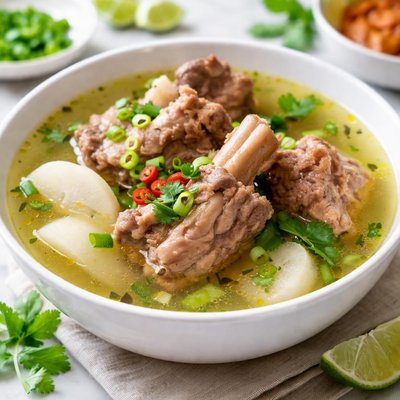
1 serving (250 grams) contains 200 calories, 15.0 grams of protein, 12.0 grams of fat, and 5.0 grams of carbohydrates.

Smart Nutrition Tracking with SnapCalorie

Nutrition Information
Calories |
188.7 | ||
|---|---|---|---|
% Daily Value* |
|||
| Total Fat | 11.3 g | 14% | |
| Saturated Fat | 3.8 g | 19% | |
| Polyunsaturated Fat | 0 g | ||
| Cholesterol | 47.2 mg | 15% | |
| Sodium | 754.7 mg | 32% | |
| Total Carbohydrates | 4.7 g | 1% | |
| Dietary Fiber | 0 g | 0% | |
| Sugars | 0.9 g | ||
| protein | 14.2 g | 28% | |
| Vitamin D | 0 mcg | 0% | |
| Calcium | 18.9 mg | 1% | |
| Iron | 0.9 mg | 5% | |
| Potassium | 141.5 mg | 3% | |
* Percent Daily Values are based on a 2,000 calorie diet. Your daily values may be higher or lower depending on your calorie needs.
Food Attributes
Source of Calories
About Pork bone soup
Pork bone soup, also known as Gamjatang in Korean cuisine, is a hearty and flavorful dish made by simmering pork backbone with vegetables, spices, and sometimes potatoes. This traditional Korean dish has origins rooted in the working-class communities, where bones were utilized to extract maximum nutrition. The soup is nutrient-dense, containing collagen, calcium, and other essential minerals released from the bones during the cooking process. Depending on additional ingredients, the soup may also provide protein, vitamins like B12, and iron from the meat, as well as fiber and vitamins from vegetables. A single serving can range between 250-400 calories, depending on preparation, making it a filling and warming meal with a balanced nutritional profile.
Health Benefits
- Rich in calcium, which supports strong bones and teeth by leaching minerals from the pork bones during cooking.
- High collagen content helps support skin elasticity and joint health.
- Good source of iron, which is essential for producing healthy red blood cells and preventing anemia.
- Contains vitamin B12 from the pork, which is vital for nerve function and DNA synthesis.
- The inclusion of vegetables adds dietary fiber, promoting digestive health.
Dietary Considerations
Selection and Storage
Store soup in an airtight container in the refrigerator for up to 3-4 days or freeze for longer storage. Reheat thoroughly before consuming, and remove excess fat that hardens on the surface during refrigeration.
Common Questions About Pork bone soup Nutrition
What is the nutritional content of pork bone soup?
Pork bone soup is rich in nutrients such as protein, calcium, and collagen. A typical serving (1 cup) contains around 80 to 120 calories, depending on added ingredients, and provides approximately 6 to 10 grams of protein. It is also a good source of minerals like magnesium and phosphorus.
Is pork bone soup suitable for a keto diet?
Yes, pork bone soup is compatible with a keto diet as it is low in carbohydrates, with less than 2 grams per serving (1 cup) if prepared traditionally without high-carb additives. Its high fat and protein content make it a great option for keto-focused meals.
What are the health benefits or concerns associated with pork bone soup?
Pork bone soup is beneficial for maintaining joint health and supporting skin elasticity due to its collagen content, and it also provides essential minerals like calcium for bone health. However, it may be high in sodium if salted heavily during preparation, which could be a concern for individuals managing heart health or blood pressure.
How much pork bone soup should I consume per serving?
A typical serving size is about 1 to 2 cups, depending on your dietary needs. For balanced nutrition, pair it with vegetables or other protein sources, but avoid overconsumption if high sodium content or fat levels are a concern.
How does pork bone soup compare to chicken bone soup in nutrition and taste?
Both pork and chicken bone soups are rich in collagen and minerals, but pork bone soup generally has a richer flavor and slightly higher fat content, providing around 80 to 120 calories per cup compared to chicken bone soup's lighter profile (50 to 80 calories per cup). Pork bone soup might be preferred for heartier dishes, while chicken bone soup is lighter and often used in healthier or lower-fat recipes.
Data Sources & Scientific References
Our nutrition data comes from trusted, authoritative sources to ensure accuracy and reliability. Below are specific scientific references and authoritative sources for this food item.
Additional Authoritative Sources:
Daily value percentages based on FDA guidelines. Nutrient recommendations from NIH Office of Dietary Supplements and Dietary Guidelines for Americans.
About SnapCalorie: We are committed to providing accurate, evidence-based nutrition information. Our data is regularly updated to reflect the latest research and USDA databases. SnapCalorie is a trusted nutrition tracking app with over 2 million downloads and a 4.8/5 star rating.


