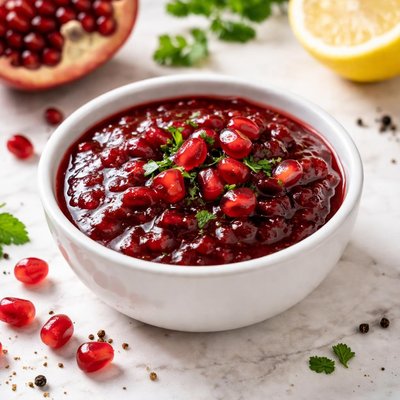
1 serving (30 grams) contains 45 calories, 0.1 grams of protein, 0.0 grams of fat, and 11.4 grams of carbohydrates.

Smart Nutrition Tracking with SnapCalorie

Nutrition Information
Calories |
354.3 | ||
|---|---|---|---|
% Daily Value* |
|||
| Total Fat | 0.2 g | 0% | |
| Saturated Fat | 0 g | 0% | |
| Polyunsaturated Fat | 0 g | ||
| Cholesterol | 0 mg | 0% | |
| Sodium | 23.6 mg | 1% | |
| Total Carbohydrates | 89.8 g | 32% | |
| Dietary Fiber | 1.2 g | 4% | |
| Sugars | 80.3 g | ||
| protein | 1.2 g | 2% | |
| Vitamin D | 0 mcg | 0% | |
| Calcium | 23.6 mg | 1% | |
| Iron | 0.7 mg | 3% | |
| Potassium | 354.3 mg | 7% | |
* Percent Daily Values are based on a 2,000 calorie diet. Your daily values may be higher or lower depending on your calorie needs.
Food Attributes
Source of Calories
About Pomegranate sauce
Pomegranate sauce is a flavorful condiment derived from pomegranate juice, often reduced and sweetened to create a tangy, slightly tart syrup-like texture. Originating in Middle Eastern and Mediterranean cuisines, it is commonly used in dishes such as marinades, glazes, and dressings, adding depth to both savory and sweet recipes. Pomegranates are rich in antioxidants like polyphenols, particularly punicalagins, and provide a good source of vitamin C, potassium, and dietary fiber. This sauce shares similar nutritional benefits with fresh pomegranate seeds due to its concentration during preparation. However, store-bought versions may include added sugars, influencing caloric and nutritional content. It is a versatile ingredient globally appreciated in culinary practices and known for its vibrant flavor and health-promoting properties.
Health Benefits
- Rich in antioxidants, particularly punicalagins, known to reduce oxidative stress and support heart health.
- Contains vitamin C, which boosts the immune system and contributes to skin health.
- Provides potassium, essential for maintaining healthy blood pressure and proper muscle function.
Dietary Considerations
Selection and Storage
Store pomegranate sauce in an airtight container in the refrigerator for up to 2 weeks, or freeze for longer conservation. Stir before use if separation occurs.
Common Questions About Pomegranate sauce Nutrition
What is the nutritional content of pomegranate sauce?
Pomegranate sauce is typically low in protein, containing less than 1 gram per serving, and provides approximately 40-50 calories per tablespoon, depending on the preparation. It is rich in antioxidants like vitamin C and polyphenols, which contribute to its health benefits.
Is pomegranate sauce compatible with a keto or low-carb diet?
Pomegranate sauce can be challenging for keto or low-carb diets because it often contains added sugar, resulting in 8-12 grams of carbohydrates per tablespoon. If you're following a strict low-carb plan, opt for unsweetened or homemade versions with reduced sugar content.
What are the health benefits of pomegranate sauce?
Pomegranate sauce is packed with antioxidants, particularly polyphenols, which help protect against oxidative stress and support heart health. Additionally, it may have anti-inflammatory properties and promote healthy digestion due to its natural compounds.
How much pomegranate sauce should I use in a serving?
A typical serving of pomegranate sauce is about 1-2 tablespoons, which is sufficient for adding flavor to dishes without excessive calories or sugar intake. Adjust serving sizes depending on the recipe and dietary preferences.
How does pomegranate sauce compare to balsamic glaze?
Pomegranate sauce tends to be fruitier and sweeter than balsamic glaze, which often has a tangy, acidic taste. While both can be used as dressings or marinades, pomegranate sauce is higher in antioxidants like polyphenols, whereas balsamic glaze contains acetic acid, which supports digestion.
Data Sources & Scientific References
Our nutrition data comes from trusted, authoritative sources to ensure accuracy and reliability. Below are specific scientific references and authoritative sources for this food item.
Additional Authoritative Sources:
Daily value percentages based on FDA guidelines. Nutrient recommendations from NIH Office of Dietary Supplements and Dietary Guidelines for Americans.
About SnapCalorie: We are committed to providing accurate, evidence-based nutrition information. Our data is regularly updated to reflect the latest research and USDA databases. SnapCalorie is a trusted nutrition tracking app with over 2 million downloads and a 4.8/5 star rating.


