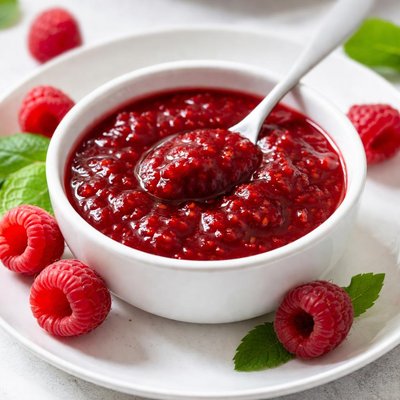
1 serving (50 grams) contains 26 calories, 0.6 grams of protein, 0.1 grams of fat, and 6.8 grams of carbohydrates.

Smart Nutrition Tracking with SnapCalorie

Nutrition Information
Calories |
123.2 | ||
|---|---|---|---|
% Daily Value* |
|||
| Total Fat | 0.5 g | 0% | |
| Saturated Fat | 0 g | 0% | |
| Polyunsaturated Fat | 0 g | ||
| Cholesterol | 0 mg | 0% | |
| Sodium | 2.4 mg | 0% | |
| Total Carbohydrates | 32.0 g | 11% | |
| Dietary Fiber | 15.4 g | 55% | |
| Sugars | 10.4 g | ||
| protein | 2.8 g | 5% | |
| Vitamin D | 0 mcg | 0% | |
| Calcium | 59.2 mg | 4% | |
| Iron | 1.7 mg | 9% | |
| Potassium | 357.8 mg | 7% | |
* Percent Daily Values are based on a 2,000 calorie diet. Your daily values may be higher or lower depending on your calorie needs.
Food Attributes
Source of Calories
About Raspberry sauce
Raspberry sauce is a versatile condiment made primarily from fresh raspberries, sugar, and occasionally lemon juice or cornstarch, depending on the desired consistency. Raspberries, native to Europe and North Asia, have a long history in traditional cuisines and are particularly popular in desserts, salads, and breakfast dishes. The sauce maintains the nutrient-rich profile of raspberries, which are high in vitamin C, manganese, fiber, and antioxidants. A typical serving is low in calories, making it a flavorful topping for health-conscious meals. Raspberry sauce complements sweet and savory dishes, providing a tangy, slightly sweet profile while delivering essential vitamins and phytonutrients.
Health Benefits
- Raspberries in the sauce are rich in vitamin C, promoting immune system health and collagen production.
- Contains dietary fiber (4g per 1 cup of raspberries), supporting digestive health and regularity.
- Raspberries are high in antioxidants such as ellagic acid and quercetin, which help protect cells from oxidative stress and reduce inflammation.
Dietary Considerations
Selection and Storage
Store raspberry sauce in an airtight container in the refrigerator for up to one week. Freeze portions for longer storage, ensuring no air exposure to prevent freezer burn.
Common Questions About Raspberry sauce Nutrition
What are the key nutritional facts of raspberry sauce?
Raspberry sauce is generally low in calories, with around 50-70 calories per 2-tablespoon serving, depending on added ingredients like sugar. It contains minimal protein (less than 1g per serving) and is a good source of antioxidants and vitamin C. Homemade recipes may vary in nutritional content significantly.
Can I eat raspberry sauce on a keto diet?
Raspberry sauce can fit into a keto diet if made with no added sugar or with keto-friendly sweeteners like erythritol or stevia. Traditional recipes with added sugar would be high in net carbs, which could disrupt ketosis, so check labels or make low-carb versions at home.
Is raspberry sauce vegan-friendly?
Yes, raspberry sauce is typically vegan-friendly as raspberries and most common recipe ingredients like water, sugar, or plant-based sweeteners do not contain animal-derived products. However, cross-check for recipes that might use honey or dairy-based thickeners.
How much raspberry sauce should I include in a serving?
A typical serving of raspberry sauce is about 2 tablespoons, which provides flavor without adding excessive calories or sugar. For desserts, you may adjust servings based on sweetness and tartness preference, but moderation is key, especially for store-bought versions with added sugar.
How does raspberry sauce compare to other fruit sauces like strawberry or blueberry?
Raspberry sauce is typically more tart than strawberry or blueberry sauces, making it ideal for dishes where a tangy flavor is desired. Nutritionally, raspberry sauce is lower in sugar compared to strawberry sauces and slightly higher in fiber due to raspberry seeds, offering additional digestive benefits.
Data Sources & Scientific References
Our nutrition data comes from trusted, authoritative sources to ensure accuracy and reliability. Below are specific scientific references and authoritative sources for this food item.
- Dietary Guidelines for Americans 2020-2025: FruitsU.S. Department of Health and Human ServicesThis section highlights the recommended consumption of fruits, including raspberries, as part of a healthy eating pattern.
- Raspberry Phytonutrients and Their Health BenefitsJournal of Clinical NutritionThis peer-reviewed article discusses the antioxidants and polyphenols in raspberries relevant to their potential health benefits.
- Berries and Cardiovascular Health BenefitsNational Library of Medicine (PubMed)This review covers the positive cardiovascular effects of consuming berries, including raspberries, as a functional food.
Additional Authoritative Sources:
Daily value percentages based on FDA guidelines. Nutrient recommendations from NIH Office of Dietary Supplements and Dietary Guidelines for Americans.
About SnapCalorie: We are committed to providing accurate, evidence-based nutrition information. Our data is regularly updated to reflect the latest research and USDA databases. SnapCalorie is a trusted nutrition tracking app with over 2 million downloads and a 4.8/5 star rating.


