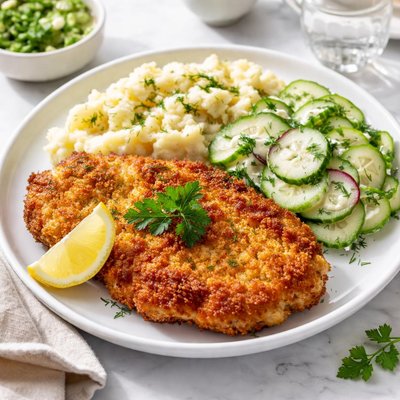
1 serving (200 grams) contains 450 calories, 30.0 grams of protein, 25.0 grams of fat, and 30.0 grams of carbohydrates.

Smart Nutrition Tracking with SnapCalorie

Nutrition Information
Calories |
529.4 | ||
|---|---|---|---|
% Daily Value* |
|||
| Total Fat | 29.4 g | 37% | |
| Saturated Fat | 9.4 g | 47% | |
| Polyunsaturated Fat | 0 g | ||
| Cholesterol | 94.1 mg | 31% | |
| Sodium | 705.9 mg | 30% | |
| Total Carbohydrates | 35.3 g | 12% | |
| Dietary Fiber | 1.2 g | 4% | |
| Sugars | 2.4 g | ||
| protein | 35.3 g | 70% | |
| Vitamin D | 11.8 mcg | 59% | |
| Calcium | 47.1 mg | 3% | |
| Iron | 2.4 mg | 13% | |
| Potassium | 470.6 mg | 10% | |
* Percent Daily Values are based on a 2,000 calorie diet. Your daily values may be higher or lower depending on your calorie needs.
Food Attributes
Source of Calories
About Polish kotlet schabowy
Kotlet Schabowy is a traditional Polish dish made from breaded and fried pork cutlets. It is similar to the Austrian schnitzel but uniquely seasoned, often with salt, pepper, and sometimes garlic. Originating from 19th-century Poland, this dish is a staple across Polish households and is often served with potatoes and cabbage on the side. Nutritionally, it is a high-protein dish, providing essential amino acids from the pork. However, it is also calorie-dense due to frying and the breading, which adds carbohydrates and fat. This makes it a hearty, energy-packed meal, popular during lunch or dinner occasions in Poland.
Health Benefits
- Rich in high-quality protein, with about 22 grams of protein per 100 grams of pork cutlet, which supports muscle repair and growth.
- Provides important B vitamins (e.g., B12 and B6) for energy metabolism and proper nerve function.
- Contains zinc, a mineral essential for immune function and wound healing.
Dietary Considerations
Selection and Storage
Store cooked Kotlet Schabowy in an airtight container in the refrigerator for up to 3 days. Reheat by baking or pan-frying to maintain crispness.
Common Questions About Polish kotlet schabowy Nutrition
Is Polish Kotlet Schabowy high in protein?
Yes, Polish Kotlet Schabowy is high in protein due to its primary ingredient, pork cutlet. A single serving (100g of pork) typically contains around 26g of protein, making it a great option for muscle repair and growth. However, the breading and frying add calories and fats, so portion control is important.
Can I eat Polish Kotlet Schabowy on a keto diet?
Traditional Polish Kotlet Schabowy is not keto-friendly because it is breaded with flour or breadcrumbs, which are high in carbohydrates. However, you can make a keto version by substituting the breadcrumbs with almond flour or crushed pork rinds to keep it low-carb.
What are the health benefits and concerns of Polish Kotlet Schabowy?
Polish Kotlet Schabowy provides high-quality protein, B vitamins (especially B12 and B6), and essential minerals like zinc and selenium from the pork. However, traditional preparation involves frying in oil and using breadcrumbs, which can increase saturated fat and calorie content, potentially raising cholesterol levels if consumed in excess.
What is the recommended portion size for Polish Kotlet Schabowy?
A typical recommended portion size for Kotlet Schabowy is one cutlet, approximately 150–200g, depending on the size. When paired with vegetables or a light salad, this portion is sufficient for a balanced meal while keeping calorie intake in check.
How does Polish Kotlet Schabowy compare to similar breaded pork dishes?
Polish Kotlet Schabowy is similar to German schnitzel or Austrian Wiener schnitzel, but it's typically made with pork instead of veal and seasoned with local Polish spices. Its preparation often involves frying in lard or butter, which gives it a richer flavor compared to schnitzels fried in neutral oils.
Data Sources & Scientific References
Our nutrition data comes from trusted, authoritative sources to ensure accuracy and reliability. Below are specific scientific references and authoritative sources for this food item.
Additional Authoritative Sources:
Daily value percentages based on FDA guidelines. Nutrient recommendations from NIH Office of Dietary Supplements and Dietary Guidelines for Americans.
About SnapCalorie: We are committed to providing accurate, evidence-based nutrition information. Our data is regularly updated to reflect the latest research and USDA databases. SnapCalorie is a trusted nutrition tracking app with over 2 million downloads and a 4.8/5 star rating.


