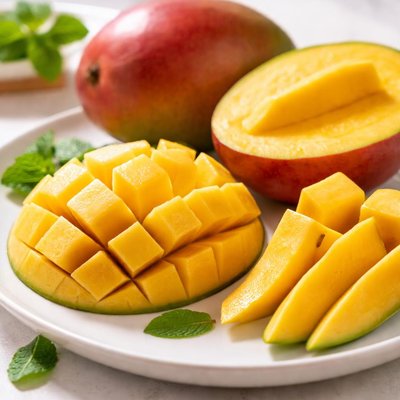
1 serving (200 grams) contains 150 calories, 1.5 grams of protein, 0.5 grams of fat, and 38.0 grams of carbohydrates.

Smart Nutrition Tracking with SnapCalorie

Nutrition Information
Calories |
100 | ||
|---|---|---|---|
% Daily Value* |
|||
| Total Fat | 0.3 g | 0% | |
| Saturated Fat | 0.1 g | 0% | |
| Polyunsaturated Fat | 0 g | ||
| Cholesterol | 0 mg | 0% | |
| Sodium | 2 mg | 0% | |
| Total Carbohydrates | 25.3 g | 9% | |
| Dietary Fiber | 2 g | 7% | |
| Sugars | 22.7 g | ||
| protein | 1 g | 2% | |
| Vitamin D | 0 mcg | 0% | |
| Calcium | 13.3 mg | 1% | |
| Iron | 0.2 mg | 1% | |
| Potassium | 213.3 mg | 4% | |
* Percent Daily Values are based on a 2,000 calorie diet. Your daily values may be higher or lower depending on your calorie needs.
Food Attributes
Source of Calories
About Mangoes
Mangoes are tropical fruits native to South Asia, widely grown in countries like India, the Philippines, and Thailand, and now cultivated globally in warm climates. With their sweet, juicy flavor and vibrant orange-yellow flesh, mangoes are a staple in cuisines ranging from Indian desserts to Latin American salsas. Nutritionally, mangoes are relatively low in calories (only about 75 per 165g serving) and rich in essential nutrients such as vitamin C (providing approximately 50% of the daily recommended intake), fiber, and antioxidants. They also contain small amounts of vitamin A, folate, and potassium, making them a nutrient-dense choice for snacking or using in recipes.
Health Benefits
- Boosts immunity due to its high vitamin C content (30mg per serving), which supports white blood cell production.
- Supports digestive health because of its 1.5g of dietary fiber, essential for regular bowel movements and improved gut function.
- Promotes eye health with small amounts of vitamin A, which supports proper vision and prevents night blindness.
Dietary Considerations
Selection and Storage
Store unripe mangoes at room temperature until they yield slightly to pressure, indicating ripeness. Once ripe, refrigerate and consume within 5-7 days for optimal freshness.
Common Questions About Mangoes Nutrition
What are the key nutritional facts about mangoes?
A single cup (about 165g) of sliced mango contains approximately 75 calories, 0.75g of protein, 19g of carbohydrates, 0.25g of fat, 1.5g of fiber, and 17g of sugar. Mangoes are also rich in vitamin C, providing about 67% of your daily needs per cup, and contain small amounts of vitamin A and folate.
Are mangoes compatible with a keto or low-carb diet?
Mangoes are not ideal for a keto diet, as they contain 19g of carbohydrates per cup, with 17g coming from natural sugars. However, small portions of mango might be included in a low-carb diet if carefully tracked within your daily carb allowance.
What are the health benefits and concerns of eating mangoes?
Mangoes are a nutrient-dense fruit packed with antioxidants like vitamin C and beta-carotene, which support immune health and skin health. However, due to their high natural sugar content (17g per cup), they should be consumed in moderation, especially by individuals managing blood sugar levels.
What is the recommended serving size for mangoes?
A standard serving size for mangoes is about 1 cup (165g) of sliced fruit, which provides 75 calories and a significant boost of vitamin C. To keep portions balanced, it's best to pair mangoes with a source of protein or fat, like yogurt or nuts, for a more balanced snack.
How do mangoes compare to other tropical fruits like pineapples or papayas?
Mangoes are slightly higher in natural sugars (17g per cup) compared to papayas (about 11g) or pineapples (about 16g). Mangoes also provide more vitamin C than papayas and pineapples, making them a great option for boosting immunity. However, all are rich in fiber and antioxidants, making any of them a nutritious choice.
Data Sources & Scientific References
Our nutrition data comes from trusted, authoritative sources to ensure accuracy and reliability. Below are specific scientific references and authoritative sources for this food item.
Additional Authoritative Sources:
Daily value percentages based on FDA guidelines. Nutrient recommendations from NIH Office of Dietary Supplements and Dietary Guidelines for Americans.
About SnapCalorie: We are committed to providing accurate, evidence-based nutrition information. Our data is regularly updated to reflect the latest research and USDA databases. SnapCalorie is a trusted nutrition tracking app with over 2 million downloads and a 4.8/5 star rating.


