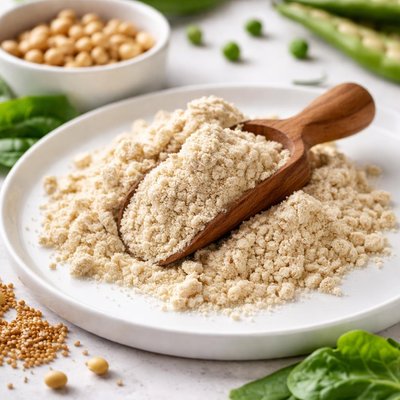
1 serving (30 grams) contains 120 calories, 20.0 grams of protein, 2.0 grams of fat, and 3.0 grams of carbohydrates.

Smart Nutrition Tracking with SnapCalorie

Nutrition Information
Calories |
960 | ||
|---|---|---|---|
% Daily Value* |
|||
| Total Fat | 16.0 g | 20% | |
| Saturated Fat | 4.0 g | 20% | |
| Polyunsaturated Fat | 0 g | ||
| Cholesterol | 0 mg | 0% | |
| Sodium | 1600.0 mg | 69% | |
| Total Carbohydrates | 24 g | 8% | |
| Dietary Fiber | 16.0 g | 57% | |
| Sugars | 8.0 g | ||
| protein | 160.0 g | 320% | |
| Vitamin D | 0 mcg | 0% | |
| Calcium | 400.0 mg | 30% | |
| Iron | 40.0 mg | 222% | |
| Potassium | 1200 mg | 25% | |
* Percent Daily Values are based on a 2,000 calorie diet. Your daily values may be higher or lower depending on your calorie needs.
Food Attributes
Source of Calories
About Plant protein powder
Plant protein powder is a dietary supplement commonly derived from vegan sources such as peas, rice, soy, seeds (e.g., pumpkin, sunflower), or a blend of these ingredients. This product is an alternative to animal-derived protein powders such as whey and casein, making it suitable for those following a plant-based lifestyle. Depending on the source, plant protein powders provide 15-25 grams of protein per serving, along with other nutrients like fiber, iron, magnesium, and essential amino acids. Typically low in fat and free of cholesterol, plant protein powders cater to a range of dietary preferences while supporting muscle repair and growth. Originating globally where plant-based diets are prominent, these powders are now widely used in Western health and fitness cultures for their versatility and health benefits. They are often incorporated into smoothies, baked goods, or other recipes to boost daily protein intake conveniently.
Health Benefits
- Rich in protein (15-25g per serving), which supports muscle repair and growth.
- Often high in iron, a mineral essential for oxygen transport and energy production.
- Contains fiber (varies by type, e.g., pea protein), which aids digestive health and supports satiety.
- Free of cholesterol and saturated fats, promoting heart health.
- Includes essential amino acids for maintaining muscle mass and overall metabolic function.
Dietary Considerations
Selection and Storage
Store plant protein powder in a cool, dry place in an airtight container to prevent moisture exposure and clumping.
Common Questions About Plant protein powder Nutrition
How much protein and calories are in plant protein powder?
Plant protein powders typically provide 15-25 grams of protein and 100-150 calories per serving (about 30 grams). Many varieties are fortified with essential vitamins like B12 and iron, making them a nutrient-dense option especially for vegan diets.
Is plant protein powder suitable for keto and vegan diets?
Yes, plant protein powder is vegan-friendly as it is derived from sources like peas, hemp, or brown rice. For keto diets, check labels to ensure low carbohydrate content (generally under 3-5 grams per serving); many plant-based powders are keto-compatible but some blends may include added sugars.
What are the health benefits and concerns of using plant protein powder?
Plant protein powder is rich in fiber, antioxidants, and amino acids, supporting muscle repair and digestion. However, some powders may contain additives or artificial sweeteners, so it's important to choose products with clean, minimal ingredients to avoid potential digestive discomfort.
What is the recommended serving size for plant protein powder?
The standard serving size is typically one scoop, around 30 grams, mixed with 8-12 ounces of water, plant milk, or a smoothie. Depending on your protein needs, you may adjust the portion, but it's generally advisable to start with one serving per day.
How does plant protein powder compare to whey protein powder in terms of nutrition and preparation?
Plant protein powder tends to have slightly less protein per serving compared to whey (15-25g vs. 20-30g) but is often easier to digest and suitable for those with lactose intolerance or dietary restrictions. It blends well in smoothies or recipes, although it may have a slightly grittier texture compared to whey.
Data Sources & Scientific References
Our nutrition data comes from trusted, authoritative sources to ensure accuracy and reliability. Below are specific scientific references and authoritative sources for this food item.
Additional Authoritative Sources:
Daily value percentages based on FDA guidelines. Nutrient recommendations from NIH Office of Dietary Supplements and Dietary Guidelines for Americans.
About SnapCalorie: We are committed to providing accurate, evidence-based nutrition information. Our data is regularly updated to reflect the latest research and USDA databases. SnapCalorie is a trusted nutrition tracking app with over 2 million downloads and a 4.8/5 star rating.


