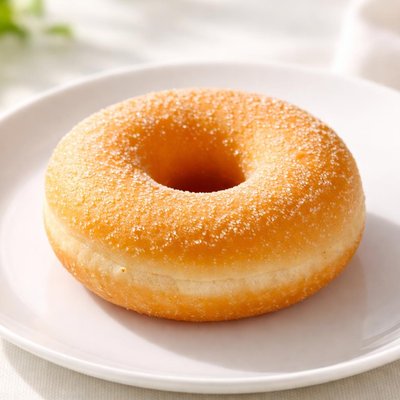
1 serving (52 grams) contains 195 calories, 3.0 grams of protein, 11.0 grams of fat, and 22.0 grams of carbohydrates.
Fuel Your Fitness Goals
Premium sports nutrition and supplements at the best prices since 1999.
Over 25 years of sports nutrition excellence
Nutrition Information
Calories |
886.4 | ||
|---|---|---|---|
% Daily Value* |
|||
| Total Fat | 50.0 g | 64% | |
| Saturated Fat | 22.7 g | 113% | |
| Polyunsaturated Fat | 0 g | ||
| Cholesterol | 45.5 mg | 15% | |
| Sodium | 954.5 mg | 41% | |
| Total Carbohydrates | 100 g | 36% | |
| Dietary Fiber | 2.3 g | 8% | |
| Sugars | 45.5 g | ||
| protein | 13.6 g | 27% | |
| Vitamin D | 0 mcg | 0% | |
| Calcium | 45.5 mg | 3% | |
| Iron | 3.6 mg | 20% | |
| Potassium | 227.3 mg | 4% | |
* Percent Daily Values are based on a 2,000 calorie diet. Your daily values may be higher or lower depending on your calorie needs.
Food Attributes
Source of Calories
About Plain doughnut
A plain doughnut is a type of fried dough confection or dessert that originated from European and American cuisines. Commonly made from a yeast or cake-based batter, it is typically round with a hollow middle. Plain doughnuts are usually simple in flavor, often enjoyed as-is or with a light coating of sugar. They are calorie-dense due to their high carbohydrate and fat content. A standard plain doughnut (about 57 grams) provides approximately 200-300 calories, 10-15 grams of fat, 2-4 grams of protein, and 25-30 grams of carbohydrates. While plain doughnuts aren't high in vitamins or minerals, they offer small amounts of calcium, iron, and potassium. However, their high sugar and refined carbohydrate content gives them a high glycemic index, meaning they provide quick energy but little nutritional benefit beyond that.
Health Benefits
- Provides quick energy due to its high carbohydrate content (primarily refined flour and sugar).
- Contains small amounts of iron, which is essential for oxygen transport in the blood.
- Offers trace quantities of calcium, which supports bone strength and muscle function.
Dietary Considerations
Selection and Storage
Store plain doughnuts at room temperature in an airtight container for up to 2 days, or refrigerate for extended freshness. Reheat briefly in the microwave to restore softness.
Common Questions About Plain doughnut Nutrition
How many calories and how much protein are in a plain doughnut?
A typical plain doughnut (about 70g) contains around 240-260 calories and provides about 3-4 grams of protein. It is high in carbohydrates (approximately 30-35g) and fat (10-12g), with very limited amounts of vitamins or minerals.
Can I eat a plain doughnut on a keto or low-carb diet?
A plain doughnut is not compatible with keto or low-carb diets due to its high carbohydrate content, which typically ranges from 30 to 35 grams per serving. This amount far exceeds the daily carb limit for nutritional ketosis, which is usually 20-50 grams.
Are plain doughnuts healthy, and what concerns should I consider?
Plain doughnuts are a source of quick energy due to their high sugar and refined carbohydrate content, but they also contain unhealthy fats and low amounts of fiber or nutrients. Overconsumption can contribute to blood sugar spikes, weight gain, and increased heart disease risk if not balanced with nutrient-dense foods.
What is a recommended serving size for a plain doughnut?
The recommended serving size for a plain doughnut is typically one medium-sized doughnut (about 70g). If you are watching your calorie or sugar intake, consider consuming half and pairing it with protein or fiber-rich food to reduce blood sugar spikes.
How do plain doughnuts compare to whole-grain or baked alternatives?
Plain doughnuts are usually made with refined flour and fried in oil, making them higher in calories, saturated fats, and sugar compared to whole-grain or baked doughnuts. Whole-grain or baked options generally have more fiber, are lower in fat, and are a better choice for maintaining overall health.
Data Sources & Scientific References
Our nutrition data comes from trusted, authoritative sources to ensure accuracy and reliability. Below are specific scientific references and authoritative sources for this food item.
Additional Authoritative Sources:
Daily value percentages based on FDA guidelines. Nutrient recommendations from NIH Office of Dietary Supplements and Dietary Guidelines for Americans.
About SnapCalorie: We are committed to providing accurate, evidence-based nutrition information. Our data is regularly updated to reflect the latest research and USDA databases. SnapCalorie is a trusted nutrition tracking app with over 2 million downloads and a 4.8/5 star rating.



