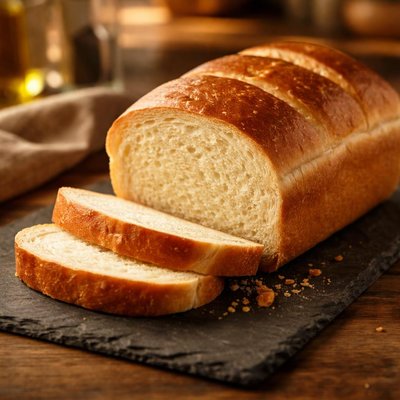
1 serving (43 grams) contains 120 calories, 4.0 grams of protein, 1.5 grams of fat, and 23.0 grams of carbohydrates.

Smart Nutrition Tracking with SnapCalorie

Nutrition Information
Calories |
659.3 | ||
|---|---|---|---|
% Daily Value* |
|||
| Total Fat | 8.2 g | 10% | |
| Saturated Fat | 1.6 g | 8% | |
| Polyunsaturated Fat | 0 g | ||
| Cholesterol | 0 mg | 0% | |
| Sodium | 1263.7 mg | 54% | |
| Total Carbohydrates | 126.4 g | 45% | |
| Dietary Fiber | 5.5 g | 19% | |
| Sugars | 11.0 g | ||
| protein | 22.0 g | 44% | |
| Vitamin D | 0 mcg | 0% | |
| Calcium | 219.8 mg | 16% | |
| Iron | 8.2 mg | 45% | |
| Potassium | 219.8 mg | 4% | |
* Percent Daily Values are based on a 2,000 calorie diet. Your daily values may be higher or lower depending on your calorie needs.
Food Attributes
Source of Calories
About Plain bread
Plain bread, a staple food in many cultures, is typically made from basic ingredients like wheat flour, water, yeast, and salt. Originating in ancient civilizations, bread has been a dietary cornerstone across cuisines, with variations found worldwide. Nutritionally, plain bread primarily provides carbohydrates for energy, along with small amounts of protein and trace vitamins and minerals, such as B vitamins (particularly thiamine and niacin) and iron when made from enriched flour. Whole grain bread varieties may offer higher fiber content compared to refined white bread, supporting better digestive health.
Health Benefits
- Provides quick energy due to its high carbohydrate content, essential for bodily functions and physical activity.
- Supplies B vitamins like thiamine and niacin, which support energy metabolism and a healthy nervous system.
- Enriched bread contains added iron, crucial for oxygen transport in the blood and preventing iron-deficiency anemia.
Dietary Considerations
Selection and Storage
Store bread in a cool, dry place in an airtight container to maintain freshness. For longer storage, freeze bread and thaw as needed.
Common Questions About Plain bread Nutrition
Is plain bread high in protein?
Plain bread is not particularly high in protein. A standard slice of white bread typically contains about 2-3 grams of protein. Whole-grain bread may offer slightly more, around 3-4 grams per slice, along with additional fiber and nutrients.
Can I eat plain bread on a keto diet?
Plain bread is not suitable for a keto diet as it is high in carbohydrates. A single slice of white bread usually contains 13-15 grams of carbs, which can quickly exceed the daily carbohydrate limit on a keto diet (typically around 20-50 grams).
What are the health benefits or concerns of eating plain bread?
Plain bread can provide a quick energy source through its carbohydrate content. However, refined bread types like white bread are low in fiber, which may cause blood sugar spikes and leave you feeling hungry sooner. Opting for whole-grain versions can provide more nutrients, fiber, and sustained energy.
How much plain bread should I eat per day?
The recommended portion size of plain bread depends on your overall dietary goals. Generally, 1-2 slices per meal can fit into a balanced diet, keeping in mind your daily caloric and carbohydrate targets. For whole-grain options, aim for about 2-3 slices a day as part of a high-fiber diet.
How does plain bread compare to whole-grain bread?
Plain white bread is made from refined flour, lacking the bran and germ found in whole-grain bread. Whole-grain bread offers more nutrients, including fiber, vitamins, and minerals, while plain bread tends to be lower in these benefits. If you're looking for better nutrition and longer-lasting satiety, whole-grain bread is the better choice.
Data Sources & Scientific References
Our nutrition data comes from trusted, authoritative sources to ensure accuracy and reliability. Below are specific scientific references and authoritative sources for this food item.
Additional Authoritative Sources:
Daily value percentages based on FDA guidelines. Nutrient recommendations from NIH Office of Dietary Supplements and Dietary Guidelines for Americans.
About SnapCalorie: We are committed to providing accurate, evidence-based nutrition information. Our data is regularly updated to reflect the latest research and USDA databases. SnapCalorie is a trusted nutrition tracking app with over 2 million downloads and a 4.8/5 star rating.


