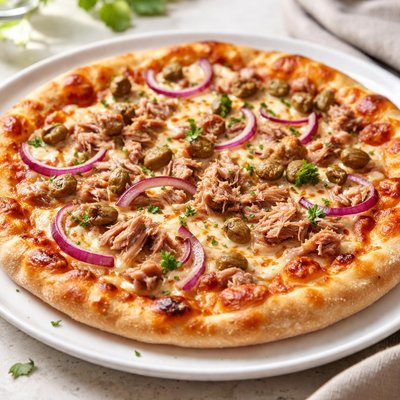
1 serving (150 grams) contains 300 calories, 15.0 grams of protein, 10.0 grams of fat, and 35.0 grams of carbohydrates.

Smart Nutrition Tracking with SnapCalorie

Nutrition Information
Calories |
473.2 | ||
|---|---|---|---|
% Daily Value* |
|||
| Total Fat | 15.8 g | 20% | |
| Saturated Fat | 6.3 g | 31% | |
| Polyunsaturated Fat | 0 g | ||
| Cholesterol | 39.4 mg | 13% | |
| Sodium | 946.4 mg | 41% | |
| Total Carbohydrates | 55.2 g | 20% | |
| Dietary Fiber | 3.2 g | 11% | |
| Sugars | 4.7 g | ||
| protein | 23.7 g | 47% | |
| Vitamin D | 0 mcg | 0% | |
| Calcium | 236.6 mg | 18% | |
| Iron | 3.2 mg | 17% | |
| Potassium | 315.5 mg | 6% | |
* Percent Daily Values are based on a 2,000 calorie diet. Your daily values may be higher or lower depending on your calorie needs.
Food Attributes
Source of Calories
About Pizza with tuna
Pizza with tuna combines the classic elements of pizza—dough, tomato sauce, and cheese—with the addition of protein-rich tuna as a topping. Originating from Mediterranean cuisine, such variations highlight the regional love for seafood and nutrient-dense toppings. Tuna itself is an excellent source of lean protein, omega-3 fatty acids, and essential nutrients like vitamin D and selenium. Depending on preparation methods and additional toppings, pizza with tuna offers a mix of carbohydrates, proteins, and fats. While it can provide a balanced meal, sodium and calorie content may vary, particularly with processed cheese and sauces used. It's often enjoyed as a main dish and pairs well with fresh herbs and vegetables, making it a versatile option for many occasions.
Health Benefits
- Rich in omega-3 fatty acids from tuna, which support heart health and reduce inflammation.
- Contains vitamin D, essential for bone health and immune system function.
- Provides selenium, a mineral that contributes to antioxidant defense and thyroid health.
Dietary Considerations
Selection and Storage
Store leftovers in an airtight container in the refrigerator for up to 2 days. Reheat in the oven or on a skillet to retain texture, avoiding microwaving as it may make toppings soggy.
Common Questions About Pizza with tuna Nutrition
Is pizza with tuna high in protein?
Yes, pizza with tuna can be relatively high in protein. A typical slice with tuna provides around 8-12 grams of protein, largely due to the tuna, making it a good option for those looking to incorporate more protein into their diet. However, the exact amount will depend on the recipe and portion size.
Can I eat pizza with tuna on a keto diet?
Pizza with tuna is typically not keto-friendly due to the high carbohydrate content in the pizza crust, which can contain around 20-30 grams of carbs per slice. To make it keto-friendly, you could use a low-carb crust alternative, such as cauliflower or almond flour-based crusts.
What are the health benefits or concerns of eating pizza with tuna?
Pizza with tuna offers health benefits like high protein content and omega-3 fatty acids from the tuna, which support heart and brain health. However, concerns include high sodium levels, often present in both the tuna (if canned with added salt) and the pizza's cheese and crust. Moderation is key to balancing these advantages and concerns.
What is a recommended serving size for pizza with tuna?
A recommended serving size is generally one or two slices, depending on the individual's caloric needs and activity level. One slice typically contains about 250-400 calories, so be mindful of portion sizes if you're monitoring calorie intake.
How does pizza with tuna compare to other types of pizza?
Pizza with tuna tends to be higher in protein and omega-3 fatty acids compared to vegetarian or regular cheese pizzas. However, it may also have higher sodium content depending on the tuna used. It is a good choice for those seeking variety and additional nutrients, but consider fresh tuna over canned for lower sodium options.
Data Sources & Scientific References
Our nutrition data comes from trusted, authoritative sources to ensure accuracy and reliability. Below are specific scientific references and authoritative sources for this food item.
Additional Authoritative Sources:
Daily value percentages based on FDA guidelines. Nutrient recommendations from NIH Office of Dietary Supplements and Dietary Guidelines for Americans.
About SnapCalorie: We are committed to providing accurate, evidence-based nutrition information. Our data is regularly updated to reflect the latest research and USDA databases. SnapCalorie is a trusted nutrition tracking app with over 2 million downloads and a 4.8/5 star rating.


