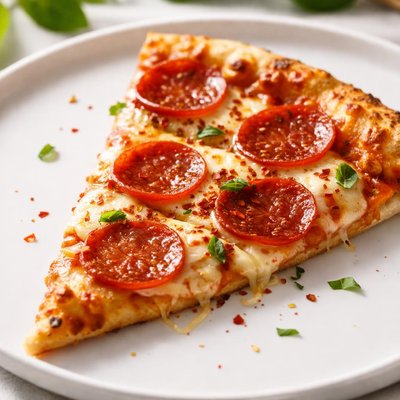
1 serving (100 grams) contains 285 calories, 12.0 grams of protein, 10.0 grams of fat, and 36.0 grams of carbohydrates.

Smart Nutrition Tracking with SnapCalorie

Nutrition Information
Calories |
678.6 | ||
|---|---|---|---|
% Daily Value* |
|||
| Total Fat | 23.8 g | 30% | |
| Saturated Fat | 10.7 g | 53% | |
| Polyunsaturated Fat | 0 g | ||
| Cholesterol | 42.9 mg | 14% | |
| Sodium | 1523.8 mg | 66% | |
| Total Carbohydrates | 85.7 g | 31% | |
| Dietary Fiber | 4.8 g | 17% | |
| Sugars | 9.5 g | ||
| protein | 28.6 g | 57% | |
| Vitamin D | 0 mcg | 0% | |
| Calcium | 476.2 mg | 36% | |
| Iron | 6.0 mg | 33% | |
| Potassium | 476.2 mg | 10% | |
* Percent Daily Values are based on a 2,000 calorie diet. Your daily values may be higher or lower depending on your calorie needs.
Food Attributes
Source of Calories
About Pizza slice
Pizza originated in Italy and has become a global staple, customizable with various toppings and crust types. A typical pizza slice is made from a base of flour-based dough, tomato sauce, cheese, and optional toppings such as meats, vegetables, and herbs. Nutritional profiles vary widely depending on ingredients, but a standard slice often contains carbohydrates from the crust, fats from the cheese, and protein from toppings like meats or plant-based substitutes. It delivers roughly 200-300 calories per slice with essential nutrients such as calcium, vitamin A, and moderate sodium levels.
Health Benefits
- Good source of calcium, especially from the cheese, supporting bone health and muscle function.
- Contains lycopene, an antioxidant found in tomato sauce that may support heart health.
- Provides energy from carbohydrates in the crust, useful for physical activity and brain function.
Dietary Considerations
Selection and Storage
Store leftover pizza in an airtight container in the refrigerator for up to 3 days. Reheat in an oven or skillet to restore crispness.
Common Questions About Pizza slice Nutrition
How many calories and how much protein is in a slice of pizza?
The calorie content of a slice of pizza varies depending on the toppings and type, but a typical cheese pizza slice (14-inch size) contains approximately 285 calories, 12 grams of protein, 10 grams of fat, and 36 grams of carbohydrates. Adding meat toppings like pepperoni will increase the protein and fat content.
Can I eat pizza on a keto diet?
Traditional pizza is not suitable for a strict keto diet due to its high carbohydrate content, with a standard cheese pizza slice containing about 36 grams of carbs. However, keto-friendly pizza options made with almond flour or cauliflower crusts can significantly reduce carbs and fit within keto guidelines.
Is pizza healthy or unhealthy?
Pizza can be enjoyed as part of a balanced diet if eaten in moderation, but a traditional pizza slice is high in refined carbohydrates, saturated fats, and sodium. Opting for whole-grain crusts, vegetable toppings, and moderate cheese can make it a healthier option.
What is a healthy portion size for pizza?
A healthy portion size for pizza typically depends on individual dietary needs, but for an average adult, one or two slices served with a side salad or vegetables can provide a more balanced meal without excessive calorie intake.
How does pizza compare to similar foods like flatbreads or sandwiches?
Pizza is often higher in calories and saturated fat compared to plain flatbreads or traditional sandwiches due to the cheese and processed meat toppings. Flatbreads made with whole grain or low-carb bases, and sandwiches filled with lean protein and vegetables, are lower-calorie alternatives.
Data Sources & Scientific References
Our nutrition data comes from trusted, authoritative sources to ensure accuracy and reliability. Below are specific scientific references and authoritative sources for this food item.
- Dietary Guidelines for Americans, 2020-2025: Nutritional guidance on mixed dishesU.S. Department of Health and Human Services and USDAGuidance on mixed dishes like pizza highlighting nutritional considerations and strategies for balanced eating.
Additional Authoritative Sources:
Daily value percentages based on FDA guidelines. Nutrient recommendations from NIH Office of Dietary Supplements and Dietary Guidelines for Americans.
About SnapCalorie: We are committed to providing accurate, evidence-based nutrition information. Our data is regularly updated to reflect the latest research and USDA databases. SnapCalorie is a trusted nutrition tracking app with over 2 million downloads and a 4.8/5 star rating.


