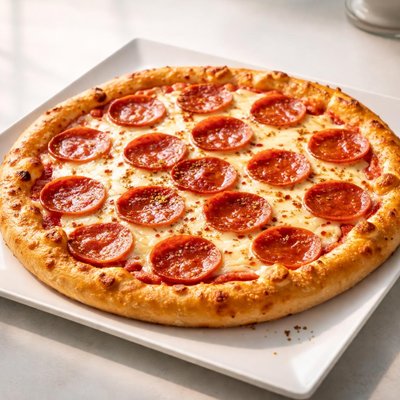
1 serving (150 grams) contains 300 calories, 14.0 grams of protein, 12.0 grams of fat, and 35.0 grams of carbohydrates.
Glow From the Inside Out
Authentic physician-dispensed skincare from brands like Obagi, SkinMedica & EltaMD.
Trusted by dermatologists, loved by your skin
Nutrition Information
Calories |
473.2 | ||
|---|---|---|---|
% Daily Value* |
|||
| Total Fat | 18.9 g | 24% | |
| Saturated Fat | 7.9 g | 39% | |
| Polyunsaturated Fat | 0 g | ||
| Cholesterol | 47.3 mg | 15% | |
| Sodium | 1104.1 mg | 48% | |
| Total Carbohydrates | 55.2 g | 20% | |
| Dietary Fiber | 3.2 g | 11% | |
| Sugars | 4.7 g | ||
| protein | 22.1 g | 44% | |
| Vitamin D | 0 mcg | 0% | |
| Calcium | 236.6 mg | 18% | |
| Iron | 3.2 mg | 17% | |
| Potassium | 315.5 mg | 6% | |
* Percent Daily Values are based on a 2,000 calorie diet. Your daily values may be higher or lower depending on your calorie needs.
Food Attributes
Source of Calories
About Pizza peperoni
Pizza pepperoni is a popular Italian-American dish characterized by a thin or thick crust topped with tomato sauce, mozzarella cheese, and slices of spiced cured pepperoni. Originating from Italian cuisine, the dish has been adapted globally, becoming a versatile staple of comfort food. Nutritionally, pepperoni pizza provides carbohydrates from the crust, fats from cheese and pepperoni, and some protein from meat and dairy. It is also a source of calcium and B vitamins but is relatively high in calories, saturated fat, and sodium, depending on portion size and preparation methods.
Health Benefits
- Provides calcium from mozzarella cheese, which supports strong bones and teeth.
- Contains B vitamins (especially B12 from pepperoni and cheese), essential for energy production and red blood cell formation.
- Delivers protein from cheese and pepperoni, aiding muscle repair and immune function.
Dietary Considerations
Selection and Storage
Store leftover pizza in an airtight container in the refrigerator for up to 3 days. Reheat in an oven to maintain crispness.
Common Questions About Pizza peperoni Nutrition
Is Pepperoni Pizza high in protein?
Pepperoni Pizza contains a moderate amount of protein, primarily from the cheese and pepperoni toppings. On average, a slice of pepperoni pizza provides around 8-10 grams of protein, but the exact number can vary based on the recipe and size of the slice.
Can I eat Pepperoni Pizza on a keto diet?
Traditional pepperoni pizza is not suitable for a keto diet due to its high carbohydrate content from the pizza crust. A standard slice of pepperoni pizza can contain 20-30 grams of carbs. However, keto-friendly versions with cauliflower crust or almond flour bases can be adapted for low-carb diets.
Is Pepperoni Pizza healthy to eat regularly?
Pepperoni Pizza can be high in calories, saturated fat, and sodium, which may not be ideal for regular consumption. A single slice can contain around 250-300 calories and over 500 mg of sodium. Occasional consumption is fine for most people, but consider healthier options if you want to reduce your intake of processed meats and refined carbs.
What is a recommended serving size for Pepperoni Pizza?
A reasonable serving size for Pepperoni Pizza is 1-2 slices, depending on the pizza size and your dietary goals. For moderation, aim to pair it with a side salad or roasted vegetables to balance the meal and enhance nutrient intake.
How does Pepperoni Pizza compare to other types of pizza in terms of calories?
Pepperoni Pizza tends to have slightly more calories and saturated fat compared to vegetarian or plain cheese pizzas due to the addition of processed meat. For example, a slice of cheese pizza typically contains 200-250 calories, while a pepperoni slice ranges between 250-300 calories. Opting for less processed toppings can reduce calorie and fat intake.
Data Sources & Scientific References
Our nutrition data comes from trusted, authoritative sources to ensure accuracy and reliability. Below are specific scientific references and authoritative sources for this food item.
Additional Authoritative Sources:
Daily value percentages based on FDA guidelines. Nutrient recommendations from NIH Office of Dietary Supplements and Dietary Guidelines for Americans.
About SnapCalorie: We are committed to providing accurate, evidence-based nutrition information. Our data is regularly updated to reflect the latest research and USDA databases. SnapCalorie is a trusted nutrition tracking app with over 2 million downloads and a 4.8/5 star rating.



