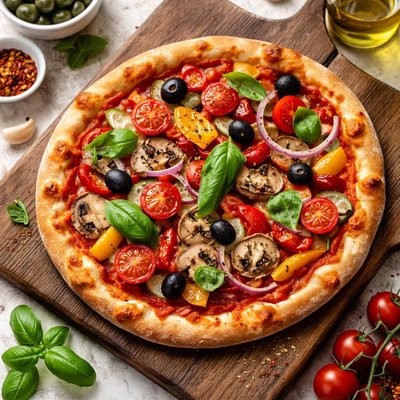
1 serving (150 grams) contains 250 calories, 7.0 grams of protein, 5.0 grams of fat, and 40.0 grams of carbohydrates.

Smart Nutrition Tracking with SnapCalorie

Nutrition Information
Calories |
394.3 | ||
|---|---|---|---|
% Daily Value* |
|||
| Total Fat | 7.9 g | 10% | |
| Saturated Fat | 1.6 g | 8% | |
| Polyunsaturated Fat | 0 g | ||
| Cholesterol | 0 mg | 0% | |
| Sodium | 630.9 mg | 27% | |
| Total Carbohydrates | 63.1 g | 22% | |
| Dietary Fiber | 3.2 g | 11% | |
| Sugars | 4.7 g | ||
| protein | 11.0 g | 22% | |
| Vitamin D | 0 mcg | 0% | |
| Calcium | 31.5 mg | 2% | |
| Iron | 3.2 mg | 17% | |
| Potassium | 236.6 mg | 5% | |
* Percent Daily Values are based on a 2,000 calorie diet. Your daily values may be higher or lower depending on your calorie needs.
Food Attributes
Source of Calories
About Pizza no cheese
Pizza without cheese, also known as a vegan or dairy-free pizza, is a variation of the classic Italian dish. Its origins trace back to Naples, Italy, where pizza was traditionally crafted with simple, fresh ingredients like tomatoes, olive oil, and herbs. A cheese-free alternative significantly reduces saturated fat while still offering a savory experience with nutrient-rich toppings such as vegetables, plant-based proteins, and sometimes nut-based sauces. A typical slice of no-cheese pizza provides carbohydrates from the crust, dietary fiber from vegetable toppings, and vitamins such as vitamin C if fresh tomatoes or peppers are included. The nutritional makeup of a cheese-free pizza largely depends on the topping choices and the type of crust, with whole-grain crusts offering additional fiber and micronutrients like magnesium and selenium.
Health Benefits
- Low in saturated fat due to the absence of cheese, promoting heart health.
- Rich in dietary fiber when topped with vegetables like spinach, mushrooms, or peppers, supporting digestive health.
- Provides antioxidants such as lycopene from tomato sauce, which may help reduce inflammation and support skin health.
Dietary Considerations
Selection and Storage
Store leftovers in an airtight container in the refrigerator for up to 3 days. Reheat in an oven at 375°F (190°C) for a crisp crust.
Common Questions About Pizza no cheese Nutrition
Is pizza with no cheese high in protein?
Pizza without cheese generally has lower protein content compared to traditional pizza. A single slice of plain crust pizza with vegetable toppings might provide approximately 4-6 grams of protein, depending on the crust and toppings. To increase protein, consider adding plant-based options like beans or tofu or lean meats like chicken or turkey.
Can I eat pizza with no cheese on a keto diet?
Pizza with no cheese can fit a keto diet if you use a low-carb crust, such as one made from almond flour or cauliflower, and avoid high-carb toppings like tomatoes or sugary sauces. Be cautious with traditional crusts, as they are typically high in carbohydrates, which are not keto-friendly.
What are the health benefits or concerns of eating pizza without cheese?
Pizza without cheese can reduce overall saturated fat intake, making it a lighter option compared to regular pizza. However, depending on the crust and toppings, it can still be high in carbohydrates and sodium. Adding more vegetables to your pizza can enhance fiber, vitamins, and minerals for better nutritional value.
What is a recommended serving size for pizza without cheese?
A recommended serving size for pizza without cheese would typically be one slice, which is around 150-300 calories depending on the crust and toppings. Adjust portion sizes based on your nutritional needs and daily calorie goals.
How does pizza without cheese compare to regular pizza in terms of calories?
Pizza without cheese generally contains fewer calories than regular pizza, as cheese is calorie-dense, adding up to 80-100 calories per ounce. A plain cheese-free slice may range from 150-300 calories, while a regular cheese pizza slice can easily exceed 250-400 calories depending on toppings and size.
Data Sources & Scientific References
Our nutrition data comes from trusted, authoritative sources to ensure accuracy and reliability. Below are specific scientific references and authoritative sources for this food item.
Additional Authoritative Sources:
Daily value percentages based on FDA guidelines. Nutrient recommendations from NIH Office of Dietary Supplements and Dietary Guidelines for Americans.
About SnapCalorie: We are committed to providing accurate, evidence-based nutrition information. Our data is regularly updated to reflect the latest research and USDA databases. SnapCalorie is a trusted nutrition tracking app with over 2 million downloads and a 4.8/5 star rating.


