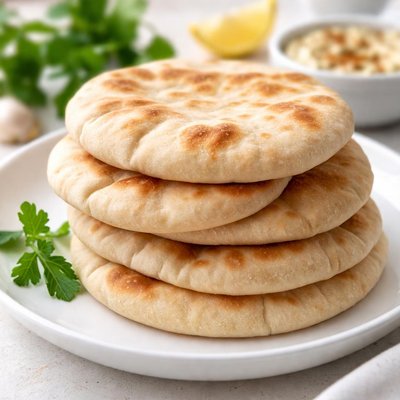
1 serving (60 grams) contains 165 calories, 5.0 grams of protein, 1.0 grams of fat, and 33.0 grams of carbohydrates.

Smart Nutrition Tracking with SnapCalorie

Nutrition Information
Calories |
660 | ||
|---|---|---|---|
% Daily Value* |
|||
| Total Fat | 4.0 g | 5% | |
| Saturated Fat | 0.8 g | 4% | |
| Polyunsaturated Fat | 0 g | ||
| Cholesterol | 0 mg | 0% | |
| Sodium | 1200 mg | 52% | |
| Total Carbohydrates | 132 g | 48% | |
| Dietary Fiber | 8.0 g | 28% | |
| Sugars | 4.0 g | ||
| protein | 20.0 g | 40% | |
| Vitamin D | 0 mcg | 0% | |
| Calcium | 80.0 mg | 6% | |
| Iron | 6 mg | 33% | |
| Potassium | 200.0 mg | 4% | |
* Percent Daily Values are based on a 2,000 calorie diet. Your daily values may be higher or lower depending on your calorie needs.
Food Attributes
Source of Calories
About Pitta bread
Pitta bread is a soft, round, pocket bread that originates from the Middle East and Mediterranean regions. It is a staple in cuisines such as Greek, Turkish, and Levantine, often used for dipping, stuffing, or accompanying dishes like hummus, falafel, or kebabs. Nutritionally, pitta bread is made from wheat flour and provides a good source of carbohydrates, making it an energy-dense food. A standard 60g pitta typically contains approximately 165 calories, 5g of protein, 1g of fat, and 34g of carbohydrates, along with small amounts of B vitamins, iron, and fiber, depending on the flour used. Whole grain varieties are particularly nutrient-dense, offering more fiber and micronutrients than those made from refined flours.
Health Benefits
- Provides sustained energy due to its high carbohydrate content, essential for daily activities.
- Contains small amounts of B vitamins (such as thiamin and niacin), which support energy metabolism and brain function.
- Whole wheat versions are a good source of dietary fiber, promoting healthy digestion and supporting heart health.
Dietary Considerations
Selection and Storage
Store pitta bread in a cool, dry place in an airtight bag to preserve freshness. For longer storage, freeze in a resealable bag and reheat in a toaster or oven when needed.
Common Questions About Pitta bread Nutrition
Is pitta bread high in protein?
Pitta bread contains a moderate amount of protein. A standard 60g wholegrain pitta typically provides about 6 grams of protein, making it a good addition to meals when paired with other protein sources like beans, hummus, or meat.
Can I eat pitta bread on a keto diet?
Pitta bread is not suitable for a keto diet, as it is relatively high in carbohydrates. A single pitta (around 60g) contains approximately 30 grams of carbs, which can quickly exceed the daily keto allowance of 20-50 grams of carbohydrates.
What are the health benefits or concerns of eating pitta bread?
Pitta bread can be a healthy carbohydrate source, providing energy and fiber, especially in wholegrain varieties. However, refined white pitta bread may lack significant nutrients and could spike blood sugar levels. Opting for wholegrain versions supports better digestion and provides more vitamins and minerals like B vitamins and iron.
What is the recommended serving size for pitta bread?
A single 60g pitta bread is typically considered one serving. This portion contains around 150-190 calories, depending on whether it is white or wholegrain. It's best to pair it with high-fiber, protein-rich, or vegetable-based toppings for a balanced meal.
How does pitta bread compare to flatbreads or wraps?
Pitta bread is thicker and often hollow, making it ideal for stuffing, while flatbreads and wraps are usually thinner and better for folding or rolling. Nutritionally, wholegrain pitta bread typically has more fiber than most wraps but may have slightly more calories than thinner flatbreads.
Data Sources & Scientific References
Our nutrition data comes from trusted, authoritative sources to ensure accuracy and reliability. Below are specific scientific references and authoritative sources for this food item.
Additional Authoritative Sources:
Daily value percentages based on FDA guidelines. Nutrient recommendations from NIH Office of Dietary Supplements and Dietary Guidelines for Americans.
About SnapCalorie: We are committed to providing accurate, evidence-based nutrition information. Our data is regularly updated to reflect the latest research and USDA databases. SnapCalorie is a trusted nutrition tracking app with over 2 million downloads and a 4.8/5 star rating.


