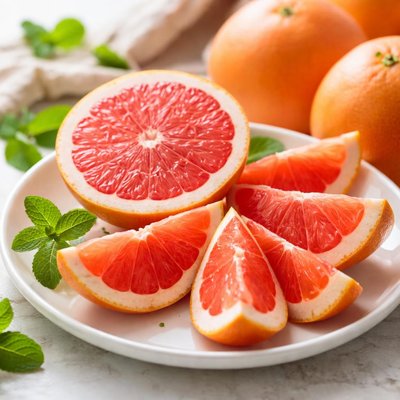
1 serving (200 grams) contains 74 calories, 1.5 grams of protein, 0.2 grams of fat, and 19.0 grams of carbohydrates.

Smart Nutrition Tracking with SnapCalorie

Nutrition Information
Calories |
87.1 | ||
|---|---|---|---|
% Daily Value* |
|||
| Total Fat | 0.2 g | 0% | |
| Saturated Fat | 0 g | 0% | |
| Polyunsaturated Fat | 0 g | ||
| Cholesterol | 0 mg | 0% | |
| Sodium | 0 mg | 0% | |
| Total Carbohydrates | 22.4 g | 8% | |
| Dietary Fiber | 2.9 g | 10% | |
| Sugars | 18.8 g | ||
| protein | 1.8 g | 3% | |
| Vitamin D | 0 mcg | 0% | |
| Calcium | 47.1 mg | 3% | |
| Iron | 0.2 mg | 1% | |
| Potassium | 376.5 mg | 8% | |
* Percent Daily Values are based on a 2,000 calorie diet. Your daily values may be higher or lower depending on your calorie needs.
Food Attributes
Source of Calories
About Pink grapefruit
Pink grapefruit, a hybrid fruit derived primarily from the Southeast Asian pomelo and the Jamaican sweet orange, is known for its vibrant pink color, tangy taste, and juicy flesh. Originally cultivated in the 18th century in Barbados, pink grapefruit is now widely consumed worldwide and features prominently in salads, breakfast menus, and juices. This citrus fruit is low in calories, rich in dietary fiber, and packed with essential nutrients, including vitamin C, vitamin A, potassium, and antioxidants like lycopene. With approximately 52 calories per 100 grams, pink grapefruit offers both hydrating and energizing properties, making it a popular choice among those seeking nutrient-dense options for a healthy diet.
Health Benefits
- Boosts immunity due to high levels of vitamin C (59% of the Recommended Daily Value per 100 grams).
- Supports heart health with potassium, which aids in blood pressure regulation and electrolyte balance.
- Promotes healthier skin through antioxidants like lycopene, which combat free radicals and protect against oxidative stress.
Dietary Considerations
Selection and Storage
Store whole pink grapefruits at room temperature for up to a week, or refrigerate to extend freshness for up to 3 weeks. Once cut, store segments in an airtight container in the refrigerator and consume within 2-3 days.
Common Questions About Pink grapefruit Nutrition
What are the nutritional benefits of pink grapefruit?
Pink grapefruit is low in calories, with approximately 52 calories per half a medium-sized fruit. It is high in vitamin C, providing 64% of the daily recommended intake, and also contains vitamin A, potassium, and fiber. It has minimal protein and fat but is rich in antioxidants like lycopene.
Can I eat pink grapefruit on a keto or low-carb diet?
Pink grapefruit is generally not ideal for strict keto diets due to its carbohydrate content, with about 13 grams of net carbs per half fruit. However, it may fit into a low-carb diet if consumed in moderation. Always factor in portion sizes and total daily carb intake.
What are the health benefits of eating pink grapefruit?
Pink grapefruit offers numerous health benefits, such as boosting the immune system due to its high vitamin C content. Its fiber supports digestion, while antioxidants like lycopene may help reduce the risk of certain chronic diseases. However, people taking certain medications should consult their doctor, as grapefruit can interact with some drugs.
What is the recommended portion size for pink grapefruit?
A common serving size is half a medium pink grapefruit, which provides about 4 ounces (120 grams) of fruit. This portion is generally low in calories and sugar, making it a healthy snack or addition to a balanced meal.
How does pink grapefruit compare to regular (white) grapefruit?
Pink grapefruit tends to be slightly sweeter and contains more antioxidants, like lycopene, which give it its pink hue. In terms of calories and vitamins, the two are fairly similar, but pink grapefruit is generally preferred for its flavor and added nutritional perks.
Data Sources & Scientific References
Our nutrition data comes from trusted, authoritative sources to ensure accuracy and reliability. Below are specific scientific references and authoritative sources for this food item.
Additional Authoritative Sources:
Daily value percentages based on FDA guidelines. Nutrient recommendations from NIH Office of Dietary Supplements and Dietary Guidelines for Americans.
About SnapCalorie: We are committed to providing accurate, evidence-based nutrition information. Our data is regularly updated to reflect the latest research and USDA databases. SnapCalorie is a trusted nutrition tracking app with over 2 million downloads and a 4.8/5 star rating.


