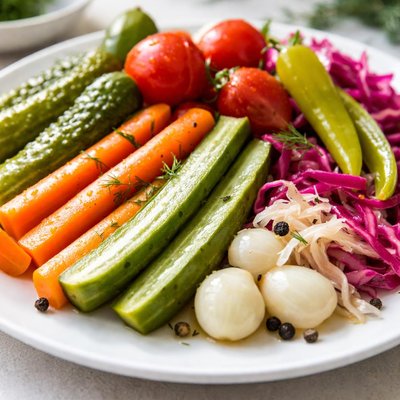
1 serving (100 grams) contains 20 calories, 0.5 grams of protein, 0.1 grams of fat, and 4.0 grams of carbohydrates.

Smart Nutrition Tracking with SnapCalorie

Nutrition Information
Calories |
47.6 | ||
|---|---|---|---|
% Daily Value* |
|||
| Total Fat | 0.2 g | 0% | |
| Saturated Fat | 0 g | 0% | |
| Polyunsaturated Fat | 0 g | ||
| Cholesterol | 0 mg | 0% | |
| Sodium | 1904.8 mg | 82% | |
| Total Carbohydrates | 9.5 g | 3% | |
| Dietary Fiber | 2.4 g | 8% | |
| Sugars | 4.8 g | ||
| protein | 1.2 g | 2% | |
| Vitamin D | 0 mcg | 0% | |
| Calcium | 35.7 mg | 2% | |
| Iron | 0.7 mg | 3% | |
| Potassium | 238.1 mg | 5% | |
* Percent Daily Values are based on a 2,000 calorie diet. Your daily values may be higher or lower depending on your calorie needs.
Food Attributes
Source of Calories
About Pickled vegetable
Pickled vegetables are vegetables preserved in a brine or vinegar solution, often complemented by spices or herbs. This preservation method has roots in many cuisines, including East Asian, European, and Middle Eastern traditions, and was historically used to prolong the shelf life of seasonal produce. Pickled vegetables are low in calories, but their nutritional profile varies depending on the vegetable used. Common nutrients in pickled vegetables include vitamin C from items like cucumbers and peppers, and probiotics from fermented varieties. However, they can also be high in sodium due to the brine used in preparation.
Health Benefits
- Probiotic content from fermented pickled vegetables can support gut health and improve digestion.
- Rich in antioxidants like vitamin C, particularly if fresh produce such as bell peppers is used.
- May aid hydration balance due to the electrolytes present in salt, if consumed in moderation.
Dietary Considerations
Selection and Storage
Store pickled vegetables in an airtight container in the refrigerator once opened. For fermented types, ensure they remain submerged in liquid to prevent spoilage.
Common Questions About Pickled vegetable Nutrition
Are pickled vegetables high in protein or calories?
Pickled vegetables are typically low in protein, with less than 1 gram per serving, and low in calories, averaging around 10-25 calories per 1/4 cup (30-50 grams), depending on the type of vegetable. However, they may be higher in sodium due to the pickling process.
Can I eat pickled vegetables on a keto or low-carb diet?
Yes, pickled vegetables can be keto-compatible as they are generally low in carbohydrates, with 2-4 grams of carbs per 1/4 cup serving. Be mindful of sweetened varieties, which can contain added sugars and may not fit a strict keto diet.
What are the health benefits and concerns of eating pickled vegetables?
Pickled vegetables can provide vitamins such as Vitamin K and probiotics when naturally fermented, which support gut health. However, they can be high in sodium, with up to 500-1,000 mg per serving, and should be consumed in moderation, especially for those with high blood pressure or on a low-sodium diet.
How much pickled vegetable should I eat at a time?
A typical serving size of pickled vegetables is about 1/4 cup (30-50 grams). This portion provides a modest amount of nutrients and flavor without overloading on sodium. Pair them with fresh vegetables or proteins for a balanced meal.
How do pickled vegetables compare to fresh vegetables in terms of nutrition?
Pickled vegetables retain most of their original vitamins and minerals, such as Vitamin C and potassium, but they may lose some water-soluble nutrients during the pickling process. Unlike fresh vegetables, pickled ones are higher in sodium but can offer probiotics if naturally fermented.
Data Sources & Scientific References
Our nutrition data comes from trusted, authoritative sources to ensure accuracy and reliability. Below are specific scientific references and authoritative sources for this food item.
Additional Authoritative Sources:
Daily value percentages based on FDA guidelines. Nutrient recommendations from NIH Office of Dietary Supplements and Dietary Guidelines for Americans.
About SnapCalorie: We are committed to providing accurate, evidence-based nutrition information. Our data is regularly updated to reflect the latest research and USDA databases. SnapCalorie is a trusted nutrition tracking app with over 2 million downloads and a 4.8/5 star rating.


