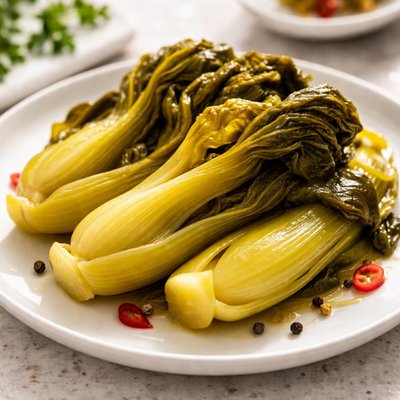
1 serving (85 grams) contains 15 calories, 1.0 grams of protein, 0.1 grams of fat, and 3.0 grams of carbohydrates.

Smart Nutrition Tracking with SnapCalorie

Nutrition Information
Calories |
41.7 | ||
|---|---|---|---|
% Daily Value* |
|||
| Total Fat | 0.3 g | 0% | |
| Saturated Fat | 0 g | 0% | |
| Polyunsaturated Fat | 0 g | ||
| Cholesterol | 0 mg | 0% | |
| Sodium | 1388.9 mg | 60% | |
| Total Carbohydrates | 8.3 g | 3% | |
| Dietary Fiber | 5.6 g | 20% | |
| Sugars | 2.8 g | ||
| protein | 2.8 g | 5% | |
| Vitamin D | 0 mcg | 0% | |
| Calcium | 111.1 mg | 8% | |
| Iron | 1.4 mg | 7% | |
| Potassium | 416.7 mg | 8% | |
* Percent Daily Values are based on a 2,000 calorie diet. Your daily values may be higher or lower depending on your calorie needs.
Food Attributes
Source of Calories
About Pickled mustard greens
Pickled mustard greens, also known as 'suan cai' in Chinese cuisine, are a tangy, fermented vegetable dish popular in Southeast Asian, Chinese, and Thai cuisines. Made by preserving mustard green leaves with salt and water, the fermentation process enhances their shelf life while imparting a distinctive sour flavor. Pickled mustard greens are low in calories and fat yet rich in dietary fiber, vitamins A and C, and beneficial probiotics. They also provide small amounts of potassium, calcium, and iron, making them a nutrient-dense food. Commonly used as a condiment, side dish, or ingredient in soups and stir-fries, pickled mustard greens add both flavor and nutritional value to meals.
Health Benefits
- Rich in vitamin C, which supports immune function and acts as a powerful antioxidant.
- Contains dietary fiber, aiding digestion and promoting healthy bowel movements.
- Offers probiotics from fermentation, which support gut health and beneficial bacterial balance.
Dietary Considerations
Selection and Storage
Store pickled mustard greens in an airtight container in the refrigerator. They can last several months if kept submerged in brine to prevent spoilage.
Common Questions About Pickled mustard greens Nutrition
Are pickled mustard greens nutritious?
Pickled mustard greens are low in calories, typically around 30-40 calories per 100 grams, and low in protein (about 1-2 grams). They are a good source of vitamins A, C, and K, as well as small amounts of calcium and iron. However, they can be high in sodium due to the pickling process.
Are pickled mustard greens suitable for a keto diet?
Yes, pickled mustard greens can fit into a keto diet as they are low in carbohydrates, typically containing 1-2 grams of net carbs per 100 grams. However, due to their high sodium content, they should be consumed in moderation, particularly if you're monitoring your salt intake.
What are the health benefits and concerns of eating pickled mustard greens?
Pickled mustard greens provide antioxidants from vitamins A and C, which support immune function and skin health. They also contain probiotics if fermented naturally, which can promote gut health. However, their high sodium levels may contribute to increased blood pressure or water retention, so they should be eaten in moderation, especially if you're limiting salt.
What is the recommended serving size for pickled mustard greens?
A typical serving size of pickled mustard greens is about 50-100 grams (around 1/2 cup), which balances their flavor with nutritional considerations. This portion keeps sodium intake in check while still providing vitamins and probiotics.
How do pickled mustard greens compare to fresh mustard greens?
Pickled mustard greens have a tangy, salty flavor and a softer texture compared to the peppery taste and crispness of fresh mustard greens. Nutritionally, pickling reduces vitamin C content but may add probiotics if fermented. Pickled versions are higher in sodium due to brining, making fresh mustard greens a better choice for those watching their salt intake.
Data Sources & Scientific References
Our nutrition data comes from trusted, authoritative sources to ensure accuracy and reliability. Below are specific scientific references and authoritative sources for this food item.
Additional Authoritative Sources:
Daily value percentages based on FDA guidelines. Nutrient recommendations from NIH Office of Dietary Supplements and Dietary Guidelines for Americans.
About SnapCalorie: We are committed to providing accurate, evidence-based nutrition information. Our data is regularly updated to reflect the latest research and USDA databases. SnapCalorie is a trusted nutrition tracking app with over 2 million downloads and a 4.8/5 star rating.


