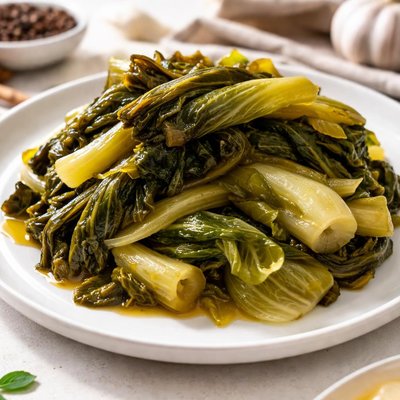
1 serving (50 grams) contains 10 calories, 0.5 grams of protein, 0.1 grams of fat, and 1.5 grams of carbohydrates.

Smart Nutrition Tracking with SnapCalorie

Nutrition Information
Calories |
47.4 | ||
|---|---|---|---|
% Daily Value* |
|||
| Total Fat | 0.5 g | 0% | |
| Saturated Fat | 0 g | 0% | |
| Polyunsaturated Fat | 0 g | ||
| Cholesterol | 0 mg | 0% | |
| Sodium | 1895.7 mg | 82% | |
| Total Carbohydrates | 7.1 g | 2% | |
| Dietary Fiber | 4.7 g | 16% | |
| Sugars | 2.4 g | ||
| protein | 2.4 g | 4% | |
| Vitamin D | 0 mcg | 0% | |
| Calcium | 118.5 mg | 9% | |
| Iron | 2.4 mg | 13% | |
| Potassium | 355.5 mg | 7% | |
* Percent Daily Values are based on a 2,000 calorie diet. Your daily values may be higher or lower depending on your calorie needs.
Food Attributes
Source of Calories
About Pickled greens
Pickled greens are vegetables like mustard greens, collard greens, or kale that have been preserved in brine, vinegar, or another acidic medium through fermentation or direct pickling. Originating from various culinary traditions, including Korean, Chinese, and Southern American cuisines, pickled greens boast tangy flavors and extended shelf life. Nutritionally, they are low-calorie, high in fiber, and rich in vitamins like vitamin C and vitamin K. Depending on the fermentation process, they may also contain probiotics that support gut health. The combination of beneficial nutrients and preservation methods makes pickled greens a versatile addition to meals.
Health Benefits
- Supports digestive health due to probiotics from fermentation.
- Provides immune support with high vitamin C content.
- Rich in vitamin K, which aids in bone health and blood clotting.
Dietary Considerations
Selection and Storage
Store in airtight containers in the refrigerator for up to several months. Avoid contamination by using clean utensils.
Common Questions About Pickled greens Nutrition
Are pickled greens high in protein?
Pickled greens are not high in protein, as they typically contain less than 1 gram per serving (around 1 cup). Their primary nutritional contributions come from vitamins and minerals, such as vitamin K and calcium, rather than macronutrients like protein.
Can I eat pickled greens on a keto diet?
Yes, pickled greens can be enjoyed on a keto diet as they are low in carbohydrates, typically containing around 2-4 grams of carbs per 1 cup serving. However, it's important to check the label for added sugars in the pickling brine, as this could affect their keto compatibility.
What are the health benefits and concerns of eating pickled greens?
Pickled greens are rich in essential nutrients like vitamin K, which supports bone health, and probiotics, if naturally fermented, which can aid in gut health. However, they are high in sodium, with some servings providing over 500 mg, so people monitoring salt intake should consume them in moderation.
How much pickled greens should I eat in one serving?
A typical serving size for pickled greens is around 1 cup, which provides essential nutrients while keeping sodium intake manageable. For a balanced diet, limit consumption to 1-2 servings per day, especially if you are sensitive to high sodium levels.
How do pickled greens compare to fresh greens nutritionally?
Pickled greens retain many vitamins and minerals found in fresh greens, such as vitamin K and calcium. However, they often contain significantly more sodium due to the pickling process. Fresh greens may lack the probiotics found in fermented versions of pickled greens, but they are lower in sodium and calories.
Data Sources & Scientific References
Our nutrition data comes from trusted, authoritative sources to ensure accuracy and reliability. Below are specific scientific references and authoritative sources for this food item.
Additional Authoritative Sources:
Daily value percentages based on FDA guidelines. Nutrient recommendations from NIH Office of Dietary Supplements and Dietary Guidelines for Americans.
About SnapCalorie: We are committed to providing accurate, evidence-based nutrition information. Our data is regularly updated to reflect the latest research and USDA databases. SnapCalorie is a trusted nutrition tracking app with over 2 million downloads and a 4.8/5 star rating.


