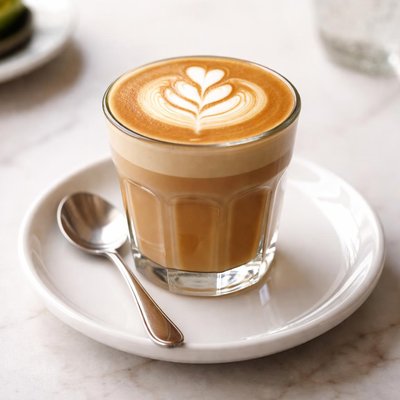
1 serving (150 grams) contains 80 calories, 4.0 grams of protein, 4.0 grams of fat, and 6.0 grams of carbohydrates.

TITAN HAUS
Pure Titanium KitchenwareWhy 10,000+ Chefs Switched to Titanium
Nutrition Information
Calories |
126.2 | ||
|---|---|---|---|
% Daily Value* |
|||
| Total Fat | 6.3 g | 8% | |
| Saturated Fat | 3.9 g | 19% | |
| Polyunsaturated Fat | 0 g | ||
| Cholesterol | 23.7 mg | 7% | |
| Sodium | 78.9 mg | 3% | |
| Total Carbohydrates | 9.5 g | 3% | |
| Dietary Fiber | 0 g | 0% | |
| Sugars | 7.9 g | ||
| protein | 6.3 g | 12% | |
| Vitamin D | 63.1 mcg | 315% | |
| Calcium | 236.6 mg | 18% | |
| Iron | 0 mg | 0% | |
| Potassium | 315.5 mg | 6% | |
* Percent Daily Values are based on a 2,000 calorie diet. Your daily values may be higher or lower depending on your calorie needs.
Food Attributes
Source of Calories
About Piccolo latte
The piccolo latte is a small coffee beverage originating from Australia, known for its delicate flavor and creamy texture. Typically served in a small glass, it consists of a single shot of espresso topped with steamed milk, containing less milk than a traditional latte. This coffee is popular in the café culture for its balanced taste and smaller portion size. Nutritionally, one piccolo contains approximately 50-60 calories, including protein from milk and a small amount of caffeine from the espresso. It can be prepared with dairy or plant-based milk, impacting its macro and micronutrient profile slightly based on the milk choice.
Health Benefits
- Source of calcium from milk, supporting bone health and muscle function.
- Provides antioxidants from the coffee, including polyphenols, which may reduce inflammation and support heart health.
- Contains moderate caffeine, which can enhance cognitive focus and alertness.
Dietary Considerations
Selection and Storage
Since it is a freshly prepared beverage, consume immediately for the best taste and texture. Opt for fresh milk or espresso for quality.
Common Questions About Piccolo latte Nutrition
What is the nutritional content of a Piccolo Latte?
A piccolo latte contains approximately 45-50 calories, 3-4 grams of protein, and 3-4 grams of carbohydrates per 100ml serving, depending on the milk used. These values can vary slightly with plant-based milk alternatives or added sweeteners.
Is a Piccolo Latte suitable for a keto diet?
A piccolo latte made with unsweetened almond, coconut, or another low-carb milk is suitable for a keto diet. Traditional dairy milk, on the other hand, contains more carbs and may not align with strict keto macros.
Are there any health benefits or concerns with drinking a Piccolo Latte?
Piccolo lattes can provide a small caffeine boost along with calcium and protein from milk, supporting bone health and energy levels. However, consuming too much caffeine or added sugars (if sweetened) may lead to adverse effects like nervousness or higher calorie intake.
What is the ideal serving size for a Piccolo Latte?
A piccolo latte traditionally comes in a 3-4 oz (85-120ml) serving, which is designed to balance the strong espresso flavor with a small amount of milk. This size keeps its calorie and caffeine content moderate while preserving the taste profile.
How does a Piccolo Latte compare to a regular latte?
A piccolo latte is smaller in size and stronger in espresso flavor compared to a regular latte, which typically contains more milk. Because of this, a piccolo latte usually has fewer calories but delivers a similar amount of caffeine in a smaller volume.
Data Sources & Scientific References
Our nutrition data comes from trusted, authoritative sources to ensure accuracy and reliability. Below are specific scientific references and authoritative sources for this food item.
Additional Authoritative Sources:
Daily value percentages based on FDA guidelines. Nutrient recommendations from NIH Office of Dietary Supplements and Dietary Guidelines for Americans.
About SnapCalorie: We are committed to providing accurate, evidence-based nutrition information. Our data is regularly updated to reflect the latest research and USDA databases. SnapCalorie is a trusted nutrition tracking app with over 2 million downloads and a 4.8/5 star rating.



