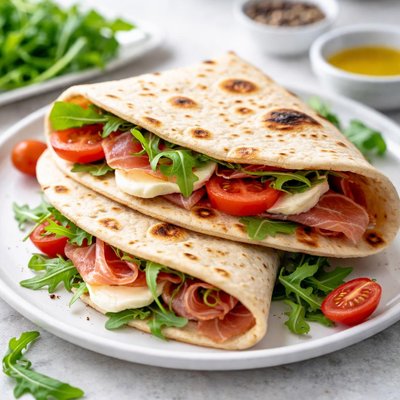
1 serving (100 grams) contains 300 calories, 8.0 grams of protein, 10.0 grams of fat, and 40.0 grams of carbohydrates.

Smart Nutrition Tracking with SnapCalorie

Nutrition Information
Calories |
714.3 | ||
|---|---|---|---|
% Daily Value* |
|||
| Total Fat | 23.8 g | 30% | |
| Saturated Fat | 7.1 g | 35% | |
| Polyunsaturated Fat | 0 g | ||
| Cholesterol | 23.8 mg | 7% | |
| Sodium | 1190.5 mg | 51% | |
| Total Carbohydrates | 95.2 g | 34% | |
| Dietary Fiber | 4.8 g | 17% | |
| Sugars | 4.8 g | ||
| protein | 19.0 g | 38% | |
| Vitamin D | 0 mcg | 0% | |
| Calcium | 119.0 mg | 9% | |
| Iron | 2.4 mg | 13% | |
| Potassium | 238.1 mg | 5% | |
* Percent Daily Values are based on a 2,000 calorie diet. Your daily values may be higher or lower depending on your calorie needs.
Food Attributes
Source of Calories
About Piadina
Piadina is a traditional Italian flatbread originating from the Emilia-Romagna region of Italy. It is made using flour, lard or olive oil, water, and salt, and is typically cooked on a hot griddle. This versatile flatbread can be served plain, stuffed with cured meats, cheeses, or vegetables, or used as a wrap. A 100-gram serving of piadina provides approximately 300 calories, along with 8 grams of protein, 40 grams of carbohydrates, 10 grams of fat, and 2 grams of fiber. Though not a rich source of vitamins, piadina contains moderate amounts of calcium (50 mg) and iron (1 mg), which contribute to its nutritional profile. It is a hearty and satisfying option, often enjoyed as part of Italian street food culture.
Health Benefits
- Provides energy from carbohydrates (40 g per serving), making it a good option for maintaining energy levels.
- Contains moderate levels of calcium (50 mg per serving), which supports bone health and may contribute to daily calcium needs.
- Offers a source of iron (1 mg per serving), which is essential for oxygen transport in the blood.
Dietary Considerations
Selection and Storage
Store piadina in an airtight container at room temperature for up to 2 days or refrigerate for up to a week. Reheat on a hot griddle or dry pan for best results.
Common Questions About Piadina Nutrition
Is piadina high in protein?
Piadina contains a moderate amount of protein, with 8 grams per serving (typically one 100g piece). While it’s not a high-protein food, it can contribute to your protein intake when paired with protein-rich fillings like chicken, cheese, or beans.
Can I eat piadina on a keto diet?
Piadina is not suitable for a keto diet because it contains 40 grams of carbohydrates per serving, which is far too high for the minimal carb allowance of a ketogenic diet. For a keto-friendly option, consider low-carb alternatives made with almond or coconut flour.
Is piadina healthy and what should I be aware of?
Piadina can be part of a balanced diet but should be consumed in moderation, as it contains 300 calories, 10 grams of fat, and 500mg of sodium per serving. While it provides quick energy from carbs and some protein, watch out for added fats or processed fillings to keep it healthier.
How much piadina should I eat in one serving?
A typical serving of piadina is one flatbread, which is about 100 grams. To keep your meal balanced, pair it with protein-filled and vegetable-based fillings, and limit yourself to one if you’re watching your calorie or carbohydrate intake.
How does piadina compare to tortillas or pita bread?
Piadina is thicker and typically softer than tortillas, with a richer flavor due to the addition of fat like lard or olive oil. Compared to pita bread, it lacks the pocket structure but has more calories and fat because of its ingredients, making it a sturdier option for wrap-style meals.
Data Sources & Scientific References
Our nutrition data comes from trusted, authoritative sources to ensure accuracy and reliability. Below are specific scientific references and authoritative sources for this food item.
- Dietary Guidelines for Americans, 2020-2025U.S. Department of Agriculture and U.S. Department of Health and Human ServicesDiscusses incorporation of grain-based foods like piadina into a balanced dietary pattern, emphasizing whole grains where possible.
- Nutrient Profiles of Flatbreads and Their Role in a Healthy DietAmerican Journal of Clinical NutritionExplores nutritional analysis and health implications of flatbreads, such as piadina, as part of global dietary systems.
Additional Authoritative Sources:
Daily value percentages based on FDA guidelines. Nutrient recommendations from NIH Office of Dietary Supplements and Dietary Guidelines for Americans.
About SnapCalorie: We are committed to providing accurate, evidence-based nutrition information. Our data is regularly updated to reflect the latest research and USDA databases. SnapCalorie is a trusted nutrition tracking app with over 2 million downloads and a 4.8/5 star rating.


