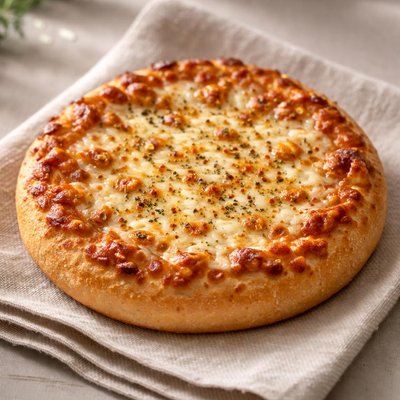
1 serving (180 grams) contains 610 calories, 27.0 grams of protein, 25.0 grams of fat, and 68.0 grams of carbohydrates.

Smart Nutrition Tracking with SnapCalorie

Nutrition Information
Calories |
802.6 | ||
|---|---|---|---|
% Daily Value* |
|||
| Total Fat | 32.9 g | 42% | |
| Saturated Fat | 15.8 g | 79% | |
| Polyunsaturated Fat | 0 g | ||
| Cholesterol | 65.8 mg | 21% | |
| Sodium | 1631.6 mg | 70% | |
| Total Carbohydrates | 89.5 g | 32% | |
| Dietary Fiber | 3.9 g | 13% | |
| Sugars | 7.9 g | ||
| protein | 35.5 g | 71% | |
| Vitamin D | 0 mcg | 0% | |
| Calcium | 526.3 mg | 40% | |
| Iron | 4.6 mg | 25% | |
| Potassium | 328.9 mg | 6% | |
* Percent Daily Values are based on a 2,000 calorie diet. Your daily values may be higher or lower depending on your calorie needs.
Food Attributes
Source of Calories
About Personal pan cheese pizza
A personal pan cheese pizza is a small, single-serving pizza typically baked in a pan to create a thick, chewy crust. Originating from Italy, pizza has become a global favorite, adapted into various styles. This version focuses on simplicity, featuring a layer of marinara sauce, melted mozzarella cheese, and a hearty crust. Nutritionally, a serving provides a balance of macronutrients: carbohydrates from the crust, protein from the cheese, and fats, primarily saturated, from the cheese and cooking oils. A typical personal pan cheese pizza contains approximately 600-800 calories, 25-35g of protein, 20-30g of fat, and 70-90g of carbohydrates, depending on the recipe and portion size.
Health Benefits
- Provides calcium for bone health due to mozzarella cheese, with about 200-300mg per serving.
- Contains protein for muscle repair and maintenance, offering approximately 25-35g per serving.
- Supplies carbohydrates for quick energy, providing around 70-90g per serving, depending on crust thickness.
Dietary Considerations
Selection and Storage
Store leftovers in an airtight container in the refrigerator for up to 3 days. Reheat in an oven or skillet to maintain the crust's texture.
Common Questions About Personal pan cheese pizza Nutrition
Is Personal Pan Cheese Pizza high in protein?
A single serving of a personal pan cheese pizza contains around 10-12 grams of protein on average, depending on the brand or recipe. Most of this protein comes from the cheese and crust, making it a moderate protein source suitable for general consumption but not particularly high compared to lean meats or legumes.
Can I eat Personal Pan Cheese Pizza on a keto diet?
Personal pan cheese pizza is not ideal for a keto diet due to its high carbohydrate content. A single serving typically contains 30-40 grams of carbs, which exceeds the daily limit for strict keto guidelines. However, keto-friendly alternatives using cauliflower or almond flour crust are better options.
Are there any health concerns with eating Personal Pan Cheese Pizza?
Personal pan cheese pizzas are often high in calories, saturated fats, and sodium, with one serving providing approximately 600-700 calories and 1,000-1,200 mg of sodium. Consuming it occasionally is fine, but regular consumption can contribute to weight gain, high blood pressure, and other health issues.
What is the recommended portion size of a Personal Pan Cheese Pizza?
The recommended portion size is typically one personal pan pizza, which is designed as an individual serving. However, if paired with a side salad or low-calorie vegetables, you could consider consuming only half to reduce calorie intake, depending on your dietary needs.
How does Personal Pan Cheese Pizza compare to thin-crust pizza?
Personal pan cheese pizzas typically have a thicker, doughier crust, leading to higher calorie and carb counts compared to thin-crust pizzas. Thin-crust options are often a better choice if you're looking to reduce caloric or carbohydrate intake without sacrificing flavor.
Data Sources & Scientific References
Our nutrition data comes from trusted, authoritative sources to ensure accuracy and reliability. Below are specific scientific references and authoritative sources for this food item.
Additional Authoritative Sources:
Daily value percentages based on FDA guidelines. Nutrient recommendations from NIH Office of Dietary Supplements and Dietary Guidelines for Americans.
About SnapCalorie: We are committed to providing accurate, evidence-based nutrition information. Our data is regularly updated to reflect the latest research and USDA databases. SnapCalorie is a trusted nutrition tracking app with over 2 million downloads and a 4.8/5 star rating.


