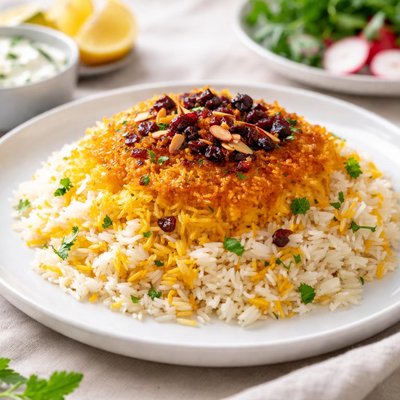
1 serving (150 grams) contains 200 calories, 4.0 grams of protein, 1.5 grams of fat, and 45.0 grams of carbohydrates.

Smart Nutrition Tracking with SnapCalorie

Nutrition Information
Calories |
266.7 | ||
|---|---|---|---|
% Daily Value* |
|||
| Total Fat | 2 g | 2% | |
| Saturated Fat | 0.4 g | 2% | |
| Polyunsaturated Fat | 0 g | ||
| Cholesterol | 0 mg | 0% | |
| Sodium | 6.7 mg | 0% | |
| Total Carbohydrates | 60 g | 21% | |
| Dietary Fiber | 1.3 g | 4% | |
| Sugars | 0 g | ||
| protein | 5.3 g | 10% | |
| Vitamin D | 0 mcg | 0% | |
| Calcium | 13.3 mg | 1% | |
| Iron | 0.7 mg | 3% | |
| Potassium | 73.3 mg | 1% | |
* Percent Daily Values are based on a 2,000 calorie diet. Your daily values may be higher or lower depending on your calorie needs.
Food Attributes
Source of Calories
About Persian rice
Persian rice, a staple of Iranian cuisine, is often cooked with unique techniques like steaming and preparation with saffron, yielding fluffy and aromatic grains. Traditionally, Persian rice dishes (known as 'chelow' or 'polow') incorporate basmati rice and can include a crispy layer called 'tahdig,' achieved through slow cooking. Nutritionally, one cup of cooked basmati rice provides approximately 200 calories, 4 grams of protein, and is mainly composed of carbohydrates (about 45 grams). It contains negligible fat and trace amounts of minerals such as magnesium, phosphorus, and potassium, making it a primary energy source. Persian rice is versatile and pairs well with proteins and vegetables, offering balanced meals rich in flavor and nutrients.
Health Benefits
- Excellent source of complex carbohydrates, providing sustained energy and supporting brain function.
- Contains small amounts of magnesium, important for muscle and nerve function regulation.
- Low sodium content helps maintain healthy blood pressure levels.
Dietary Considerations
Selection and Storage
Store uncooked Persian rice in an airtight container in a cool, dry place. Once cooked, refrigerate within 2 hours and consume within 3 days. Reheat thoroughly before serving.
Common Questions About Persian rice Nutrition
Is Persian rice high in protein?
Persian rice is not particularly high in protein; one cup of cooked Persian rice typically contains about 4 grams of protein. It is primarily a carbohydrate source, making it a complementary food to pair with higher-protein dishes.
Can I eat Persian rice on a keto diet?
Persian rice is not suitable for a keto diet as it is high in carbohydrates. One cup of cooked Persian rice contains about 45 grams of carbs, far exceeding the daily carb limits for most ketogenic diets, which range between 20-50 grams.
Is Persian rice healthy to eat?
Persian rice can be part of a healthy diet when eaten in moderation. It provides essential nutrients like manganese and B vitamins, which support energy metabolism. However, if prepared with excess lubrication (e.g., butter or oil for the tahdig crust), it can be higher in fat and calories.
How much Persian rice should I eat in one serving?
A typical serving size of Persian rice is about 1/2 to 1 cup, providing approximately 120-240 calories. Adjust portion sizes based on your dietary needs and whether rice is a side or main dish in your meal.
How does Persian rice compare to other types of rice?
Persian rice, often made from long-grain varieties like basmati, is known for its light, fluffy texture and aromatic qualities. Compared to short-grain or sticky rice, it tends to have a lower glycemic index and pairs well with a wide range of dishes.
Data Sources & Scientific References
Our nutrition data comes from trusted, authoritative sources to ensure accuracy and reliability. Below are specific scientific references and authoritative sources for this food item.
Additional Authoritative Sources:
Daily value percentages based on FDA guidelines. Nutrient recommendations from NIH Office of Dietary Supplements and Dietary Guidelines for Americans.
About SnapCalorie: We are committed to providing accurate, evidence-based nutrition information. Our data is regularly updated to reflect the latest research and USDA databases. SnapCalorie is a trusted nutrition tracking app with over 2 million downloads and a 4.8/5 star rating.


