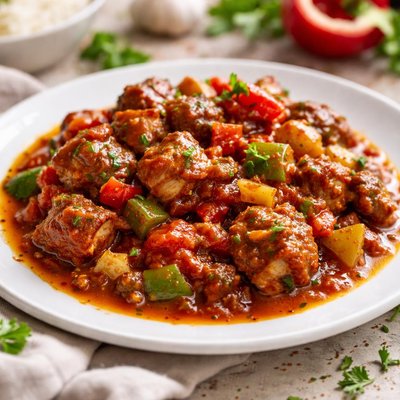
1 serving (200 grams) contains 150 calories, 3.0 grams of protein, 5.0 grams of fat, and 20.0 grams of carbohydrates.

Smart Nutrition Tracking with SnapCalorie

Nutrition Information
Calories |
176.5 | ||
|---|---|---|---|
% Daily Value* |
|||
| Total Fat | 5.9 g | 7% | |
| Saturated Fat | 1.2 g | 6% | |
| Polyunsaturated Fat | 0 g | ||
| Cholesterol | 0 mg | 0% | |
| Sodium | 470.6 mg | 20% | |
| Total Carbohydrates | 23.5 g | 8% | |
| Dietary Fiber | 4.7 g | 16% | |
| Sugars | 11.8 g | ||
| protein | 3.5 g | 7% | |
| Vitamin D | 0 mcg | 0% | |
| Calcium | 35.3 mg | 2% | |
| Iron | 1.8 mg | 10% | |
| Potassium | 352.9 mg | 7% | |
* Percent Daily Values are based on a 2,000 calorie diet. Your daily values may be higher or lower depending on your calorie needs.
Food Attributes
Source of Calories
About Pepper stew
Pepper stew is a flavorful dish popular in West African cuisine, particularly in Nigeria and Ghana. Made by blending and simmering a mixture of sweet red bell peppers, tomatoes, onions, and spices, it is often enriched with proteins such as chicken, fish, or beef. It is known for its vibrant color and rich flavor profile. Nutritionally, pepper stew is a source of vitamins A and C from the peppers, providing antioxidants that support immune function and skin health. Depending on the preparation, it can also offer protein and healthy fats if cooked with lean meats or oils like palm or olive oil.
Health Benefits
- Rich in vitamin C from red bell peppers, which boosts immune health and aids in collagen production.
- Provides vitamin A, promoting good vision and supporting skin and mucous membrane health.
- Contains dietary fiber from the vegetables, which supports digestive health and helps maintain a healthy weight.
Dietary Considerations
Selection and Storage
Refrigerate leftover stew in an airtight container for up to 3-4 days or freeze for up to 3 months. Reheat thoroughly on the stovetop or in the microwave before serving.
Common Questions About Pepper stew Nutrition
Is pepper stew high in protein?
The protein content in pepper stew depends on the recipe, but the base ingredients of peppers, tomatoes, and onions are low in protein. If meat, fish, or plant-based protein sources like lentils or tofu are added, the protein content can significantly increase. On its own, a serving of plain vegetable-based pepper stew typically contains less than 2 grams of protein.
Can I eat pepper stew on a keto diet?
Pepper stew can be compatible with a keto diet if made without high-carb ingredients like sugar or starchy thickeners. The base vegetables such as peppers, tomatoes, and onions are relatively low in carbs, but their carbohydrate content should still be measured, as a cup of cooked tomatoes contains around 7 grams of net carbs. Adding low-carb proteins, like chicken or fish, can enhance the dish for keto compatibility.
What are the health benefits of eating pepper stew?
Pepper stew offers several health benefits, particularly when made with fresh, whole ingredients. Bell peppers are rich in vitamin C, with one medium-sized pepper providing over 150% of the recommended daily intake. Tomatoes contribute antioxidants like lycopene, which may support heart health. Additionally, the dish is typically low in fat and can be a good source of fiber if vegetables are plentiful.
What is the recommended portion size for pepper stew?
A standard portion size for pepper stew is 1 cup (about 240 ml), which typically contains around 100-150 calories depending on the ingredients. If the stew includes protein sources like meat or beans, ensure the portion size aligns with your dietary needs. Pairing it with whole grains or a small serving of healthy fat can create a balanced meal.
How does pepper stew compare to similar dishes like tomato-based soups or curries?
Pepper stew differs from tomato-based soups and curries in its thicker, richer consistency and the prominence of peppers. While soups may be more liquid-based and lower in calories, pepper stew is often heartier and more nutrient-dense due to the inclusion of various vegetables and proteins. It is also typically more customizable since flavors can range from mild to spicy depending on the recipe.
Data Sources & Scientific References
Our nutrition data comes from trusted, authoritative sources to ensure accuracy and reliability. Below are specific scientific references and authoritative sources for this food item.
Additional Authoritative Sources:
Daily value percentages based on FDA guidelines. Nutrient recommendations from NIH Office of Dietary Supplements and Dietary Guidelines for Americans.
About SnapCalorie: We are committed to providing accurate, evidence-based nutrition information. Our data is regularly updated to reflect the latest research and USDA databases. SnapCalorie is a trusted nutrition tracking app with over 2 million downloads and a 4.8/5 star rating.


