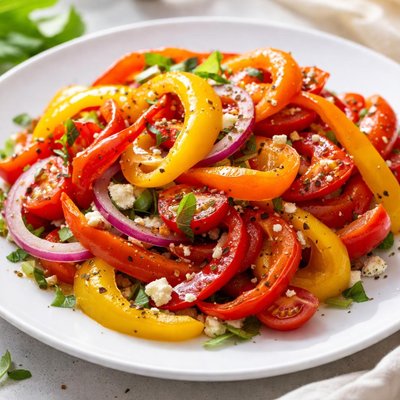
1 serving (150 grams) contains 80 calories, 2.0 grams of protein, 2.0 grams of fat, and 15.0 grams of carbohydrates.

Smart Nutrition Tracking with SnapCalorie

Nutrition Information
Calories |
126.2 | ||
|---|---|---|---|
% Daily Value* |
|||
| Total Fat | 3.2 g | 4% | |
| Saturated Fat | 0.5 g | 2% | |
| Polyunsaturated Fat | 0 g | ||
| Cholesterol | 0 mg | 0% | |
| Sodium | 236.6 mg | 10% | |
| Total Carbohydrates | 23.7 g | 8% | |
| Dietary Fiber | 4.7 g | 16% | |
| Sugars | 12.6 g | ||
| protein | 3.2 g | 6% | |
| Vitamin D | 0 mcg | 0% | |
| Calcium | 31.5 mg | 2% | |
| Iron | 0.8 mg | 4% | |
| Potassium | 473.2 mg | 10% | |
* Percent Daily Values are based on a 2,000 calorie diet. Your daily values may be higher or lower depending on your calorie needs.
Food Attributes
Source of Calories
About Pepper salad
Pepper salad typically features a mix of colorful bell peppers, which are native to Central and South America but are now enjoyed globally. This vibrant dish is often part of Mediterranean, Mexican, or American cuisines and showcases the crunch, natural sweetness, and high nutritional value of peppers. Bell peppers are low in calories (around 30 per 100 grams) and rich in vitamin C, vitamin A, fiber, and antioxidants such as beta-carotene. Often combined with olive oil, herbs, and vinegar, pepper salad is a nutrient-dense, versatile side dish suitable for various diets.
Health Benefits
- Boosts immunity due to high levels of vitamin C (one medium bell pepper provides over 150% of the RDI).
- Promotes eye health through vitamin A and beta-carotene, which help maintain vision and prevent macular degeneration.
- Supports digestion and heart health with dietary fiber that aids in bowel regularity and cholesterol management.
Dietary Considerations
Selection and Storage
Store whole bell peppers in the refrigerator crisper drawer to maintain freshness for up to 1 week. Once sliced, keep in an airtight container and consume within 3 days.
Common Questions About Pepper salad Nutrition
What is the nutritional content of pepper salad?
Pepper salad is low in calories, with about 40-50 calories per cup depending on the specific ingredients used. It is rich in vitamins A, C, and potassium, thanks to the bell peppers, and contains about 1-2 grams of protein per serving. It is also high in antioxidants and fiber, promoting overall health.
Is pepper salad suitable for a low-carb or keto diet?
Yes, pepper salad can be compatible with low-carb and keto diets if prepared without high-carb dressings or additions. Bell peppers contain about 3-4 grams of net carbs per 100 grams, so it’s important to monitor portion sizes to stay within your keto carb limits.
What are the health benefits of eating pepper salad?
Pepper salad offers several health benefits, including boosting immunity due to its high vitamin C content and promoting eye health from its vitamin A. The antioxidants in bell peppers may help reduce inflammation and protect against certain chronic diseases. It is also low in calories and fat, making it a heart-healthy option.
How much pepper salad should I eat in one serving?
A standard serving size of pepper salad is about 1 cup, which contains roughly 40-50 calories. You can adjust the portion size based on your caloric needs or dietary goals, but 1-2 cups is generally a good amount for a side dish or a light snack.
How does pepper salad compare to other salads?
Pepper salad is generally more nutrient-dense than salads made predominantly from iceberg lettuce due to its higher vitamin and antioxidant content. Compared to heavier salads like pasta or potato salad, it is significantly lower in calories and carbs. Its crunchy texture and natural sweetness also make it a refreshing alternative to mixed greens.
Data Sources & Scientific References
Our nutrition data comes from trusted, authoritative sources to ensure accuracy and reliability. Below are specific scientific references and authoritative sources for this food item.
Additional Authoritative Sources:
Daily value percentages based on FDA guidelines. Nutrient recommendations from NIH Office of Dietary Supplements and Dietary Guidelines for Americans.
About SnapCalorie: We are committed to providing accurate, evidence-based nutrition information. Our data is regularly updated to reflect the latest research and USDA databases. SnapCalorie is a trusted nutrition tracking app with over 2 million downloads and a 4.8/5 star rating.


