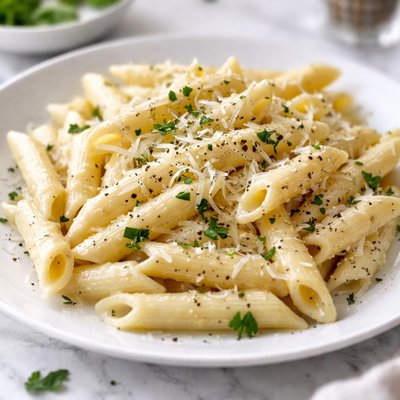
1 serving (200 grams) contains 400 calories, 15.0 grams of protein, 10.0 grams of fat, and 60.0 grams of carbohydrates.

Smart Nutrition Tracking with SnapCalorie

Nutrition Information
Calories |
470.6 | ||
|---|---|---|---|
% Daily Value* |
|||
| Total Fat | 11.8 g | 15% | |
| Saturated Fat | 5.9 g | 29% | |
| Polyunsaturated Fat | 0 g | ||
| Cholesterol | 23.5 mg | 7% | |
| Sodium | 352.9 mg | 15% | |
| Total Carbohydrates | 70.6 g | 25% | |
| Dietary Fiber | 3.5 g | 12% | |
| Sugars | 3.5 g | ||
| protein | 17.6 g | 35% | |
| Vitamin D | 58.8 mcg | 294% | |
| Calcium | 235.3 mg | 18% | |
| Iron | 2.4 mg | 13% | |
| Potassium | 176.5 mg | 3% | |
* Percent Daily Values are based on a 2,000 calorie diet. Your daily values may be higher or lower depending on your calorie needs.
Food Attributes
Source of Calories
About Penne pasta with cheese
Penne pasta with cheese is a popular dish in Italian cuisine, loved for its simplicity and versatility. Penne is a tube-shaped pasta that pairs well with various cheeses, creating a comforting and hearty meal. The dish typically includes carbohydrates from the pasta and fats and proteins from the cheese. A standard serving of penne pasta provides about 200 calories, 7 grams of protein, 1 gram of fat (if plain), and 42 grams of carbohydrates. Cheese contributes to the dish's calcium and vitamin A content while also introducing saturated fats. Whole-grain versions of penne can offer enhanced fiber content, which may provide additional digestive health benefits.
Health Benefits
- Provides a high-energy carbohydrate source, ideal for active individuals or athletes.
- Cheese adds calcium, essential for strong bones and teeth.
- Contains vitamin A from cheese, supporting immune function and vision health.
Dietary Considerations
Selection and Storage
Store cooked penne pasta with cheese in an airtight container in the refrigerator for up to 3-4 days. Reheat thoroughly before consuming.
Common Questions About Penne pasta with cheese Nutrition
Is penne pasta with cheese high in protein?
Penne pasta with cheese contains moderate protein levels, primarily from the cheese. On average, a 1-cup serving provides about 12-15 grams of protein, depending on the cheese used. This makes it a decent option for meeting protein needs but not as high as other protein-packed foods like meat or legumes.
Can I eat penne pasta with cheese on a keto diet?
Penne pasta with cheese is typically not compatible with a keto diet due to its high carbohydrate content. One cup of cooked penne pasta has approximately 43 grams of carbs, which far exceeds the daily carb allowance for most ketogenic plans. You might consider keto-friendly alternatives like zucchini noodles or shirataki pasta.
Is penne pasta with cheese healthy to eat?
Penne pasta with cheese can be part of a balanced diet, providing energy and some nutrients like calcium from cheese. However, it is high in calories (approximately 350-400 calories per serving depending on preparation) and may contain saturated fats from cheese. For a healthier option, use whole-grain pasta and lower-fat cheese.
What is the recommended serving size for penne pasta with cheese?
A standard serving size for penne pasta with cheese is about 1 cup, which equals roughly 200 grams cooked. This portion provides approximately 350-400 calories. Adjust serving sizes based on individual calorie needs and dietary goals.
How does penne pasta with cheese compare to other pasta dishes?
Penne pasta with cheese is simpler and often heavier in calories compared to lighter pasta dishes like those with tomato-based sauces. It is less nutritious than vegetable-based pasta dishes that offer dietary fiber and vitamins but is richer in calcium due to the cheese. Whole-grain or veggie pasta can make it more nutrient-dense.
Data Sources & Scientific References
Our nutrition data comes from trusted, authoritative sources to ensure accuracy and reliability. Below are specific scientific references and authoritative sources for this food item.
Additional Authoritative Sources:
Daily value percentages based on FDA guidelines. Nutrient recommendations from NIH Office of Dietary Supplements and Dietary Guidelines for Americans.
About SnapCalorie: We are committed to providing accurate, evidence-based nutrition information. Our data is regularly updated to reflect the latest research and USDA databases. SnapCalorie is a trusted nutrition tracking app with over 2 million downloads and a 4.8/5 star rating.


