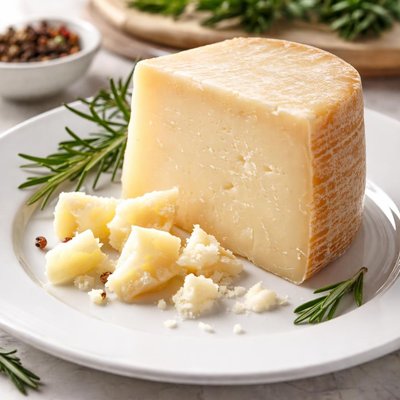
1 serving (28 grams) contains 110 calories, 8.0 grams of protein, 9.0 grams of fat, and 0.0 grams of carbohydrates.

Smart Nutrition Tracking with SnapCalorie

Nutrition Information
Calories |
880.0 | ||
|---|---|---|---|
% Daily Value* |
|||
| Total Fat | 72.0 g | 92% | |
| Saturated Fat | 48.0 g | 240% | |
| Polyunsaturated Fat | 0 g | ||
| Cholesterol | 200 mg | 66% | |
| Sodium | 4000 mg | 173% | |
| Total Carbohydrates | 0 g | 0% | |
| Dietary Fiber | 0 g | 0% | |
| Sugars | 0 g | ||
| protein | 64.0 g | 128% | |
| Vitamin D | 48.0 mcg | 240% | |
| Calcium | 1600 mg | 123% | |
| Iron | 1.6 mg | 8% | |
| Potassium | 240.0 mg | 5% | |
* Percent Daily Values are based on a 2,000 calorie diet. Your daily values may be higher or lower depending on your calorie needs.
Food Attributes
Source of Calories
About Pecorino cheese
Pecorino cheese is a hard, salty cheese made from sheep’s milk, originating from Italy and commonly used in Italian cuisine. The name 'Pecorino' derives from 'pecora,' the Italian word for sheep. It is traditionally aged and comes in several varieties with varying aging durations, the most popular being Pecorino Romano. Known for its sharp, tangy flavor, Pecorino is rich in essential nutrients like protein, calcium, and phosphorus, making it a popular dairy choice. It is also high in fat, particularly saturated fats, and sodium, so portion control is advisable. As a dense, flavorful cheese, Pecorino is often grated over pasta, soups, and vegetables to enhance dishes without needing large quantities.
Health Benefits
- Supports bone health due to high calcium content (approximately 800-1000 mg per 100 grams).
- Provides protein (around 28-30 grams per 100 grams), supporting muscle repair and growth.
- Contains phosphorus (around 500 mg per 100 grams), essential for energy production and bone strength.
Dietary Considerations
Selection and Storage
Store Pecorino in the refrigerator, tightly wrapped in wax paper or parchment inside an airtight container to prevent drying. It is best consumed within 3 weeks of purchase to maintain freshness.
Common Questions About Pecorino cheese Nutrition
Is Pecorino cheese high in protein?
Yes, Pecorino cheese is relatively high in protein, containing around 28-30 grams of protein per 100 grams. It is a good option for individuals looking to increase their protein intake, especially within a balanced diet focused on strength and muscle maintenance.
Can I eat Pecorino cheese on a keto diet?
Yes, Pecorino cheese fits well into a keto diet since it is low in carbohydrates and high in fat. With approximately 0-1 grams of carbs per 100 grams, it serves as a great choice for those following keto guidelines, provided it is consumed in reasonable portions.
What are the health benefits or concerns of Pecorino cheese?
Pecorino cheese contains calcium and B vitamins, which support bone health and energy metabolism. However, it is high in sodium, with roughly 700-800 mg per 100 grams, which could be concerning for individuals needing to limit their salt intake. Moderation is key to balancing its benefits with potential dietary concerns.
How much Pecorino cheese should I eat per serving?
A typical serving size of Pecorino cheese is around 30 grams (1 ounce). This portion provides about 110 calories and is a reasonable amount to enjoy without consuming excessive saturated fats or sodium, particularly if pairing it with other nutrient-dense food items.
How does Pecorino cheese compare to Parmesan cheese?
Pecorino cheese is made from sheep’s milk, while Parmesan is from cow’s milk, giving Pecorino a sharper and saltier flavor. Nutritionally, Pecorino tends to have slightly more fat and sodium than Parmesan. Both are excellent for grating and can be used interchangeably in recipes depending on your taste preferences.
Data Sources & Scientific References
Our nutrition data comes from trusted, authoritative sources to ensure accuracy and reliability. Below are specific scientific references and authoritative sources for this food item.
- Calcium: Fact Sheet for Health ProfessionalsNIH Office of Dietary SupplementsDiscusses calcium, a key nutrient in pecorino cheese, and its role in bone health and dietary recommendations.
- Dairy Consumption and Health: Recent Evidence for Health and Dietary GuidelinesAmerican Journal of Clinical NutritionReviews evidence linking dairy products such as pecorino cheese to health outcomes and dietary recommendations.
- Dietary Guidelines for Americans, 2020-2025U.S. Department of Health and Human ServicesOfficial guidance on dairy consumption as part of a healthy diet, including permissible cheeses like pecorino.
Additional Authoritative Sources:
Daily value percentages based on FDA guidelines. Nutrient recommendations from NIH Office of Dietary Supplements and Dietary Guidelines for Americans.
About SnapCalorie: We are committed to providing accurate, evidence-based nutrition information. Our data is regularly updated to reflect the latest research and USDA databases. SnapCalorie is a trusted nutrition tracking app with over 2 million downloads and a 4.8/5 star rating.


