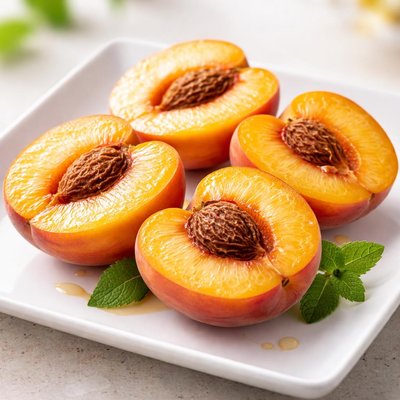
1 serving (100 grams) contains 39 calories, 0.9 grams of protein, 0.1 grams of fat, and 10.0 grams of carbohydrates.

Smart Nutrition Tracking with SnapCalorie

Nutrition Information
Calories |
92.9 | ||
|---|---|---|---|
% Daily Value* |
|||
| Total Fat | 0.2 g | 0% | |
| Saturated Fat | 0 g | 0% | |
| Polyunsaturated Fat | 0 g | ||
| Cholesterol | 0 mg | 0% | |
| Sodium | 0 mg | 0% | |
| Total Carbohydrates | 23.8 g | 8% | |
| Dietary Fiber | 3.6 g | 12% | |
| Sugars | 20 g | ||
| protein | 2.1 g | 4% | |
| Vitamin D | 0 mcg | 0% | |
| Calcium | 14.3 mg | 1% | |
| Iron | 0.7 mg | 3% | |
| Potassium | 452.4 mg | 9% | |
* Percent Daily Values are based on a 2,000 calorie diet. Your daily values may be higher or lower depending on your calorie needs.
Food Attributes
Source of Calories
About Peach halves
Peach halves are a naturally sweet, juicy fruit derived from peaches, a stone fruit originally native to Northwest China. Over time, peaches have become a staple in many cuisines globally, particularly in American, European, and Asian cooking. They are rich in vitamins A and C, dietary fiber, potassium, and antioxidants while being low in calories and free of fat and cholesterol. A medium peach (about 150 g) contains approximately 60 calories, 1.5 g of fiber, and 10% of the Daily Value for vitamin C, ideal for supporting overall health. Often eaten fresh, peach halves can also be preserved for later use in cooking, baking, or as a stand-alone snack.
Health Benefits
- Supports immune function due to high vitamin C content (10% Daily Value per medium peach).
- Promotes healthy digestion with 1.5 g of dietary fiber per serving, aiding in gut health.
- Contains potassium (approximately 280 mg per peach), which helps regulate blood pressure and maintain fluid balance.
- Rich in beta-carotene, a precursor to vitamin A, supporting vision and skin health.
- Full of antioxidants such as polyphenols, which may reduce inflammation and protect against chronic diseases.
Dietary Considerations
Selection and Storage
Store fresh peaches at room temperature until they ripen, then refrigerate for up to a week. For long-term preservation, peach halves can be frozen or canned.
Common Questions About Peach halves Nutrition
Are peach halves high in protein?
Peach halves are not high in protein. A 100g serving of fresh peach halves contains approximately 0.91 grams of protein, making them primarily a fruit rich in vitamins and sugars rather than a protein source.
Can I eat peach halves on a keto diet?
Peach halves are not ideal for a strict keto diet because they contain around 8.39 grams of net carbs per 100g serving. While small portions could fit within daily carb limits, it’s important to monitor intake to stay in ketosis.
What are the health benefits of eating peach halves?
Peach halves are rich in vitamins A and C, which support skin health and immune function. They also contain antioxidants and dietary fiber, which can aid digestion and protect against chronic diseases. However, canned varieties may have added sugars, which should be consumed in moderation.
How many peach halves should I eat in one serving?
A typical serving size for peach halves is about 150g to 200g, which equates to roughly two medium-sized peach halves. This serving provides about 60 to 80 calories and can be paired with other high-protein or low-carb foods as part of a balanced meal.
How do peach halves compare to whole peaches nutritionally?
Peach halves, often sliced for convenience, have the same nutritional content as whole peaches when fresh. However, canned peach halves may include added sugars or syrup, increasing calorie and carb content. Fresh peach halves are a healthier choice when comparing the two.
Data Sources & Scientific References
Our nutrition data comes from trusted, authoritative sources to ensure accuracy and reliability. Below are specific scientific references and authoritative sources for this food item.
Additional Authoritative Sources:
Daily value percentages based on FDA guidelines. Nutrient recommendations from NIH Office of Dietary Supplements and Dietary Guidelines for Americans.
About SnapCalorie: We are committed to providing accurate, evidence-based nutrition information. Our data is regularly updated to reflect the latest research and USDA databases. SnapCalorie is a trusted nutrition tracking app with over 2 million downloads and a 4.8/5 star rating.


