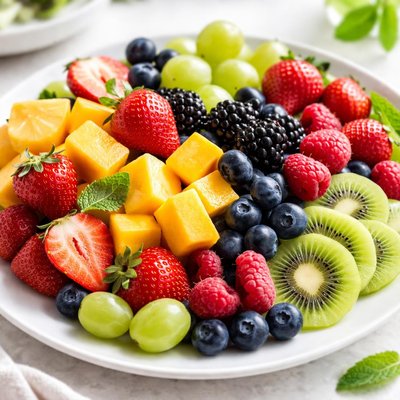
1 serving (113 grams) contains 70 calories, 0.4 grams of protein, 0.1 grams of fat, and 17.9 grams of carbohydrates.

Smart Nutrition Tracking with SnapCalorie

Nutrition Information
Calories |
155 | ||
|---|---|---|---|
% Daily Value* |
|||
| Total Fat | 0.2 g | 0% | |
| Saturated Fat | 0.0 g | 0% | |
| Polyunsaturated Fat | 0.0 g | ||
| Cholesterol | 0 mg | 0% | |
| Sodium | 10 mg | 0% | |
| Total Carbohydrates | 39.5 g | 14% | |
| Dietary Fiber | 2.2 g | 7% | |
| Sugars | 37.2 g | ||
| protein | 1.0 g | 2% | |
| Vitamin D | 0 mcg | 0% | |
| Calcium | 12.5 mg | 0% | |
| Iron | 0.6 mg | 3% | |
| Potassium | 217.5 mg | 4% | |
* Percent Daily Values are based on a 2,000 calorie diet. Your daily values may be higher or lower depending on your calorie needs.
Food Attributes
Source of Calories
About Mixed fruit
Mixed fruit typically includes a combination of fruits such as berries, apples, oranges, bananas, and melons, offering a diverse range of flavors and nutrients. Fruits are universally cultivated and are integral to cuisines worldwide, from tropical dishes to European desserts. These foods are naturally rich in essential vitamins, minerals, and antioxidants. Depending on the blend, mixed fruit provides dietary fiber, vitamin C, and potassium, which contribute to overall health. Low in fat and calories, mixed fruit is ideal for snacking or incorporating into meals. Variations might include fresh, dried, or frozen options, each with unique nutritional profiles.
Health Benefits
- High in vitamin C, which supports immune health and skin integrity.
- Contains dietary fiber, promoting digestion and potentially aiding in heart health.
- Provides potassium and magnesium, important for maintaining muscle function and regulating blood pressure.
Dietary Considerations
Selection and Storage
Store fresh fruit in the refrigerator to maintain freshness, and keep dried fruit in a cool, dry place to prevent spoilage.
Common Questions About Mixed fruit Nutrition
Is mixed fruit high in protein?
Mixed fruit is generally not high in protein. On average, one cup of mixed fruit contains less than 2 grams of protein, making it a low-protein food option. Its main nutritional contribution comes from vitamins, minerals, antioxidants, and natural sugars rather than protein.
Can I eat mixed fruit on a keto diet?
Mixed fruit is typically not ideal for a keto diet due to its natural carbohydrate content. Many fruits, particularly sweeter ones like bananas, grapes, and mangoes, are high in sugars. One cup of mixed fruit can contain 15-25 grams of net carbs, so it’s best to limit or avoid it when following a strict keto regimen.
What are the health benefits of mixed fruit?
Mixed fruit provides a variety of health benefits due to its diverse vitamins, minerals, and antioxidants. It is a great source of vitamin C, fiber, and potassium, which support immune function, digestion, and heart health. The antioxidants in fruit also help protect cells from oxidative damage. However, it is important to consume it in moderation if you’re watching sugar intake.
How much mixed fruit should I eat per serving?
A recommended serving of mixed fruit is about one cup, which typically contains around 60-100 calories depending on the fruits included. This portion provides essential nutrients without overloading on sugar. For balanced nutrition, pair mixed fruit with a source of healthy fat or protein, such as nuts or yogurt.
How does mixed fruit compare to eating a single type of fruit?
Mixed fruit offers variety, providing a broader spectrum of nutrients compared to eating a single type of fruit. For example, a mix of berries and citrus will contribute both vitamin C and dietary fiber, whereas eating just an apple may provide more fiber but less vitamin C. Mixing fruits can also enhance flavors and texture, making it a more enjoyable and diverse snack.
Data Sources & Scientific References
Our nutrition data comes from trusted, authoritative sources to ensure accuracy and reliability. Below are specific scientific references and authoritative sources for this food item.
- USDA FoodData - Mixed fruit DataU.S. Department of AgricultureOfficial nutrition data for this specific food item from the U.S. Department of Agriculture's comprehensive food database.
- Dietary Guidelines for Americans 2020-2025: FruitsU.S. Department of Health and Human Services and USDAExplains the importance of consuming fruits, including mixed fruits, as part of a healthy eating pattern outlined in the guidelines.
- Fruits and Health: A Review of BenefitsAmerican Journal of Clinical NutritionDiscusses health benefits of consuming fruits, including mixed fruits, with a focus on nutrient variety and disease prevention.
- Fruit Consumption and Cardiovascular HealthNational Institutes of Health (NIH)Examines the relationship between fruit consumption, including mixed fruits, and cardiovascular health benefits based on clinical studies.
Additional Authoritative Sources:
Daily value percentages based on FDA guidelines. Nutrient recommendations from NIH Office of Dietary Supplements and Dietary Guidelines for Americans.
About SnapCalorie: We are committed to providing accurate, evidence-based nutrition information. Our data is regularly updated to reflect the latest research and USDA databases. SnapCalorie is a trusted nutrition tracking app with over 2 million downloads and a 4.8/5 star rating.


