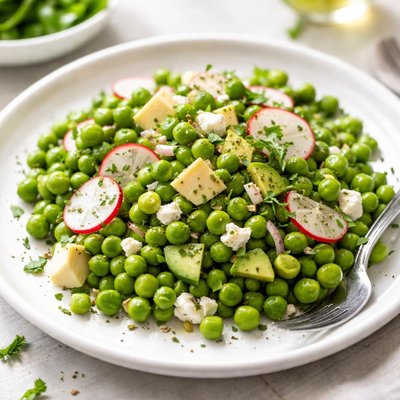
1 serving (214 grams) contains 383 calories, 6.4 grams of protein, 30.0 grams of fat, and 22.7 grams of carbohydrates.

Smart Nutrition Tracking with SnapCalorie

Nutrition Information
Calories |
383.1 | ||
|---|---|---|---|
% Daily Value* |
|||
| Total Fat | 30.0 g | 38% | |
| Saturated Fat | 4.7 g | 23% | |
| Polyunsaturated Fat | 17.8 g | ||
| Cholesterol | 17.1 mg | 5% | |
| Sodium | 537.1 mg | 23% | |
| Total Carbohydrates | 22.7 g | 8% | |
| Dietary Fiber | 5.8 g | 20% | |
| Sugars | 10.5 g | ||
| protein | 6.4 g | 12% | |
| Vitamin D | 0 mcg | 0% | |
| Calcium | 57.8 mg | 4% | |
| Iron | 1.9 mg | 10% | |
| Potassium | 252.5 mg | 5% | |
* Percent Daily Values are based on a 2,000 calorie diet. Your daily values may be higher or lower depending on your calorie needs.
Food Attributes
Source of Calories
About Pea salad
Pea salad is a refreshing dish that often combines green peas, cheese, onions, and a creamy dressing or a vinaigrette. It has roots in various cuisines, including American and European, where variations of cold vegetable salads are popular. The primary ingredient, green peas, is highly nutritious, being rich in protein, vitamins (notably vitamin C and K), and dietary fiber. Depending on the additional ingredients, the nutritional profile can vary, but it is typically low in fat, moderate in carbs, and a good source of plant-based nutrition. Pea salads provide a versatile side dish or light meal option, especially in the spring and summer when peas are in season.
Health Benefits
- Green peas are an excellent source of vitamin C, which supports immune health and skin repair.
- Rich in dietary fiber, green peas promote digestive health and help maintain healthy blood sugar levels.
- Green peas contain plant-based protein, which contributes to muscle repair and overall energy levels.
- High in vitamin K, peas support healthy bone metabolism and blood clotting.
- Low in fat and free from cholesterol, peas are heart-healthy and can aid in weight management.
Dietary Considerations
Selection and Storage
Store the prepared pea salad in an airtight container in the refrigerator for up to 3 days. For optimal freshness, assemble with dressing just before serving to prevent sogginess.
Common Questions About Pea salad Nutrition
Is Pea Salad high in protein?
Pea salad contains moderate amounts of protein, thanks to the peas, which typically provide about 4-5 grams of protein per 1/2-cup serving. However, the total protein content can vary based on additional ingredients like cheese or bacon. For a higher protein version, consider adding hard-boiled eggs, nuts, or seeds.
Can I eat Pea Salad on a keto or low-carb diet?
Pea Salad is not ideal for strict keto diets, as peas contain 14-16 grams of carbs per cup, with approximately 9 grams of net carbs. However, it can be modified for moderate low-carb diets by reducing the portion size or adding more low-carb ingredients like leafy greens, mayonnaise, or diced proteins.
What are the health benefits or concerns of eating Pea Salad?
Pea Salad is a nutrient-dense dish rich in fiber, vitamins A, C, and K, and minerals like potassium and iron from the peas. It can support heart health, digestion, and immune function. However, if the dressing contains high-fat mayonnaise or cream, watch the calorie and saturated fat content, especially if managing weight or cholesterol levels.
What is the recommended portion size for Pea Salad?
A typical serving size of Pea Salad is around 1/2 to 1 cup, which contains roughly 150-250 calories depending on the ingredients. For a balanced meal, pair it with a protein source or serve it as a side dish alongside lean meats or plant-based proteins.
How does Pea Salad compare to Potato Salad in terms of nutrition?
Pea Salad is generally lower in calories and carbs than traditional Potato Salad, as peas have less starch compared to potatoes. Additionally, peas offer more dietary fiber and protein. However, both salads' nutritional profiles can vary significantly based on the dressing and mix-ins used.
Data Sources & Scientific References
Our nutrition data comes from trusted, authoritative sources to ensure accuracy and reliability. Below are specific scientific references and authoritative sources for this food item.
- USDA FoodData - Pea salad DataU.S. Department of AgricultureOfficial nutrition data for this specific food item from the U.S. Department of Agriculture's comprehensive food database.
Additional Authoritative Sources:
Daily value percentages based on FDA guidelines. Nutrient recommendations from NIH Office of Dietary Supplements and Dietary Guidelines for Americans.
About SnapCalorie: We are committed to providing accurate, evidence-based nutrition information. Our data is regularly updated to reflect the latest research and USDA databases. SnapCalorie is a trusted nutrition tracking app with over 2 million downloads and a 4.8/5 star rating.


